Allen-Bradley 1746-NI16I Energy-Saving Analog Input Module for Optimized SLC 500 Automation
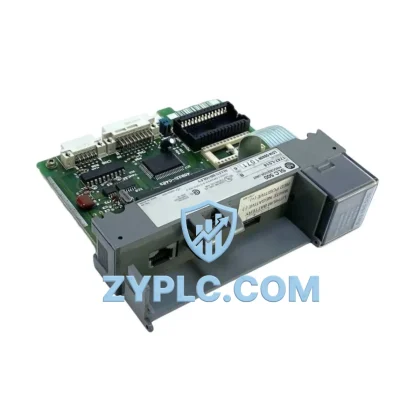
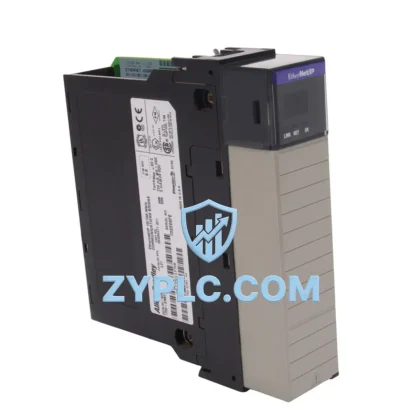
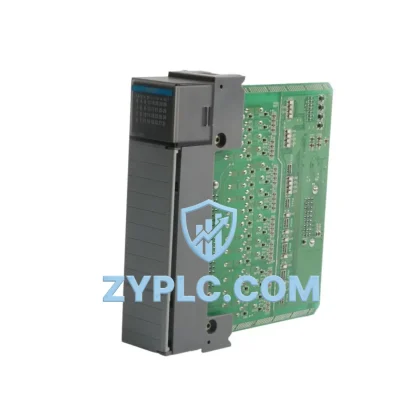
The Allen-Bradley 1746-NI16I is a 16-channel analog input module engineered for the SLC 500 programmable controller platform, delivering precision signal acquisition that forms the backbone of energy-aware industrial automation. In modern manufacturing environments where every kilowatt-hour counts, the 1746-NI16I enables plant engineers to capture real-time process variables — current, voltage, temperature, and pressure — with the resolution and speed needed to drive intelligent energy decisions at the control layer.
Unlike passive signal conditioners, the 1746-NI16I integrates directly into the SLC 500 backplane, allowing the 1747-L553 or 1747-L543 processor to act on live analog data without communication latency. This tight coupling between measurement and execution is what separates reactive energy management from true predictive optimization. When paired with a 1746-NR4 thermocouple input module monitoring motor winding temperatures, the system can detect thermal inefficiency before it escalates into unplanned downtime — reducing both energy waste and maintenance cost simultaneously.
Efficiency Performance Table
| Parameter |
Specification / Value |
| SKU |
1746-NI16I |
| Input Channels |
16 (Single-ended or Differential) |
| Input Signal Range |
4–20 mA / 0–20 mA / ±10 V (configurable per channel) |
| Resolution |
12-bit (1 in 4,096) |
| Module Power Consumption |
≤ 185 mA @ 5 VDC (backplane) |
| Operating Efficiency |
High — low self-consumption, full 16-ch simultaneous sampling |
| Compatible Systems |
SLC 500 (1746 I/O chassis), RSLogix 500, FactoryTalk View |
| Application Environment |
Industrial plant floor, panel-mount, IP20 enclosure |
| Energy Monitoring Value |
Real-time current/voltage loop acquisition for power analytics |
| Series |
SLC 500 / 1746 I/O Series |
| Warranty |
12-Month Warranty — tested and verified before shipment |
Energy-Aware Automation Architecture
Effective energy optimization in a production facility is never the result of a single device — it emerges from a well-integrated control architecture where every layer communicates efficiently. The 1746-NI16I sits at the data acquisition layer, feeding analog signals from field instruments into the SLC 500 control loop. This data then drives decisions across the entire automation stack.
At the drive level, variable frequency drives such as the PowerFlex 40 or PowerFlex 400 regulate motor speed based on process demand signals derived from the analog inputs captured by the 1746-NI16I. When a flow transmitter connected to channel 3 of the module reports that line pressure has stabilized, the SLC 500 processor can instruct the PowerFlex drive to reduce motor speed by 15%, directly cutting energy consumption without sacrificing throughput. This closed-loop interaction between analog measurement and drive modulation is one of the most impactful energy-saving strategies available in legacy SLC 500 environments.
On the I/O expansion side, the 1746-NI16I works alongside digital I/O modules such as the 1746-IB16 and 1746-OB16 to create a complete mixed-signal control node. Discrete outputs trigger contactors and solenoids while the analog module continuously monitors process variables, enabling the 1747-L553 processor to coordinate both worlds within a single scan cycle. For applications requiring additional analog output capability — such as valve positioning or speed reference signals — the 1746-NO4I output module complements the NI16I in the same chassis.
At the supervisory level, an operator interface such as the PanelView 550 or PanelView Plus 600 displays real-time energy metrics derived from the analog inputs, giving line operators immediate visibility into power consumption trends. When integrated with a FactoryTalk Historian or a third-party SCADA system via the 1747-KFC15 Ethernet interface, the 1746-NI16I’s data stream becomes the foundation of a plant-wide energy monitoring dashboard — enabling shift-by-shift comparison of energy intensity per unit produced.
For facilities running DeviceNet or ControlNet alongside SLC 500, the 1746-NI16I’s data can be bridged through a 1747-SDN DeviceNet scanner, allowing energy data from field-level smart sensors to be consolidated with the analog inputs in a unified control strategy. This architecture supports the transition from isolated machine control to integrated energy management without requiring a full platform migration.
Power Optimization in Real Production Lines
In a typical discrete manufacturing environment, analog input modules like the 1746-NI16I are deployed to monitor motor current draw, hydraulic pressure, conveyor tension, and furnace temperature — all variables that directly correlate with energy consumption. When these signals are sampled at the SLC 500’s scan rate and compared against setpoint thresholds programmed in RSLogix 500, the controller can execute energy-saving logic that would be impossible with manual monitoring.
Consider a stamping line where the 1746-NI16I monitors the current loop from six hydraulic pressure transducers. During idle periods between press cycles, the SLC 500 detects that hydraulic pressure has held steady for more than 30 seconds and commands the PowerFlex 40 driving the hydraulic pump to ramp down to 40% speed — reducing pump energy consumption by up to 50% during non-productive intervals. When the next part arrives at the press station, the analog input confirms pressure demand and the drive ramps back up within milliseconds. This demand-responsive control, enabled by the precision of the 1746-NI16I, can reduce hydraulic system energy consumption by 20–35% over a full production shift.
In process industries such as food and beverage or chemical manufacturing, the 1746-NI16I’s 4–20 mA input channels are used to monitor flow meters, pH sensors, and level transmitters. By feeding this data into PID control loops running on the 1747-L543 processor, the system maintains process variables at their most energy-efficient operating points — avoiding the energy penalty of over-pumping, over-heating, or over-pressurizing that occurs when control is imprecise.
From a maintenance perspective, trending the analog signals captured by the 1746-NI16I over time reveals early indicators of equipment degradation. A gradual increase in motor current draw — visible as a rising trend on channel 7 — may indicate bearing wear or mechanical misalignment, conditions that increase energy consumption before they cause failure. By catching these trends early through the data logged from the 1746-NI16I, maintenance teams can schedule corrective action during planned downtime rather than responding to emergency breakdowns, reducing both energy waste and repair costs.
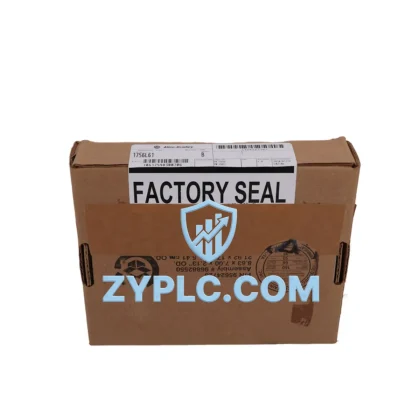
Every unit shipped undergoes full functional testing across all 16 input channels prior to dispatch, and is backed by a 12-month warranty. In-stock availability ensures minimal lead time for replacement or system expansion, keeping your production line running without extended procurement delays.
Energy Optimization FAQ
Q1: How does the 1746-NI16I contribute to measurable energy savings on the production floor?
The 1746-NI16I provides the real-time analog data that makes demand-responsive control possible. By feeding accurate current, voltage, and process variable signals into the SLC 500 processor, it enables the controller to modulate drives, valves, and actuators based on actual process demand rather than fixed schedules — directly reducing energy consumption during low-demand periods.
Q2: Is the 1746-NI16I compatible with my existing SLC 500 system and RSLogix 500 programming environment?
Yes. The 1746-NI16I is fully compatible with all SLC 500 chassis (1746 series) and is configured and monitored through RSLogix 500. It supports standard M0/M1 file data mapping, making integration into existing ladder logic programs straightforward without requiring hardware or software upgrades.
Q3: Can the 1746-NI16I be used as a direct replacement for a failed analog input module in a running production system?
Yes. The 1746-NI16I is a direct form-fit-function replacement for compatible SLC 500 analog input modules. Each unit is tested and verified before shipment. We recommend confirming the channel configuration (current vs. voltage mode) matches your existing wiring before installation. Our technical team can assist with compatibility verification prior to purchase.
Q4: What does the 12-month warranty cover, and what is the testing process before shipment?
The 12-month warranty covers functional defects across all 16 input channels under normal operating conditions. Prior to shipment, each 1746-NI16I is bench-tested using calibrated signal sources to verify input accuracy, channel isolation, and backplane communication integrity. Units that do not meet specification are not shipped. Warranty claims are processed with priority turnaround to minimize production impact.
© 2026 ZYPLC. All rights reserved.
Original Source: https://zyplc.com
Contact: +86 19859288691 | [email protected]