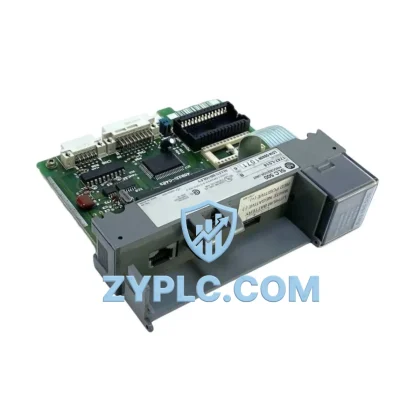
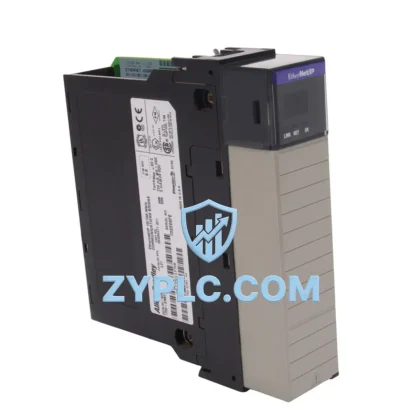
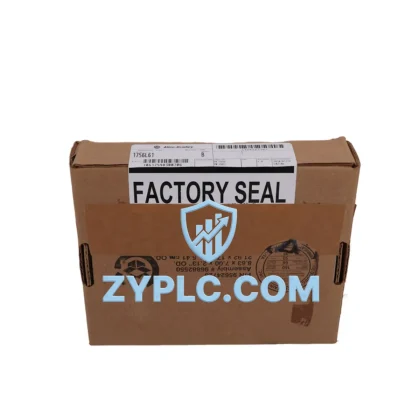
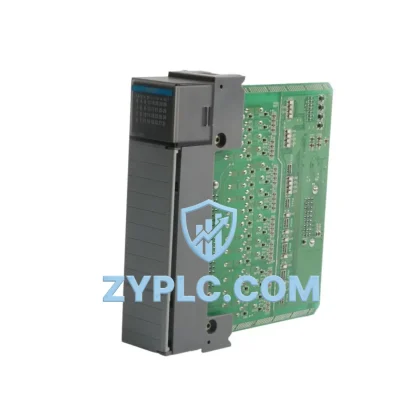
Allen-Bradley 1746-NIO4I System-Ready Analog I/O for SLC 500 Control System Architecture
The Allen-Bradley 1746-NIO4I is a high-resolution analog combination input/output module engineered for seamless integration within the SLC 500 modular control platform. Designed to occupy a standard 1746 I/O chassis slot, this module bridges the signal acquisition and command output layers of a distributed control system, enabling precise measurement and actuation across demanding industrial environments. Whether deployed in a standalone SLC 5/05 processor rack or as part of a multi-rack architecture coordinated through a 1747-SN Remote I/O Scanner, the 1746-NIO4I delivers the analog signal fidelity and system-level coherence that modern process and discrete manufacturing applications require.
In a fully layered automation architecture, the 1746-NIO4I occupies the I/O layer — the critical interface between field instrumentation and the control processor. Its four current-input channels (4–20 mA) and two current-output channels allow it to simultaneously receive process variable signals from transmitters, flow meters, and pressure sensors while issuing setpoint commands to variable frequency drives, control valves, and proportional actuators. This bidirectional analog capability reduces the total module count in a control cabinet, simplifies wiring, and improves system maintainability over the equipment lifecycle.
From a system architecture perspective, the 1746-NIO4I is most effective when paired with complementary modules and processors within the SLC 500 ecosystem. Its contextual integration with the SLC 5/04 and SLC 5/05 processors via the 1746 backplane ensures deterministic scan-cycle performance, with analog data refreshed in synchronization with the processor’s I/O scan. Engineers configuring multi-rack systems can extend analog I/O capacity by adding additional 1746-NIO4I modules in expansion chassis connected through the 1747-SN scanner, maintaining a unified control namespace across all physical racks.
Architecture Specification Table
| System Role |
Analog Combination I/O Module — SLC 500 I/O Layer |
| SKU / Part Number |
1746-NIO4I |
| Brand / Manufacturer |
Allen-Bradley (Rockwell Automation) |
| Compatible Series |
SLC 500 (1746 I/O Platform) |
| Analog Inputs |
4 Channels — Current (4–20 mA), 12-bit resolution |
| Analog Outputs |
2 Channels — Current (4–20 mA), 12-bit resolution |
| Input Impedance |
250 Ω (nominal) |
| Output Load Resistance |
0–500 Ω maximum |
| Power Consumption |
120 mA @ 5 VDC (backplane); 0 mA @ 24 VDC |
| Backplane Interface |
1746 I/O Chassis Slot (any slot, local or expansion rack) |
| Communication |
SLC 500 Backplane I/O Bus; compatible with 1747-SN Remote I/O Scanner |
| Isolation |
500 VAC channel-to-backplane isolation |
| Operating Temperature |
0°C to +60°C (32°F to 140°F) |
| Storage Temperature |
-40°C to +85°C |
| Relative Humidity |
5–95% non-condensing |
| Enclosure Requirement |
IP20 (panel-mount within control cabinet) |
| Certifications |
UL Listed, CE Marked, CSA Certified |
| Warranty |
12-Month Warranty — covers hardware defects and operational failure under normal use |
Coordinated Control System Design
The 1746-NIO4I achieves its full architectural value when integrated within a coherent SLC 500 system rather than treated as an isolated component. A typical coordinated architecture begins at the control layer with an SLC 5/05 processor (1747-L553), which manages program execution, data table operations, and Ethernet/IP communications to supervisory systems. The processor communicates with all I/O modules — including the 1746-NIO4I — through the 1746-A13 chassis backplane, which provides both power distribution and high-speed I/O bus connectivity across up to 13 module slots.
Power integrity is foundational to analog signal accuracy. The 1746-P4 power supply provides regulated 5 VDC and 24 VDC rails to the chassis, ensuring that the 1746-NIO4I’s analog circuitry operates within its specified noise and drift tolerances. In redundant power configurations, a secondary 1746-P4 or equivalent supply can be deployed in a parallel chassis to maintain system availability during supply maintenance or failure events.
For digital I/O coordination alongside analog signals, the 1746-IB16 DC input module and 1746-OB16 DC output module are commonly installed in adjacent chassis slots. These modules handle discrete status signals from limit switches, proximity sensors, and solenoid valves, while the 1746-NIO4I manages the continuous process variables — creating a complete signal acquisition and command layer within a single rack. In applications requiring thermocouple or RTD temperature measurement, the 1746-NT4 thermocouple input module complements the 1746-NIO4I by extending the thermal monitoring capability of the same chassis.
Network connectivity is managed through the SLC 5/05 processor’s built-in Ethernet port or, in legacy installations, through a 1747-KE DH-485 to RS-232 interface module for serial communication with programming terminals and SCADA systems. For remote I/O expansion, the 1747-SN Remote I/O Scanner enables the SLC 5/05 to address analog and digital modules installed in satellite racks located up to 3,000 meters from the main chassis — a critical capability in large-footprint facilities such as water treatment plants, mining operations, and petrochemical processing units.
At the human-machine interface layer, a PanelView 600 (2711-K6C8) or PanelView Plus 700 terminal connects to the SLC 5/05 via DH-485 or Ethernet, providing operators with real-time visualization of the analog process variables managed by the 1746-NIO4I. Alarm setpoints, trend displays, and manual override controls are configured in the HMI to reflect the analog channel data mapped in the SLC 500 data table, creating a seamless operator experience across the control hierarchy.
Application in Layered Automation Systems
The 1746-NIO4I is deployed across a broad range of industrial sectors where analog signal management is central to process control and system reliability.
In water and wastewater treatment facilities, the module monitors flow transmitters, pH sensors, dissolved oxygen probes, and turbidity meters while simultaneously issuing 4–20 mA commands to variable speed pump drives and chemical dosing systems. Its 12-bit resolution ensures that fine process adjustments — such as chlorine dosing rate corrections — are executed with the precision required by regulatory compliance standards.
In oil and gas and petrochemical processing plants, the 1746-NIO4I is integrated into SLC 500-based safety-instrumented and process control panels managing pressure, temperature, and flow loops. The module’s 500 VAC channel-to-backplane isolation protects the control system from field-side transients common in hazardous area installations, while its compatibility with the 1747-SN scanner allows analog I/O to be distributed across multiple field junction boxes without additional processor hardware.
In manufacturing and packaging lines, the module coordinates with servo drives and pneumatic proportional valves to maintain tension control, fill weight accuracy, and conveyor speed regulation. Paired with the SLC 5/04 processor and a 1746-HSCE high-speed counter module, the 1746-NIO4I forms part of a closed-loop control architecture that responds to encoder feedback and adjusts actuator outputs within a single processor scan cycle.
In power generation and electrical substation applications, the module monitors generator output parameters — voltage, current, and power factor — through transducer signals, feeding real-time data to the SLC 500 processor for automatic voltage regulation and load-shedding logic. Its wide operating temperature range and industrial-grade construction ensure reliable performance in substation environments subject to thermal cycling and electromagnetic interference.
In mining and metallurgical processing, the 1746-NIO4I manages analog signals from belt scale integrators, slurry density meters, and mill motor current transducers, providing the SLC 500 control system with the continuous process data needed for throughput optimization and equipment protection. Long-term availability of the module through established industrial distributors ensures that maintenance teams can replace units without extended production downtime.
Architecture Engineering FAQ
Q1: Is the 1746-NIO4I compatible with all SLC 500 processors, and can it be used in expansion racks?
The 1746-NIO4I is compatible with all SLC 500 processors — including the SLC 5/01, 5/02, 5/03, 5/04, and 5/05 — and can be installed in any slot of a local 1746 chassis or in expansion racks connected via the 1747-SN Remote I/O Scanner. When used in expansion racks, the module’s analog data is mapped into the processor’s I/O data table through the scanner’s rack and group addressing scheme. Engineers should verify that the total backplane current draw — including the 120 mA consumed by the 1746-NIO4I at 5 VDC — does not exceed the capacity of the installed 1746-Px power supply.
Q2: How does the 1746-NIO4I support system redundancy and long-term maintenance planning?
While the SLC 500 platform does not natively support hot-standby processor redundancy in the manner of ControlLogix with 1756-RM2 redundancy modules, system availability for the 1746-NIO4I can be enhanced through cold-standby spare module strategies and structured preventive maintenance programs. Maintaining a stocked spare of the 1746-NIO4I at site level eliminates mean-time-to-repair delays caused by procurement lead times. All units supplied through ZYPLC are covered by a 12-Month Warranty, ensuring that hardware defects identified during commissioning or early operation are resolved without additional cost. Contextual Integration support is available to assist engineers with module replacement, channel recalibration, and data table remapping following a swap.
Q3: What configuration and calibration steps are required when installing the 1746-NIO4I in an existing SLC 500 system?
Installation requires the module to be inserted into a powered-down 1746 chassis slot, followed by configuration using RSLogix 500 software. Engineers must define the module type in the I/O configuration tree, assign input and output channel data file addresses, and set channel scaling parameters to match the engineering units of the connected field instruments. Factory calibration is performed to NIST-traceable standards; however, field verification using a calibrated 4–20 mA loop calibrator is recommended after installation to confirm end-to-end signal accuracy. Channel-level diagnostics — including open-wire detection on input channels — are accessible through the module’s status bits in the SLC 500 data table, enabling rapid fault isolation during commissioning and ongoing operation.
© 2026 ZYPLC. All rights reserved.
Original Source: https://zyplc.com
Contact: +86 19859288691 | [email protected]