Allen-Bradley 1746-NR4 Energy-Saving Resistance Input Module: Precision Energy Control for SLC 500 Automation
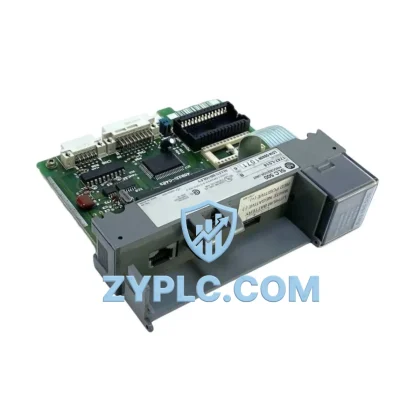
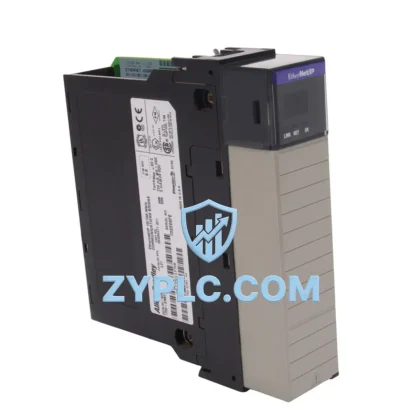
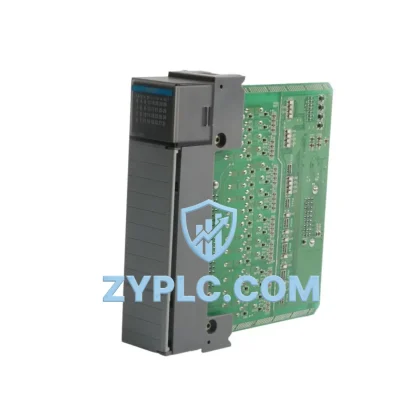
The Allen-Bradley 1746-NR4 is a 4-channel RTD and resistance input module designed for the SLC 500 modular I/O platform. In modern industrial environments where energy accountability is no longer optional, the 1746-NR4 delivers the thermal and resistance measurement accuracy that underpins effective energy management — from motor winding temperature monitoring to process fluid temperature feedback in closed-loop control systems. By providing real-time, high-resolution resistance data directly to the SLC 5/04 or SLC 5/05 processor, this module enables control engineers to make data-driven decisions that reduce unnecessary energy consumption, extend equipment service life, and tighten production line cycle times.
Efficiency Performance Table
| Parameter |
Specification |
| Input Channels |
4 (RTD / Resistance) |
| Input Types Supported |
Pt100, Pt1000, Ni120, Cu10, 10Ω–1000Ω Resistance |
| Resolution |
16-bit (±0.1°C typical accuracy) |
| Power Consumption |
≤ 3.0 W (backplane draw) |
| Operating Efficiency |
High — low self-heating, minimal signal drift |
| Compatible Systems |
SLC 500 (1746 I/O chassis), RSLogix 500, FactoryTalk View |
| Application Environments |
HVAC, Motor Drives, Furnace Control, Compressor Monitoring |
| Energy Saving Value |
Enables closed-loop thermal control to eliminate over-heating waste |
| Series |
SLC 500 / 1746 |
| Warranty |
12-Month Warranty — tested before shipment |
Energy-Aware Automation Architecture
Effective energy optimization in a production facility is never the result of a single device — it is the outcome of a well-integrated control architecture. The 1746-NR4 sits at the sensing layer of this architecture, feeding precise thermal data into the SLC 5/04 processor via the 1746 backplane. This data is then acted upon by downstream control and drive components to regulate energy consumption in real time.
In a typical motor-driven application, the 1746-NR4 monitors winding temperature on a three-phase induction motor. When the processor detects a rising thermal trend — indicating inefficient operation or impending overload — it signals a PowerFlex 40 variable frequency drive to reduce output frequency, lowering motor speed and cutting energy draw proportionally. This closed-loop interaction between the RTD input module and the VFD is one of the most direct paths to measurable energy savings on the plant floor.
For broader system visibility, the SLC 5/05 processor communicates temperature and resistance data upstream via Ethernet/IP to a FactoryTalk View SE SCADA station, where operators can monitor energy consumption trends across multiple production cells. Alongside the 1746-NR4, a 1746-NI8 analog input module handles 4–20 mA current loop signals from flow and pressure transmitters, while a 1746-NO4I analog output module drives proportional control valves in thermal management circuits. The 1746-OW16 relay output module handles discrete switching for cooling fans and auxiliary heating elements based on temperature thresholds set in the RSLogix 500 program.
For facilities running mixed analog and digital I/O, the 1746-IA16 AC input module and 1746-OA16 AC output module complement the 1746-NR4 within the same chassis, enabling a unified control strategy without additional hardware overhead. Where DeviceNet communication is required — for example, to integrate with a 1203-USB DeviceNet-to-USB gateway or a 1769-SDN scanner module — the SLC platform’s open architecture accommodates protocol bridging without disrupting the thermal monitoring loop.
In high-precision thermal process applications such as injection molding or extrusion, the 1746-NR4 is often paired with a MicroLogix 1100 as a distributed node, offloading zone temperature control from the main SLC rack and reducing backplane scan time — a direct contributor to tighter production line cycle times and lower idle energy consumption between production runs.
Power Optimization in Real Production Lines
The most significant energy losses in industrial facilities occur not during peak production, but during transitional states — startup, idle, and partial-load operation. The 1746-NR4 addresses this by providing continuous, high-resolution thermal feedback that allows the control system to distinguish between productive thermal load and wasteful heat buildup.
In a compressor station, for example, the module monitors bearing and winding temperatures across multiple units. When one compressor’s thermal signature indicates it is operating outside its optimal efficiency band, the SLC processor can redistribute load to a more efficient unit — reducing total energy consumption without sacrificing throughput. This predictive load-balancing capability directly reduces peak demand charges and extends the mean time between maintenance interventions.
In furnace and oven applications, the 1746-NR4 enables zone-by-zone temperature profiling. Rather than running all heating elements at full power throughout a production cycle, the control program uses RTD feedback to apply power only where and when it is needed. This approach typically reduces heating energy consumption by 15–25% compared to open-loop or timer-based control strategies, while simultaneously improving product quality consistency.
From a maintenance cost perspective, the 1746-NR4’s continuous resistance monitoring can detect early signs of motor insulation degradation — a resistance drift that, if undetected, leads to catastrophic motor failure and unplanned downtime. By flagging this condition early, maintenance teams can schedule interventions during planned stops rather than reacting to emergency breakdowns, reducing both repair costs and lost production time.
Every unit shipped undergoes full functional testing prior to dispatch. Stock is maintained for immediate availability, and all orders are supported by a 12-month warranty covering both hardware defects and performance conformance to Allen-Bradley specifications.
Energy Optimization FAQ
Q: How does the 1746-NR4 contribute to measurable energy savings?
A: By providing accurate, real-time RTD and resistance data to the SLC 500 processor, the 1746-NR4 enables closed-loop thermal control strategies that eliminate over-heating, reduce idle energy consumption, and allow variable frequency drives to operate motors at optimal efficiency points rather than fixed speeds.
Q: Is the 1746-NR4 compatible with my existing SLC 500 chassis and RSLogix 500 program?
A: Yes. The 1746-NR4 is fully compatible with all 1746 modular I/O chassis and is configured directly within RSLogix 500 using standard I/O configuration dialogs. No additional software licenses or hardware adapters are required for integration into an existing SLC 500 system.
Q: Can the 1746-NR4 replace an older or discontinued RTD input module?
A: In most cases, yes. The 1746-NR4 supports the most common RTD types (Pt100, Pt1000, Ni120, Cu10) and resistance ranges used in legacy SLC 500 installations. We recommend verifying your existing I/O configuration file in RSLogix 500 to confirm channel assignments before replacement.
Q: What does the 12-month warranty cover, and how is pre-shipment testing conducted?
A: The 12-month warranty covers all hardware defects and performance deviations from Allen-Bradley published specifications. Prior to shipment, each 1746-NR4 unit is bench-tested for channel accuracy, backplane communication integrity, and input type recognition across all four channels. Test records are available upon request.
© 2026 ZYPLC. All rights reserved.
Original Source: https://zyplc.com
Contact: +86 19859288691 | plc.sales@zyplc.com