Allen-Bradley 1746-NT4 System-Ready Thermocouple Input for SLC 500 Architecture: Precision Signal Acquisition Across Control System Layers
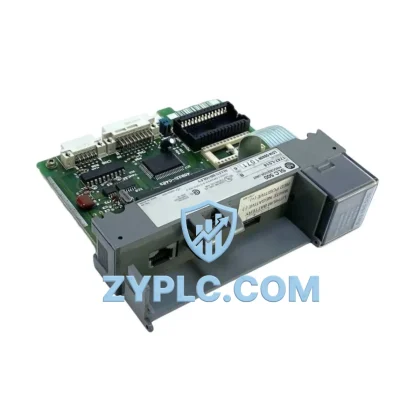
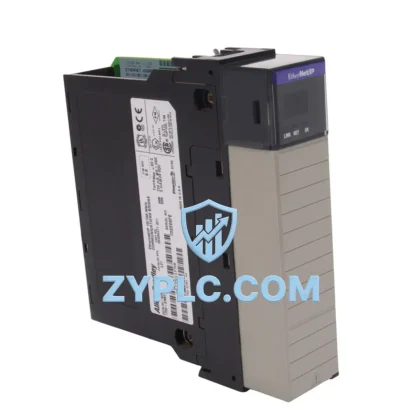
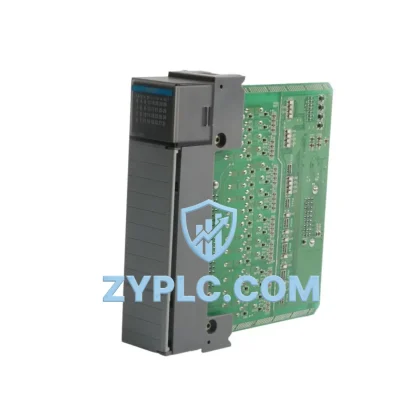
The Allen-Bradley 1746-NT4 is a four-channel thermocouple and millivolt input module engineered for seamless integration within the SLC 500 modular control platform. Designed to occupy a standard 1746 I/O chassis slot, this module serves as a critical node in the thermal signal acquisition layer of a layered automation architecture — bridging field-level sensing elements with the SLC 5/03, SLC 5/04, or SLC 5/05 processor’s data table for real-time process control decisions. Its role extends beyond simple analog input: the 1746-NT4 enables engineers to build thermally aware control loops that interact directly with output modules, communication gateways, and supervisory systems without introducing signal conditioning bottlenecks.
In a complete SLC 500 control system, the 1746-NT4 occupies the I/O layer and communicates with the CPU module through the 1746 backplane. The processor reads thermocouple data — supporting types J, K, E, T, R, S, B, and N — and executes ladder logic routines that govern downstream actuators, variable frequency drives, or relay output modules such as the 1746-OW16. This tight integration between the thermal input layer and the output execution layer is what makes the 1746-NT4 indispensable in temperature-critical processes including furnace control, heat treatment lines, and extrusion systems.
System architects working with the SLC 500 platform frequently pair the 1746-NT4 with the 1746-A13 or 1746-A7 chassis to accommodate mixed I/O configurations. Power distribution within the rack is handled by the 1746-P4 or 1746-P7 power supply modules, which provide the regulated 5 VDC and 24 VDC rails required for stable analog signal processing. Proper power budgeting is essential when deploying the 1746-NT4 alongside high-density digital I/O modules, as thermocouple input modules impose specific backplane current draw requirements that must be accounted for during rack design.
At the network and communication layer, the SLC 5/04 and SLC 5/05 processors support DH+ and Ethernet/IP connectivity respectively, enabling the 1746-NT4’s acquired temperature data to be transmitted upstream to SCADA platforms, historian servers, or HMI terminals such as the PanelView 800 or PanelView Plus 7. This data pathway supports real-time trending, alarm management, and process optimization without requiring additional signal converters or protocol bridges. For installations requiring DeviceNet integration, the 1746-DNB DeviceNet scanner module can be added to the same chassis, extending the system’s field device connectivity while preserving the centralized data architecture.
Redundancy considerations are equally important in high-availability applications. While the SLC 500 platform does not natively support CPU-level redundancy in the same manner as the ControlLogix 1756 family, system designers can implement I/O redundancy strategies by deploying parallel 1746-NT4 modules in separate chassis connected to a common field wiring terminal block. This approach ensures continued temperature monitoring even during module replacement or scheduled maintenance, supporting the 12-Month Warranty service window without process interruption.
From an engineering and commissioning perspective, the 1746-NT4 is configured through RSLogix 500 software, where each channel’s thermocouple type, filter frequency, and open-circuit detection behavior are defined in the module’s configuration file. The module supports 60 Hz and 50 Hz noise rejection filtering, making it suitable for both North American and international installations. Cold junction compensation is performed internally, eliminating the need for external reference junction hardware and simplifying panel wiring. Each channel’s data is mapped to a dedicated input word in the SLC processor’s data table, enabling straightforward ladder logic programming for setpoint comparison, PID loop input, and alarm triggering.
Long-term maintenance efficiency is a defining advantage of the 1746-NT4 within an established SLC 500 infrastructure. Because the module uses the standard 1746 form factor, field replacement requires no chassis modification, no rewiring of the terminal block assembly, and no changes to the processor program — only a channel reconfiguration download via RSLogix 500. This plug-and-play serviceability, combined with the included 12-Month Warranty, significantly reduces mean time to repair (MTTR) in production environments where unplanned downtime carries substantial operational cost.
Inventory availability and supply chain continuity are critical factors for facilities operating legacy SLC 500 systems. ZYPLC maintains dedicated stock of the 1746-NT4 alongside complementary modules including the 1746-NI4, 1746-NI8, and 1746-NO4I, ensuring that engineers can source complete analog I/O configurations from a single supplier. This consolidated sourcing model reduces procurement lead times and simplifies vendor qualification processes for facilities operating under ISO 9001 or IEC 61511 functional safety frameworks.
Architecture Specification Table
| Parameter |
Specification |
| System Role |
Thermocouple / Millivolt Analog Input Module — SLC 500 I/O Layer |
| Compatible Chassis |
1746-A4, 1746-A7, 1746-A10, 1746-A13 |
| Compatible Processors |
SLC 5/01, 5/02, 5/03, 5/04, 5/05 |
| Number of Input Channels |
4 Differential Channels |
| Thermocouple Types Supported |
J, K, E, T, R, S, B, N |
| Millivolt Input Range |
±100 mV |
| Resolution |
16-bit (including sign bit) |
| Cold Junction Compensation |
Internal, automatic |
| Noise Rejection Filter |
50 Hz / 60 Hz selectable |
| Open-Circuit Detection |
Yes, per channel |
| Backplane Current Draw (5 VDC) |
150 mA |
| Backplane Current Draw (24 VDC) |
0 mA |
| Operating Temperature |
0°C to 60°C (32°F to 140°F) |
| Storage Temperature |
-40°C to 85°C |
| Relative Humidity |
5% to 95% non-condensing |
| Communication Interface |
SLC 500 1746 Backplane |
| Configuration Software |
RSLogix 500 |
| Enclosure / Mounting |
1746 Chassis Slot (Single-Slot) |
| Certifications |
UL, CE, CSA |
| Warranty |
12-Month Warranty (ZYPLC) |
Coordinated Control System Design
A well-engineered SLC 500 system built around the 1746-NT4 typically integrates the following coordinated components across multiple architecture layers. At the processing core, the SLC 5/04 processor (1747-L541) executes the ladder logic program that reads the 1746-NT4’s four thermocouple channels and computes control outputs based on configured setpoints and PID parameters. The processor communicates with the I/O chassis via the 1746 backplane at a scan rate determined by the program’s RPI settings.
Power integrity is maintained by the 1746-P4 power supply, which delivers 4A at 5 VDC and 0.96A at 24 VDC — sufficient to support a mixed rack containing the 1746-NT4, digital input modules such as the 1746-IB16, and digital output modules such as the 1746-OB16. For larger chassis configurations, the 1746-P7 power supply provides extended current capacity to accommodate high-density I/O populations.
Analog output control signals generated in response to the 1746-NT4’s temperature readings are transmitted through the 1746-NO4I current output module, which drives 4–20 mA signals to proportional control valves, variable frequency drives, or electropneumatic positioners in the field. This closed-loop thermal control architecture — input module to processor to output module to field actuator — represents the fundamental signal flow in temperature-regulated process systems.
At the human-machine interface layer, a PanelView Plus 7 (2711P series) terminal connected via Ethernet/IP to the SLC 5/05 processor provides operators with real-time temperature displays, trend graphs, and alarm acknowledgment screens. For DH+ connected systems using the SLC 5/04, a PanelView 1000 (2711-T10C8) terminal serves the same supervisory function over the DH+ network.
Field wiring termination is managed through 1492-IFM series interface modules and terminal blocks, which provide a clean, labeled wiring interface between the thermocouple extension cables and the 1746-NT4’s screw terminal connector. This wiring infrastructure simplifies troubleshooting and supports hot-swap maintenance procedures during the module’s operational lifecycle.
Application in Layered Automation Systems
The 1746-NT4 finds its most demanding applications in industries where precise thermal measurement is a prerequisite for product quality and process safety. In metal heat treatment and forging operations, the module monitors furnace zone temperatures across multiple thermocouples simultaneously, enabling the SLC 500 processor to maintain tight temperature uniformity within ±2°C of setpoint — a requirement for achieving consistent metallurgical properties in hardened steel components.
In petrochemical and refinery applications, the 1746-NT4 is deployed in reactor temperature monitoring panels where Type K and Type J thermocouples track exothermic reaction temperatures. The module’s open-circuit detection capability provides an additional safety layer by triggering processor-level alarms when a thermocouple wire breaks, preventing undetected temperature runaway conditions in high-pressure reaction vessels.
For food and beverage processing lines, the module’s support for Type T thermocouples — optimized for low-temperature measurement accuracy — makes it suitable for pasteurization control, cold chain monitoring, and cooking tunnel temperature management. The SLC 500 system’s deterministic scan cycle ensures that temperature deviations are detected and corrected within the process’s required response time.
In power generation and utilities, the 1746-NT4 monitors transformer winding temperatures, motor bearing temperatures, and cooling water temperatures in auxiliary systems. Its integration with the SLC 500 platform allows these measurements to be incorporated into the plant’s DCS or SCADA system via the 1747-SDN DeviceNet scanner or Ethernet/IP gateway, providing plant-wide visibility from a single data source.
Packaging and plastics extrusion lines represent another high-volume application, where barrel zone temperatures must be maintained within narrow bands to ensure consistent melt viscosity and product dimensional accuracy. The 1746-NT4’s four-channel configuration allows a single module to monitor multiple barrel zones, reducing chassis slot consumption and simplifying the overall I/O architecture.
Architecture Engineering FAQ
Q1: Is the 1746-NT4 compatible with all SLC 500 processor generations, and are there any firmware prerequisites for full channel functionality?
The 1746-NT4 is compatible with all SLC 500 processors from the SLC 5/01 through SLC 5/05, provided the chassis and power supply are correctly sized. Configuration is performed through RSLogix 500 (version 7.0 or later recommended), where each channel’s thermocouple type and filter frequency are defined in the module’s configuration file. No special firmware upgrades are required for the processor; however, engineers should verify that the processor’s I/O configuration file matches the physical module type to avoid configuration mismatch faults on startup.
Q2: How does the 1746-NT4 support long-term maintenance and module replacement without disrupting the control system architecture?
The 1746-NT4 uses the standard 1746 single-slot form factor, meaning field replacement requires only the removal of the terminal block connector and insertion of the replacement module — no chassis modification or rewiring is needed. After physical replacement, the RSLogix 500 configuration file is downloaded to restore channel settings. ZYPLC’s 12-Month Warranty covers manufacturing defects and provides advance replacement support, minimizing production downtime during the warranty period. For facilities with critical uptime requirements, maintaining a spare 1746-NT4 in inventory is strongly recommended.
Q3: Can the 1746-NT4 be used in a mixed analog I/O rack alongside other 1746 analog modules, and how should power budgeting be managed?
Yes, the 1746-NT4 can coexist in the same 1746 chassis with other analog modules such as the 1746-NI4 (analog voltage/current input), 1746-NO4I (analog current output), and 1746-NI8 (8-channel analog input). Power budgeting requires summing the 5 VDC backplane current draw of all installed modules and verifying that the total does not exceed the power supply’s rated output. The 1746-NT4 draws 150 mA at 5 VDC; this figure must be included in the rack power budget calculation alongside digital I/O modules and the processor module. The 1746-P4 or 1746-P7 power supply datasheets provide the reference values for maximum allowable backplane current per chassis configuration.
© 2026 ZYPLC. All rights reserved.
Original Source: https://zyplc.com
Contact: +86 19859288691 | [email protected]