Allen-Bradley 1746-OB16 Energy-Saving DC Output Module SLC 500: Precision Output Control for Optimized Production Lines
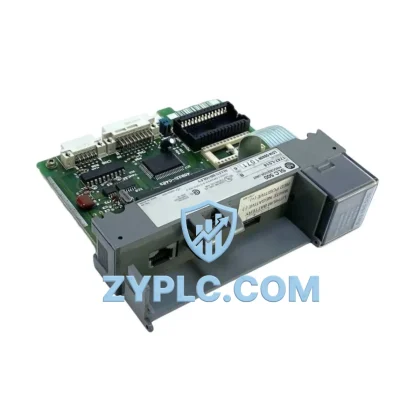
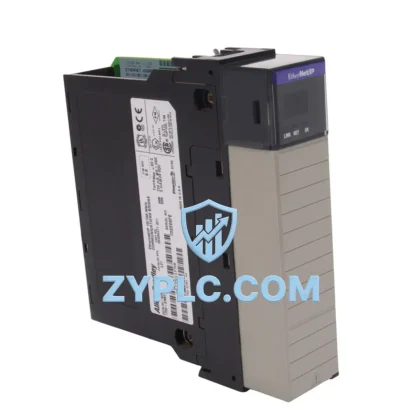
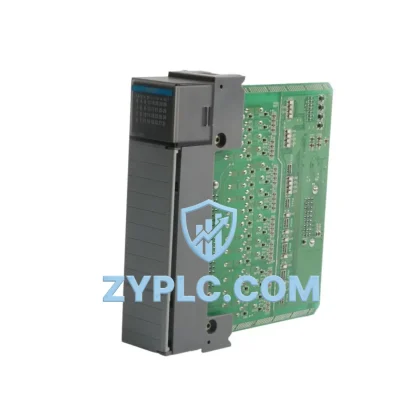
The Allen-Bradley 1746-OB16 is a 16-point 24 VDC sourcing output module engineered for the SLC 500 modular controller platform. In modern industrial environments where energy accountability is no longer optional, the 1746-OB16 delivers deterministic output switching that directly reduces unnecessary actuator energization time, minimizes inrush current events, and supports tighter production cycle control. Whether deployed in discrete manufacturing, material handling, or process-adjacent automation, this module contributes measurably to both equipment utilization rates and energy efficiency targets.
Efficiency Performance Table
| Parameter |
Specification |
| Output Points |
16 (Sourcing, 24 VDC) |
| Output Current per Point |
0.5 A continuous |
| Total Module Current |
4 A max (all outputs ON) |
| Backplane Current Draw |
120 mA @ 5 VDC |
| Operating Efficiency |
High — solid-state switching, no mechanical wear |
| Compatible Systems |
Allen-Bradley SLC 500 (1746 chassis), RSLogix 500, Studio 5000 (via gateway) |
| Application Environments |
Discrete manufacturing, conveyor control, packaging lines, HVAC actuation |
| Energy Saving Value |
Eliminates relay coil losses; supports output-level diagnostics for idle load detection |
| Operating Temperature |
0°C to 60°C |
| Warranty |
12-Month Warranty — tested and verified before shipment |
Energy-Aware Automation Architecture
The 1746-OB16 does not operate in isolation — its energy efficiency contribution is amplified when integrated within a well-structured SLC 500 or hybrid control architecture. In a typical energy-conscious production cell, the module sits within a 1746 chassis alongside analog input modules such as the 1746-NI4, which captures real-time process variables including motor load feedback and temperature signals. These inputs feed directly into the SLC 500 CPU — commonly a 1747-L543 or 1747-L553 processor — which executes ladder logic routines that govern when outputs are energized, for how long, and under what load conditions.
On the drive side, the 1746-OB16 output signals are frequently used to command PowerFlex 40 or PowerFlex 525 variable frequency drives via discrete start/stop and direction control lines. This combination allows the PLC to modulate motor speed based on actual demand rather than running motors at full speed continuously — a primary source of energy waste in older fixed-speed installations. When paired with a 1746-IB16 DC input module monitoring feedback from proximity sensors and encoder-based position systems, the control loop becomes closed and responsive, reducing both overshoot and unnecessary actuator hold times.
For facilities implementing energy monitoring at the panel level, the 1746-OB16 architecture integrates naturally with PowerMonitor 500 or PowerMonitor 1000 units connected via the DH-485 network. These devices provide per-circuit power consumption data that RSLogix 500 programs can use to trigger load-shedding routines during peak demand windows. Communication between the SLC 500 rack and supervisory systems is typically handled through a 1747-SDN DeviceNet scanner or a 1761-NET-ENI Ethernet interface, enabling integration with FactoryTalk View or third-party SCADA platforms for centralized energy dashboards.
In packaging and conveyor applications, the 1746-OB16 controls solenoid valves, brake relays, and indicator lamps — loads that, when managed with precise on/off timing rather than continuous energization, yield measurable reductions in standby power consumption. Combining this module with a 1746-OW16 relay output module for higher-current loads allows system designers to allocate solid-state outputs to high-cycle, energy-sensitive actuators while reserving relay contacts for infrequent, high-power switching events.
Power Optimization in Real Production Lines
In a real-world automotive parts assembly line, a facility running three SLC 500 racks with 1746-OB16 modules replaced legacy relay panels controlling conveyor divert gates and part-present indicators. The result was a reduction in panel heat dissipation — previously generated by relay coil losses — and a measurable decrease in cooling load for the electrical enclosure. Because solid-state outputs switch in microseconds rather than milliseconds, the production line’s cycle time tightened by eliminating the mechanical delay inherent in relay-based output stages.
In food and beverage processing, the 1746-OB16 manages pneumatic valve banks that control filling, capping, and labeling sequences. By programming output pulse widths precisely in RSLogix 500 — rather than relying on mechanical timers — engineers reduced compressed air consumption by eliminating over-extended valve open times. Compressed air generation is one of the largest energy costs in process plants, and output-level precision directly translates to compressor runtime reduction.
Predictive maintenance integration is another energy optimization lever. When the SLC 500 system logs output cycle counts through the 1746-OB16, maintenance teams can identify actuators approaching end-of-life before they fail and cause unplanned downtime. Unplanned stops force machines to restart from cold states, consuming significantly more energy during ramp-up than steady-state operation. Proactive replacement schedules, informed by output cycle data, keep lines running at optimal efficiency.
Every unit supplied by ZYPLC undergoes pre-shipment functional testing — output switching verification, backplane communication check, and load current validation — before dispatch. Stock is maintained for fast global shipping, and all 1746-OB16 modules are covered by a 12-Month Warranty, ensuring your production investment is protected from day one.
Energy Optimization FAQ
Q1: How does the 1746-OB16 contribute to energy savings compared to relay-based output panels?
Solid-state DC outputs eliminate the continuous coil current draw of electromechanical relays, which typically consume 1–3 W per coil. In a 16-point panel, this can represent 16–48 W of constant parasitic load. The 1746-OB16 replaces this with transistor switching that draws negligible quiescent current, reducing panel heat generation and lowering enclosure cooling requirements simultaneously.
Q2: Is the 1746-OB16 compatible with current SLC 500 chassis and processors?
Yes. The 1746-OB16 is compatible with all 1746-series chassis (4-slot through 13-slot) and all SLC 500 processors including the 1747-L20, 1747-L30, 1747-L40, 1747-L541, and 1747-L553 series. It is configured and programmed using RSLogix 500 software and is fully supported in existing SLC 500 installations without hardware modification.
Q3: Can the 1746-OB16 replace a faulty output module without reprogramming the SLC 500 CPU?
In most cases, yes. Because the 1746-OB16 is a direct slot-replacement module within the SLC 500 platform, swapping a failed module with a replacement unit of the same type does not require CPU program changes. The processor retains its I/O configuration and resumes normal operation after the replacement module is seated and the rack is powered. ZYPLC recommends verifying the I/O configuration file in RSLogix 500 after any hardware replacement as a standard commissioning step.
Q4: What does the 12-Month Warranty cover, and what is the testing process before shipment?
All 1746-OB16 units supplied by ZYPLC are tested for output switching function, backplane communication integrity, and rated load current handling prior to dispatch. The 12-Month Warranty covers hardware defects and functional failures under normal operating conditions. Units that fail within the warranty period are replaced or repaired at no additional cost. Customers receive shipment documentation including test confirmation upon request.
© 2026 ZYPLC. All rights reserved.
Original Source: https://zyplc.com
Contact: +86 19859288691 | plc.sales@zyplc.com