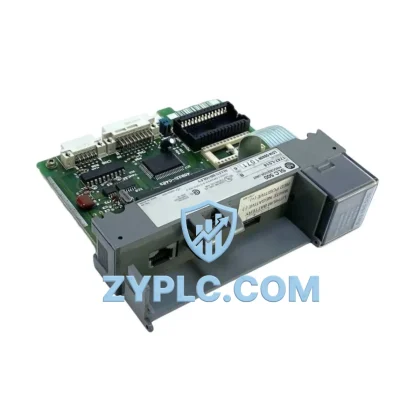
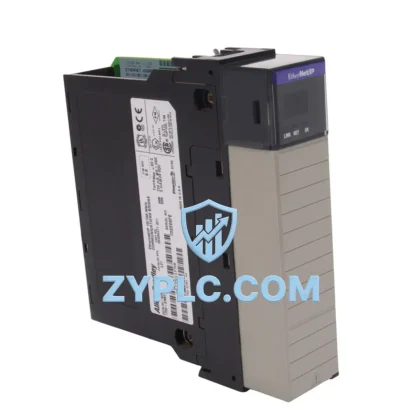
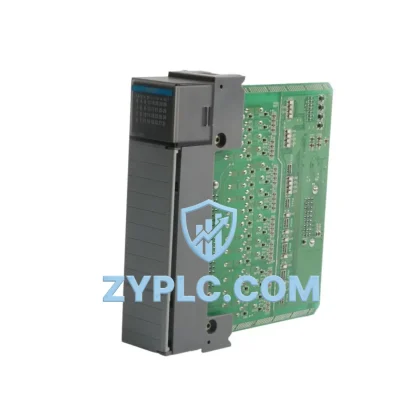
Allen-Bradley 1746-OB16E System-Ready DC Output for SLC 500 Architecture
The Allen-Bradley 1746-OB16E is a 16-point, 10–50V DC solid-state digital output module engineered for seamless integration within the SLC 500 modular control platform. Designed to operate within the 1746 I/O chassis family, this module occupies a single slot and delivers reliable, high-density discrete output capability across demanding industrial environments. Rather than functioning as a standalone component, the 1746-OB16E is conceived as a system-level building block — one that coordinates with upstream CPU logic, downstream field devices, and adjacent I/O modules to sustain continuous, deterministic control across the full automation architecture.
In a layered SLC 500 system, the 1746-OB16E interfaces directly with the processor module — typically a 1747-L532 or 1747-L543 CPU — through the 1746 backplane, enabling scan-cycle-synchronized output switching with minimal latency. The backplane serves as the high-speed communication spine of the rack, and the 1746-OB16E’s solid-state output design ensures that switching transients do not propagate back into the backplane or affect adjacent analog or specialty modules. This electrical isolation is critical in mixed-signal racks where analog input modules such as the 1746-NI8 or 1746-NO4I share the same chassis.
At the I/O layer, the 1746-OB16E drives field devices including solenoid valves, motor starter coils, indicator lamps, and relay inputs. Its 16 individually fused output channels — each rated at 1A continuous — allow engineers to distribute load across multiple actuator circuits without requiring external relay banks, reducing panel footprint and wiring complexity. When paired with 1492 wiring systems or 1492-IFM interface modules, field termination becomes modular and maintainable, supporting rapid replacement during scheduled maintenance windows without disturbing adjacent wiring.
From a network and communication perspective, the 1746-OB16E operates within systems managed by the 1747-SDN DeviceNet Scanner or 1747-SN Remote I/O Scanner, enabling distributed I/O architectures where the SLC 500 processor controls remote racks across a plant floor. In such configurations, the output module’s response time remains consistent regardless of physical distance from the CPU, provided the network scan rate is correctly configured. For facilities running DH+ or DH-485 networks, the 1747-KE or 1747-AIC link couplers maintain communication integrity between the SLC 500 processor and operator interface terminals such as the PanelView 550 or PanelView 600 HMI, giving operators real-time visibility into output channel states.
Power architecture is equally important to system reliability. The 1746-OB16E requires a stable 24V DC field power supply — typically sourced from a 1606-XLP or equivalent DIN-rail power supply — that is isolated from the backplane logic supply. Proper power zoning, with separate fusing for field power and backplane power, ensures that a field-side fault does not cascade into the processor or communication modules. In redundant power configurations, dual-feed arrangements with automatic switchover protect against single-point power failures in critical process applications.
For system architects designing redundant or high-availability control systems, the 1746-OB16E can be deployed in parallel output configurations where two modules drive the same field device through diode-OR circuits, providing output redundancy without requiring a full hot-standby PLC platform. This approach is common in water treatment, chemical dosing, and power distribution applications where unplanned output failures carry significant operational or safety consequences.
Long-term maintainability is a core design consideration for any SLC 500 system. The 1746-OB16E’s modular form factor allows field replacement in under five minutes without tools, and its LED status indicators — one per output channel — enable rapid fault isolation during commissioning and troubleshooting. Maintenance engineers can identify a failed output channel visually before connecting a laptop or handheld programmer, reducing mean time to repair in environments where downtime is measured in production losses per minute.
ZYPLC maintains verified stock of the 1746-OB16E and supports global procurement for system integrators, OEMs, and end users requiring both new and refurbished units. All units supplied by ZYPLC are covered by a 12-Month Warranty and undergo functional verification prior to shipment, ensuring that modules arrive ready for rack installation and system commissioning without additional incoming inspection overhead.
Architecture Specification Table
| Parameter |
Specification |
| System Role |
Discrete DC Output Module — SLC 500 Control Layer |
| Output Points |
16 Outputs (individually fused) |
| Output Voltage Range |
10–50V DC |
| Output Current (per point) |
1A continuous |
| Output Type |
Solid-State (Transistor, Sourcing) |
| Backplane Compatibility |
1746 I/O Chassis (1-slot) |
| Communication |
SLC 500 Backplane (DH+, DH-485, DeviceNet via scanner) |
| Isolation |
Optical isolation between field and logic circuits |
| Operating Temperature |
0°C to 60°C |
| Mounting |
1746 Modular Chassis, Single Slot |
| Certifications |
UL, CE, CSA |
| Warranty |
12-Month Warranty (ZYPLC Verified) |
Coordinated Control System Design
The 1746-OB16E achieves its full value when integrated within a coordinated SLC 500 system architecture. A typical deployment begins with a 1747-L543 CPU as the central processing unit, executing ladder logic programs that generate output commands based on input conditions gathered from modules such as the 1746-IB16 24V DC digital input module or the 1746-NI8 analog input module. The CPU’s scan cycle writes output data to the 1746-OB16E’s output image table, which the module then translates into physical switching events on its 16 output channels.
The 1746-A13 chassis provides the physical backplane and slot infrastructure that houses the CPU, power supply, and I/O modules in a unified assembly. The 1746-P2 power supply delivers regulated 5V DC backplane power and 24V DC auxiliary power, supporting mixed I/O configurations within the same rack. For applications requiring expanded I/O beyond a single chassis, the 1747-SN Remote I/O Scanner extends the SLC 500’s I/O capacity to remote racks, where additional 1746-OB16E modules can be installed to control field devices distributed across a large machine or plant section.
Communication with operator interfaces is managed through the 1747-KE DH-485 to RS-232 Interface, which connects the SLC 500 network to PanelView 550 or PanelView 600 HMI terminals. These terminals display real-time output channel status, alarm conditions, and process variables, enabling operators to monitor and interact with the control system without requiring direct access to the PLC rack. In facilities using DeviceNet for distributed I/O, the 1747-SDN DeviceNet Scanner manages network communication, allowing the SLC 500 processor to control remote output modules and smart field devices across a single network segment.
Application in Layered Automation Systems
The 1746-OB16E is deployed across a wide range of industrial sectors where reliable discrete output control is essential to process integrity. In manufacturing and assembly automation, the module drives pneumatic solenoid valves, conveyor motor starters, and part-present indicator lamps in high-cycle applications where output switching occurs thousands of times per shift. Its solid-state design eliminates the mechanical wear associated with relay-based output modules, extending service intervals and reducing unplanned downtime on high-throughput production lines.
In water and wastewater treatment facilities, the 1746-OB16E controls pump motor starters, valve actuators, and chemical dosing systems within SLC 500-based SCADA architectures. The module’s optical isolation and individual channel fusing protect the control system from the electrical noise and ground faults common in wet process environments, where field wiring runs long distances through conduit shared with power cables.
In power distribution and electrical substation applications, the module provides switching control for circuit breaker trip coils, alarm annunciators, and status indication panels. Its wide DC voltage range (10–50V DC) accommodates the varied field power standards found in utility and industrial power systems, reducing the need for intermediate signal conditioning.
For oil, gas, and petrochemical process control, the 1746-OB16E integrates into SLC 500 systems managing compressor control panels, emergency shutdown sequences, and process valve actuation. In these safety-critical environments, the module’s deterministic response time and individual channel diagnostics support both normal operations and fault-response sequences.
In mining and metals processing, the module controls conveyor belt drives, crusher motor starters, and ore handling equipment within harsh environments characterized by vibration, dust, and wide temperature swings. The SLC 500 platform’s proven reliability in these conditions, combined with the 1746-OB16E’s robust output design, makes it a preferred choice for brownfield modernization projects where system continuity and spare parts availability are primary concerns.
Architecture Engineering FAQ
Q1: Is the 1746-OB16E compatible with all SLC 500 chassis and CPU combinations?
The 1746-OB16E is compatible with all standard 1746 I/O chassis, including the 1746-A4, 1746-A7, 1746-A10, and 1746-A13, and operates with all SLC 500 processor families from the SLC 5/01 through SLC 5/05. No special configuration is required beyond standard I/O addressing in RSLogix 500 or RSLogix Micro. The module occupies one I/O slot and is automatically recognized by the processor during power-up configuration.
Q2: Can the 1746-OB16E be used in a redundant output architecture, and what are the wiring requirements?
Yes. For redundant output applications, two 1746-OB16E modules can be configured to drive the same field device through diode-OR output circuits, where each module independently controls the same actuator. This approach requires careful ladder logic design to ensure both modules receive synchronized output commands, and field wiring must include blocking diodes to prevent back-feed between the two output circuits. ZYPLC’s technical team can provide application guidance for redundant output configurations upon request.
Q3: What does the 12-Month Warranty cover, and how is a warranty claim processed?
All 1746-OB16E units supplied by ZYPLC are covered by a 12-Month Warranty from the date of shipment, covering manufacturing defects, functional failures under normal operating conditions, and premature component failure. Warranty claims are initiated by contacting ZYPLC’s technical support team, who will issue a return authorization and arrange for module testing and replacement or repair. Units that have been subjected to overvoltage, incorrect installation, or physical damage are evaluated on a case-by-case basis. ZYPLC aims to resolve all warranty claims within 10 business days of receiving the returned unit.
© 2026 ZYPLC. All rights reserved.
Original Source: https://zyplc.com
Contact: +86 19859288691 | [email protected]