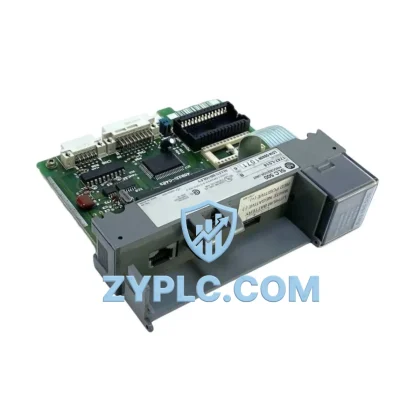
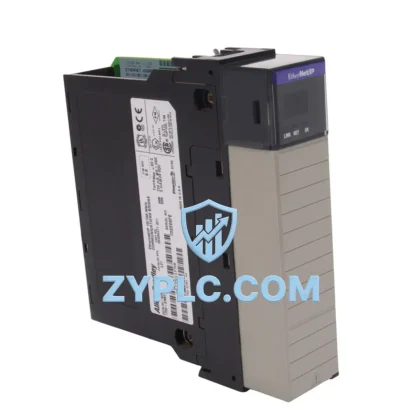
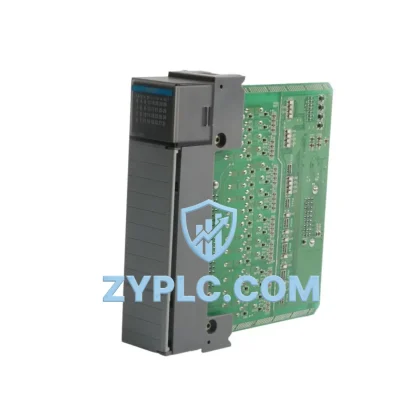
Allen-Bradley 1746-P3 System-Ready Power Supply for SLC 500 Architecture
In any layered industrial automation environment, power integrity is the foundation upon which every control decision rests. The Allen-Bradley 1746-P3 is a high-capacity power supply module purpose-built for the SLC 500 modular chassis system, delivering stable, regulated DC power to the processor, I/O modules, and communication adapters that form the backbone of your control architecture. Whether deployed in a standalone machine control cabinet or integrated into a distributed plant-wide SCADA network, the 1746-P3 ensures that every upstream and downstream component operates within its rated electrical envelope — consistently, reliably, and without interruption.
The SLC 500 platform, anchored by processors such as the 1747-L532 and 1747-L543, depends on a power supply that can sustain full backplane current capacity across all populated slots. The 1746-P3 provides 10A at 5VDC and 2A at 24VDC, making it the preferred choice for fully loaded 10-slot chassis configurations using the 1746-A10. When paired with digital input modules such as the 1746-IB16 or analog output modules like the 1746-NO4I, the 1746-P3 maintains voltage stability even under dynamic load conditions — a critical requirement in process control environments where signal accuracy directly affects product quality and safety compliance.
From a system architecture perspective, the 1746-P3 occupies the power layer — the lowest and most foundational tier of the automation hierarchy. Above it, the control layer is managed by the SLC 5/03 or SLC 5/05 processor, which executes ladder logic programs and manages I/O scanning cycles. The I/O layer, populated with modules such as the 1746-OB16 discrete output module and 1746-NI4 analog input module, interfaces directly with field devices including sensors, actuators, and transmitters. The communication layer, often implemented via a 1747-SDN DeviceNet Scanner or a 1747-KE DH-485 to RS-232 interface module, enables the SLC 500 to exchange data with upstream SCADA systems, HMI panels, and peer controllers. All of these layers draw their operational stability from the power supply — making the 1746-P3 a system-critical component rather than a peripheral accessory.
In redundant architecture designs, engineers often specify dual-chassis configurations where a secondary SLC 500 rack — also powered by a 1746-P3 — mirrors the primary system. This approach is common in water treatment facilities, chemical processing plants, and power distribution substations where unplanned downtime carries significant operational and regulatory consequences. The 1746-P3’s consistent output characteristics make it straightforward to validate power budgets across both primary and redundant racks, simplifying the engineering review process and reducing commissioning time.
For human-machine interface integration, the SLC 500 system typically connects to PanelView terminals or third-party HMI platforms via DH-485 or Ethernet/IP. The 1746-P3 supports the backplane current demands introduced by communication modules such as the 1747-SCNR Ethernet/IP Scanner, ensuring that adding network connectivity does not compromise the power budget of the existing I/O configuration. This is particularly important in retrofit projects where engineers are expanding legacy SLC 500 systems to support modern supervisory networks without replacing the entire control platform.
Long-term maintenance efficiency is another key advantage of specifying the 1746-P3 within a standardized SLC 500 architecture. Because the module is form-factor compatible with all 1746-series chassis variants — including the 1746-A4, 1746-A7, and 1746-A13 — maintenance teams can stock a single power supply SKU to cover multiple machine types across a facility. This reduces spare parts inventory complexity, shortens mean time to repair, and supports a predictable lifecycle management strategy. All units supplied by ZYPLC are tested, verified against original Allen-Bradley specifications, and covered by a 12-Month Warranty, giving procurement and engineering teams confidence in both product authenticity and post-sale support.
From an installation standpoint, the 1746-P3 mounts directly into the leftmost slot of the SLC 500 chassis and requires no additional configuration. Input voltage acceptance ranges from 85 to 265VAC at 47–63Hz, providing compatibility with global power infrastructure and eliminating the need for external voltage conversion in international deployments. The module’s internal thermal management design supports operation in ambient temperatures up to 60°C, making it suitable for installation in control cabinets located in hot, dusty, or vibration-prone industrial environments such as mining operations, steel mills, and offshore platforms.
Whether you are designing a new SLC 500 system from the ground up, expanding an existing installation, or sourcing a verified replacement for a failed unit, the Allen-Bradley 1746-P3 represents a proven, architecture-aligned solution. Its role in sustaining Contextual Integration across the control, I/O, communication, and HMI layers of the SLC 500 platform makes it indispensable to engineers who prioritize system consistency, long-term reliability, and total cost of ownership.
Architecture Specification Table
| Parameter |
Specification |
| System Role |
Backplane Power Supply — SLC 500 Modular Chassis |
| Output: 5VDC |
10A (backplane logic power) |
| Output: 24VDC |
2A (field device auxiliary power) |
| Input Voltage Range |
85–265VAC, 47–63Hz (universal input) |
| Compatible Chassis |
1746-A4, 1746-A7, 1746-A10, 1746-A13 |
| Compatible Processors |
SLC 5/01, 5/02, 5/03, 5/04, 5/05 (1747-L series) |
| Operating Temperature |
0°C to 60°C |
| Communication Support |
Supports backplane current for DH-485, DeviceNet, Ethernet/IP modules |
| Installation |
Leftmost chassis slot, no software configuration required |
| Certifications |
UL Listed, CE Marked, cUL |
| Warranty |
12-Month Warranty (ZYPLC) |
Coordinated Control System Design
The 1746-P3 is engineered to power a complete SLC 500 control node, and its specification must be evaluated in the context of the full module complement it supports. A typical fully loaded architecture might include the 1747-L543 SLC 5/04 processor as the primary control engine, executing scan cycles across a mix of 1746-IB16 24VDC digital input modules and 1746-OB16 digital output modules that interface with field-level sensors and actuators. Analog signal conditioning is handled by modules such as the 1746-NI4 analog input module and 1746-NO4I analog output module, which require stable 5VDC backplane power to maintain 12-bit resolution accuracy.
Network connectivity is typically extended through a 1747-SCNR Ethernet/IP Scanner module or a 1747-SDN DeviceNet Scanner, both of which draw additional backplane current that must be accounted for in the power budget calculation. Terminal block assemblies and wiring duct systems within the control cabinet complete the physical installation, while the 1746-A10 10-slot chassis provides the mechanical and electrical backplane that ties all modules together under the 1746-P3’s power envelope. For applications requiring operator interaction, a PanelView 550 or PanelView 600 HMI terminal connects via DH-485 to the SLC processor, with the communication interface module drawing its logic power from the same backplane supply.
Application in Layered Automation Systems
The Allen-Bradley 1746-P3 is deployed across a wide range of industrial sectors where the SLC 500 platform remains the control standard of choice. In municipal water treatment facilities, the 1746-P3 powers SLC 500 nodes that manage pump sequencing, valve control, and flow metering — applications where power supply reliability directly affects regulatory compliance and public safety. In oil and gas processing plants, the module supports SLC 500 systems controlling separator vessels, compressor stations, and emergency shutdown logic, where the 60°C ambient rating and universal AC input are essential for remote installation environments.
In metals and mining operations, the 1746-P3 is commonly found in conveyor control panels, crusher automation systems, and ore processing lines, where vibration, dust, and wide temperature swings demand a power supply with robust electrical and mechanical design. Packaging and material handling lines in food and beverage manufacturing rely on SLC 500 systems powered by the 1746-P3 to coordinate servo drives, vision systems, and reject mechanisms at high cycle rates. In power generation and distribution substations, the module supports protection relay interface panels and load management controllers where uninterrupted backplane power is a non-negotiable system requirement.
Architecture Engineering FAQ
Q1: Is the 1746-P3 compatible with all SLC 500 chassis sizes, and how do I verify the power budget for my configuration?
The 1746-P3 is compatible with all 1746-series modular chassis, including the 1746-A4, 1746-A7, 1746-A10, and 1746-A13. To verify the power budget, sum the 5VDC and 24VDC current draw values listed in the datasheet for each installed module — including the processor, all I/O modules, and any communication adapters. The total must not exceed 10A at 5VDC and 2A at 24VDC. Allen-Bradley’s SLC 500 System Overview manual (publication 1747-UM011) provides a power budget worksheet for this calculation.
Q2: Can the 1746-P3 be used in a redundant SLC 500 architecture, and what is the recommended configuration?
Yes. Redundant SLC 500 architectures typically use two independent chassis, each with its own 1746-P3 power supply, operating in a hot-standby or warm-standby configuration managed by a redundancy module or external logic. The 1746-P3’s consistent output specifications make it straightforward to validate that both primary and secondary racks operate within identical electrical parameters, which is a prerequisite for certified redundant control system designs in process industries.
Q3: What does the 12-Month Warranty cover, and what is the process for warranty claims?
All Allen-Bradley 1746-P3 units supplied by ZYPLC are covered by a 12-Month Warranty from the date of shipment. The warranty covers defects in materials and workmanship under normal operating conditions. In the event of a warranty claim, contact ZYPLC at plc.sales@zyplc.com or +86 19859288691 with your order reference and a description of the fault. ZYPLC will arrange for inspection, repair, or replacement at no additional cost within the warranty period.
© 2026 ZYPLC. All rights reserved.
Original Source: https://zyplc.com
Contact: +86 19859288691 | plc.sales@zyplc.com