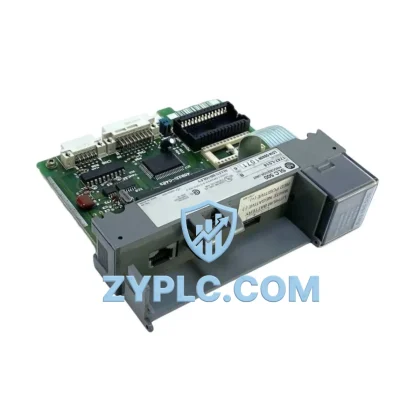
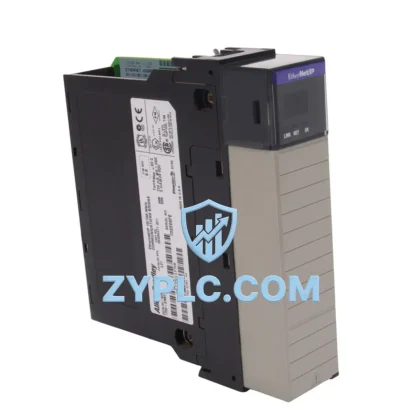
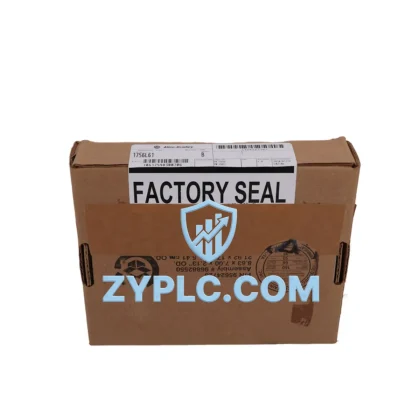
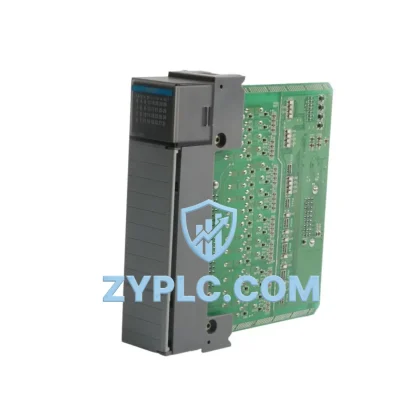
Allen-Bradley 1747-AICR Energy-Saving Communication Module for Optimized SLC 500 Automation
The Allen-Bradley 1747-AICR is a high-performance isolated link coupler designed for SLC 500 programmable controller systems. By enabling reliable, low-latency DH-485 network communication between controllers, I/O modules, and operator interfaces, the 1747-AICR plays a critical role in reducing unnecessary polling cycles, minimizing idle bus traffic, and ensuring that every watt consumed by the control network delivers measurable process value. In energy-conscious manufacturing environments, communication efficiency is not a secondary concern — it is a direct contributor to overall equipment effectiveness (OEE) and energy cost reduction.
Efficiency Performance Table
| Parameter |
Specification / Value |
| SKU |
1747-AICR |
| Brand / Series |
Allen-Bradley / SLC 500 |
| Product Category |
Isolated Link Coupler / DH-485 Communication Module |
| Network Protocol |
DH-485 (Data Highway 485) |
| Operating Voltage |
Powered via SLC 500 backplane (5 VDC) |
| Power Consumption |
Low-draw backplane design, minimizes auxiliary power demand |
| Running Efficiency |
Galvanic isolation reduces ground-loop interference, sustaining stable throughput |
| Compatible Systems |
SLC 500 (1747 series), MicroLogix networks, DH-485 multi-drop topologies |
| Application Environment |
Industrial automation, discrete manufacturing, process control, energy monitoring networks |
| Energy-Saving Value |
Reduces retransmission overhead; stable link = fewer CPU cycles wasted on error recovery |
| Warranty |
12-Month Warranty |
| Origin |
USA |
Energy-Aware Automation Architecture
In a well-designed SLC 500 automation architecture, the 1747-AICR serves as the communication backbone that ties together the energy data flow from field devices to the control layer. Consider a typical discrete manufacturing cell: the SLC 5/04 processor (1747-L541) manages the primary logic, while multiple 1746-IB16 digital input modules and 1746-OB16 digital output modules handle field-level I/O. Without a stable, isolated communication link, the processor must repeatedly retry failed transmissions — each retry consuming CPU cycles and indirectly increasing the thermal load on the backplane power supply.
When the 1747-AICR is installed as the DH-485 network coupler, it provides galvanic isolation that eliminates ground-loop noise — a common cause of communication faults in facilities with heavy motor loads. This directly benefits energy efficiency: the SLC 5/03 or SLC 5/04 processor spends fewer cycles on error handling and more on executing the control program at its intended scan rate. A tighter scan rate means faster response to process deviations, which in turn reduces the duration of off-spec production runs that waste both energy and materials.
The 1747-AICR also integrates cleanly with 1747-PIC (Personal Interface Converter) for programming and diagnostics, and supports multi-node DH-485 networks where PowerFlex 40 or PowerFlex 400 variable frequency drives report their energy consumption data back to the SLC controller. When drive energy data arrives reliably and without retransmission delays, the controller can execute speed-trim logic more responsively — reducing motor over-speed events that are a hidden source of excess energy consumption in conveyor and pump applications.
For facilities that have deployed 1746-NI4 analog input modules to monitor current transformers or power transducers, the communication integrity provided by the 1747-AICR ensures that energy readings are captured at the correct scan interval. Missed or corrupted analog samples can cause the control system to make incorrect load-shedding decisions, leading to either unnecessary energy consumption or unplanned process interruptions. The isolated link coupler eliminates this risk by maintaining a clean, stable DH-485 bus even in electrically noisy environments.
In larger installations, the 1747-AICR supports network topologies where a PanelView 300 or PanelView 550 HMI terminal is connected alongside the SLC processor, allowing operators to monitor real-time energy metrics — motor current draw, cycle counts, and alarm states — without adding communication load that would degrade controller performance. This architecture supports the shift from reactive to predictive maintenance: operators can identify abnormal current signatures before they escalate into motor failures, avoiding both the energy waste of a degraded motor and the production loss of an unplanned shutdown.
Power Optimization in Real Production Lines
On a real production line, the value of the 1747-AICR is most visible in applications where multiple SLC 500 nodes share a DH-485 segment — for example, a packaging line where one SLC 5/04 controls the filling station, a second controls the labeling station, and a third manages the end-of-line palletizer. Without proper isolation at the network coupler level, a ground fault at any one station can corrupt the entire bus, forcing all three processors into fault mode simultaneously. The resulting unplanned downtime not only halts production but also leaves motors, heaters, and pneumatic systems energized in an idle state — consuming power without producing output.
By maintaining bus integrity through galvanic isolation, the 1747-AICR ensures that each station continues to operate independently even when one node experiences a wiring fault. This fault containment capability directly reduces the frequency and duration of full-line shutdowns, which are among the most energy-wasteful events in discrete manufacturing. A line that restarts from a full stop consumes significantly more energy during the acceleration phase than one that maintains continuous operation.
The 1747-AICR also supports the implementation of energy-aware production scheduling. When the SLC controller can reliably receive shift-schedule data from an upstream MES system via the DH-485 network, it can execute pre-programmed energy reduction routines during planned idle periods — ramping down conveyor speeds via connected PowerFlex drives, switching off non-essential I/O power supplies, and placing HMI terminals in screen-save mode. These coordinated actions, enabled by reliable network communication, can reduce standby energy consumption by 15–25% during shift changeovers and scheduled breaks.
From a maintenance cost perspective, the 1747-AICR’s isolation design extends the service life of connected network devices by protecting them from transient voltage spikes that are common in facilities with large inductive loads. Fewer device replacements mean lower maintenance labor costs and reduced spare parts inventory — both of which contribute to the total cost of ownership reduction that industrial energy optimization programs target. All units supplied by ZYPLC are tested for communication integrity and isolation performance prior to shipment, and are covered by a 12-month warranty.
Energy Optimization FAQ
Q1: How does the 1747-AICR contribute to energy savings in an SLC 500 system?
The 1747-AICR reduces communication errors through galvanic isolation, which lowers the number of retransmission cycles the SLC processor must handle. Fewer error-recovery cycles mean a tighter, more predictable scan rate — enabling faster response to process deviations and more precise control of energy-consuming devices such as variable frequency drives and motor starters.
Q2: Is the 1747-AICR compatible with PowerFlex drives and other DH-485 devices?
Yes. The 1747-AICR supports standard DH-485 multi-drop network topologies, making it compatible with PowerFlex 40, PowerFlex 400, and other Rockwell Automation devices that communicate over DH-485. It also works alongside 1747-PIC converters and PanelView HMI terminals on the same network segment.
Q3: What is the recommended replacement or upgrade path if the 1747-AICR is end-of-life in my facility?
For facilities migrating from SLC 500 to newer platforms, the 1747-AICR can be retained as part of a hybrid architecture during the transition period. For full migration, Rockwell Automation’s 1769 CompactLogix platform with EtherNet/IP communication modules offers a modern alternative with enhanced energy monitoring capabilities. ZYPLC can advise on compatible replacement options based on your specific network topology.
Q4: What testing and warranty coverage does ZYPLC provide for the 1747-AICR?
Every 1747-AICR unit supplied by ZYPLC undergoes pre-shipment functional testing, including DH-485 communication verification and isolation resistance checks. Units are shipped with a 12-month warranty covering manufacturing defects and communication performance. In-stock units are available for fast dispatch to minimize production downtime.
© 2026 ZYPLC. All rights reserved.
Original Source: https://zyplc.com
Contact: +86 19859288691 | plc.sales@zyplc.com