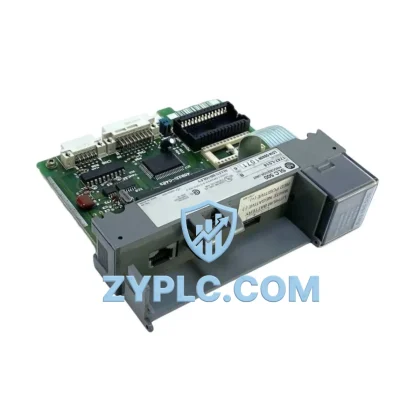
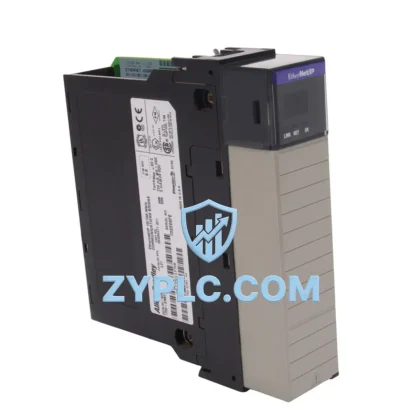
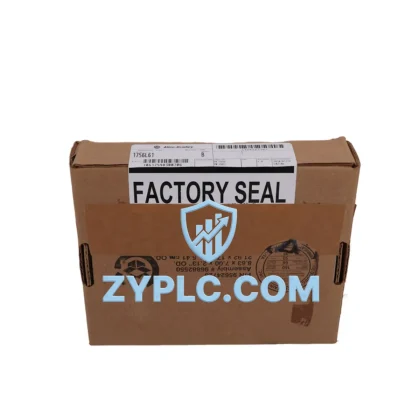
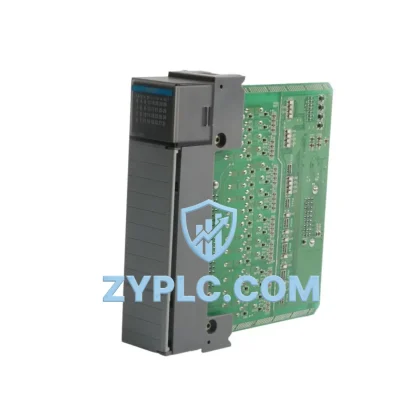
Allen-Bradley 1747-ASB System-Ready Remote I/O Adapter for SLC 500 Architecture
In a well-engineered industrial control system, every layer must communicate with precision and reliability. The Allen-Bradley 1747-ASB Remote I/O Adapter is a foundational component in the SLC 500 control architecture, purpose-built to extend the reach of the SLC 500 CPU into distributed field environments without compromising signal integrity, scan cycle performance, or system-wide data consistency. Whether deployed in a compact manufacturing cell or a multi-zone process control installation, the 1747-ASB enables seamless I/O expansion across physical distances — bridging the gap between the control layer and the field device layer with proven Allen-Bradley Remote I/O (RIO) protocol reliability.
Architecture Specification Table
| Attribute |
Specification |
| System Role |
Remote I/O Adapter — Distributed I/O Node for SLC 500 Systems |
| Compatible CPU |
Allen-Bradley SLC 500 Series (SLC 5/02, 5/03, 5/04, 5/05) |
| Communication Protocol |
Allen-Bradley Remote I/O (RIO) — 57.6K / 115.2K / 230.4K baud |
| I/O Chassis Compatibility |
1746 SLC 500 I/O Chassis (up to 30 I/O modules per node) |
| Network Topology |
Daisy-chain, multi-drop RIO trunk cable |
| Rack Address Configuration |
DIP switch selectable — up to 32 logical rack addresses |
| Power Supply Requirement |
Powered via 1746 I/O chassis backplane (1746-P series) |
| Operating Temperature |
0°C to 60°C (32°F to 140°F) |
| Mounting |
Installs in Slot 0 of 1746 I/O chassis |
| Warranty |
12-Month Warranty — Tested before shipment |
Coordinated Control System Design
The 1747-ASB does not operate in isolation — it is the remote node anchor that makes distributed SLC 500 architectures possible. In a typical system layout, the SLC 5/04 or SLC 5/05 CPU housed in the main 1746 chassis communicates over the RIO trunk cable to one or more 1747-ASB adapters installed at remote 1746 I/O chassis locations across the plant floor. Each remote chassis can be populated with a full range of 1746 I/O modules: digital input modules such as the 1746-IB16 and 1746-IA16, digital output modules like the 1746-OB16, and analog I/O modules including the 1746-NI4 and 1746-NO4I for process variable monitoring and control signal generation.
The 1746-P2 or 1746-P4 power supply installed in each remote chassis provides stable backplane power to the 1747-ASB and all co-installed I/O modules, ensuring that field-side power integrity is maintained independently from the main control cabinet. This architecture supports clean separation between the control layer and the field device layer — a critical design principle in high-availability industrial environments.
At the control layer, the SLC 500 CPU manages the RIO scan list, polling each 1747-ASB node at configurable rack addresses. This deterministic scan cycle ensures that field signals — from proximity sensors, limit switches, pressure transmitters, and motor drive feedback — are updated in the CPU’s data table with consistent timing. When integrated with a PanelView 550 or PanelView 600 HMI terminal connected via DH-485 or DH+ network, operators gain real-time visibility into remote I/O status, alarm conditions, and process variables without requiring physical access to the remote cabinet.
For systems requiring communication between the SLC 500 platform and higher-level SCADA or MES systems, the 1747-KE or 1747-KFC15 communication interface modules installed in the main chassis provide the protocol bridge — converting DH-485 or DH+ data into formats accessible by RSView32, FactoryTalk View SE, or third-party SCADA platforms. The 1747-ASB’s role in this architecture is to ensure that remote field data arrives at the CPU accurately and on time, so that SCADA dashboards and historian databases reflect true plant-floor conditions.
Application in Layered Automation Systems
The 1747-ASB Remote I/O Adapter is deployed across a wide range of industrial sectors where distributed I/O architecture is essential for operational efficiency and system scalability.
In automotive manufacturing and assembly line automation, the 1747-ASB enables SLC 500 controllers to manage remote I/O nodes at conveyor transfer stations, robotic welding cells, and end-of-line test fixtures — all from a centralized control cabinet. The ability to extend I/O over RIO trunk cable reduces wiring complexity and cabinet footprint at each remote station.
In water and wastewater treatment facilities, the 1747-ASB supports distributed monitoring of pump stations, valve actuators, and flow meters located across large geographic areas. The SLC 500 CPU at the main control room polls remote 1747-ASB nodes at pump houses and lift stations, aggregating field data for SCADA-based process oversight and alarm management.
In oil and gas and petrochemical applications, the 1747-ASB is used in remote I/O panels installed near wellheads, compressor skids, and separator vessels. Its robust operating temperature range and compatibility with the 1746 I/O chassis family make it suitable for installation in NEMA-rated enclosures in harsh field environments.
In power generation and distribution substations, the 1747-ASB enables SLC 500 systems to monitor breaker status, transformer temperatures, and protection relay outputs from remote I/O panels — feeding data back to the main control system for centralized SCADA monitoring and event logging.
In packaging and material handling systems, the 1747-ASB supports multi-zone conveyor control, where each zone’s I/O — including photoeye sensors, motor starters, and divert actuators — is managed through a dedicated remote 1746 chassis, keeping the main control cabinet clean and the system architecture modular and maintainable.
Architecture Engineering FAQ
Q1: How many 1747-ASB nodes can be connected to a single SLC 500 CPU on one RIO network?
The SLC 500 RIO scanner (built into SLC 5/02, 5/03, 5/04, and 5/05 CPUs) supports up to 32 logical rack addresses on a single RIO trunk. Each 1747-ASB adapter occupies one or more rack addresses depending on the number of I/O slots configured. In practice, most SLC 500 systems support 8 to 16 remote 1747-ASB nodes per RIO channel, depending on baud rate, cable length, and I/O module density. For larger systems, multiple RIO channels or a migration to ControlLogix with 1756-DHRIO may be considered.
Q2: Is the 1747-ASB compatible with both new and legacy SLC 500 chassis configurations, and what installation considerations apply?
Yes. The 1747-ASB installs in Slot 0 of any 1746 I/O chassis (4-slot, 7-slot, 10-slot, or 13-slot) and is compatible with all SLC 500 CPU generations that support RIO scanning. Installation requires correct DIP switch configuration for rack address, starting group, and rack size — settings that must match the SLC 500 CPU’s I/O configuration table programmed in RSLogix 500. All units supplied by ZYPLC are pre-tested and shipped with 12-Month Warranty coverage, with configuration documentation available upon request.
Q3: What long-term maintenance and support considerations apply to systems using the 1747-ASB, and how does ZYPLC support ongoing availability?
The SLC 500 platform, while mature, remains widely deployed in installed base systems across global industries. Allen-Bradley has transitioned SLC 500 to a limited support lifecycle, making reliable aftermarket sourcing of components like the 1747-ASB critical for system maintainability. ZYPLC maintains inventory of tested 1747-ASB units to support both emergency replacement and planned maintenance programs. Each unit is covered by a 12-Month Warranty and undergoes functional testing prior to shipment. For customers managing long-term SLC 500 installed base systems, ZYPLC can provide multi-unit procurement support and technical consultation on system architecture compatibility.
© 2026 ZYPLC. All rights reserved.
Original Source: https://zyplc.com
Contact: +86 19859288691 | plc.sales@zyplc.com