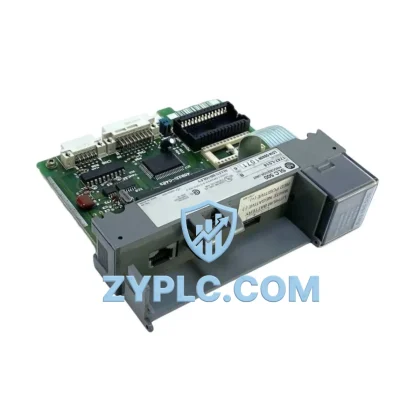
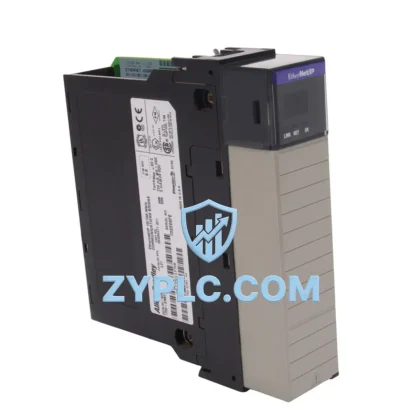
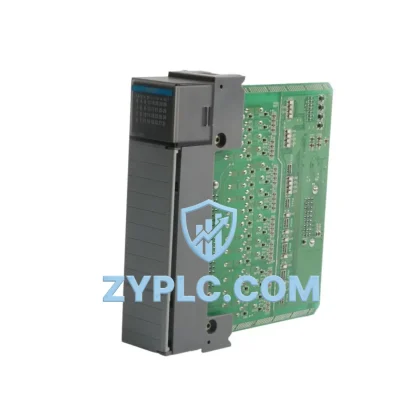
Allen-Bradley 1747-BA Energy-Saving PLC Battery for Optimized SLC 500 Automation
The Allen-Bradley 1747-BA is a high-reliability lithium battery engineered specifically for the SLC 500 programmable logic controller platform. In modern industrial environments where unplanned downtime translates directly into energy waste and lost production throughput, the 1747-BA plays a foundational role in sustaining continuous, efficient machine operation. By maintaining CMOS memory integrity during power interruptions, this battery ensures that control programs, I/O configurations, and communication parameters remain intact — eliminating the energy-intensive re-initialization cycles that follow unexpected memory loss.
Efficiency Performance Table
| Parameter |
Specification |
| SKU / Part Number |
1747-BA |
| Compatible Platform |
Allen-Bradley SLC 500 PLC Series |
| Battery Chemistry |
Lithium (Li/SO₂) |
| Nominal Voltage |
3.0 V |
| Typical Service Life |
Up to 5 years (standby); application-dependent |
| Operating Temperature |
0°C to +60°C |
| Power Consumption |
Ultra-low standby drain — microampere-level quiescent current |
| Memory Retention Function |
CMOS RAM backup for ladder logic, I/O maps, and communication configs |
| Compatible Systems |
SLC 5/01, SLC 5/02, SLC 5/03, SLC 5/04, SLC 5/05 processors |
| Application Environment |
Discrete manufacturing, process control, material handling, utilities |
| Energy Efficiency Value |
Prevents cold-restart energy spikes; sustains optimized PLC operating state |
| Warranty |
12-Month Warranty — tested and verified before shipment |
Energy-Aware Automation Architecture
The 1747-BA does not operate in isolation — it is a critical enabler within a broader energy-aware automation architecture. In a typical SLC 500-based control system, the processor module (such as the 1747-L553 or 1747-L543) relies on the 1747-BA to retain its ladder logic program and I/O configuration across power cycles. Without a healthy battery, every power interruption forces a full program reload, consuming additional time, energy, and technician resources.
On the I/O side, digital and analog modules such as the 1746-IB16 input module and 1746-OB16 output module depend on the processor’s retained configuration to resume accurate signal processing immediately upon restart. This continuity is especially important in energy monitoring applications where the 1746-NI4 analog input module is used to sample current and voltage signals from field sensors — any gap in data acquisition caused by a memory loss event can distort energy consumption baselines and invalidate efficiency benchmarks.
For facilities running variable-speed drives alongside SLC 500 controllers, the integration between the PLC and a PowerFlex 40 or PowerFlex 400 AC drive via DeviceNet or hardwired I/O is a common energy optimization strategy. The drive adjusts motor speed in response to PLC commands, reducing energy consumption during low-demand periods. The 1747-BA ensures that the PLC’s drive control parameters — ramp rates, speed references, fault responses — are never lost, preserving the tuned efficiency profile of the entire motor drive system.
Communication continuity is equally important. SLC 500 systems frequently use the 1747-SDN DeviceNet Scanner or the 1747-KE DH-485 to RS-232 interface module to exchange data with upstream SCADA systems or HMI panels such as the PanelView 600. A battery failure that corrupts the communication configuration can sever the data link between the controller and the monitoring layer, blinding operators to real-time energy consumption data and preventing timely corrective action.
In power distribution and energy metering applications, the SLC 500 platform is often paired with PowerMonitor 500 or PowerMonitor 1000 units to track kWh consumption, demand peaks, and power factor across production zones. The 1747-BA keeps the PLC’s data-logging routines and threshold alarm parameters intact, ensuring that energy anomalies are detected and logged without interruption — a prerequisite for ISO 50001 energy management compliance and continuous improvement programs.
Power Optimization in Real Production Lines
In high-throughput manufacturing environments — automotive assembly, food and beverage processing, packaging lines, and water treatment facilities — the SLC 500 controller governs the sequencing, timing, and interlock logic that determines how efficiently energy is consumed across every production shift. The 1747-BA directly supports power optimization by eliminating one of the most overlooked sources of energy waste: the unplanned restart.
When a PLC loses its program due to battery failure, the restart sequence typically involves manual intervention by a maintenance technician, program re-download from a laptop running RSLogix 500 software, I/O verification, and a cautious step-through of the startup sequence. During this period, upstream and downstream equipment may remain energized but idle — motors running at full speed with no load, heating elements maintaining temperature with no product present, and compressed air systems sustaining pressure with no consumption. This idle energy expenditure, multiplied across multiple restart events per year, represents a measurable and avoidable cost.
By contrast, a production line protected by a healthy 1747-BA resumes operation within seconds of power restoration. The SLC 500 processor reads its retained program, re-establishes communication with field devices, and resumes the production sequence from a known safe state. Variable-speed drives return to their last commanded speed references, conveyor systems resume at calibrated belt speeds, and energy monitoring routines continue logging without a data gap. The result is a tighter production cycle, lower average energy consumption per unit produced, and a reduced maintenance burden on the automation team.
Predictive maintenance strategies also benefit from battery integrity. When the SLC 500’s battery voltage drops below threshold, the processor sets a battery low fault bit that can be mapped to an HMI alarm or a SCADA notification. Proactive replacement of the 1747-BA — before failure occurs — prevents the cascading costs of an unplanned restart and keeps the energy optimization program on track. All units supplied by ZYPLC are tested prior to shipment and covered by a 12-month warranty, giving maintenance planners a reliable replacement cycle baseline.
Energy Optimization FAQ
Q1: How does the 1747-BA contribute to energy savings in an SLC 500 system?
The 1747-BA preserves the PLC’s program and configuration across power interruptions, preventing cold-restart sequences that waste energy through idle equipment operation and extended re-initialization. By enabling instant program recovery, it keeps production lines running at their optimized energy consumption profile without interruption.
Q2: Which SLC 500 processor models are compatible with the 1747-BA?
The 1747-BA is compatible with the full SLC 500 processor family, including the SLC 5/01 (1747-L511, 1747-L514), SLC 5/02 (1747-L524), SLC 5/03 (1747-L531, 1747-L532, 1747-L533), SLC 5/04 (1747-L541, 1747-L542, 1747-L543), and SLC 5/05 (1747-L551, 1747-L552, 1747-L553) series. Always verify the processor’s hardware manual for battery slot specifications before installation.
Q3: What is the recommended replacement interval, and how is battery health monitored?
Allen-Bradley recommends replacing the 1747-BA every 1–3 years depending on operating temperature and duty cycle, though service life can extend up to 5 years under optimal conditions. The SLC 500 processor monitors battery voltage continuously and sets a battery low status bit (S:2/14) when replacement is needed. This bit can be mapped to an HMI indicator or SCADA alarm via RSLogix 500 to support a proactive maintenance schedule.
Q4: What testing and warranty coverage does ZYPLC provide for the 1747-BA?
Every 1747-BA unit supplied by ZYPLC undergoes pre-shipment functional testing to verify voltage output and capacity. All units are covered by a 12-month warranty from the date of shipment. In the event of a verified defect within the warranty period, ZYPLC will arrange a replacement or refund. For procurement inquiries, contact the ZYPLC sales team at +86 19859288691 or plc.sales@zyplc.com.
© 2026 ZYPLC. All rights reserved. Original Source: https://zyplc.com | Contact: +86 19859288691 | plc.sales@zyplc.com