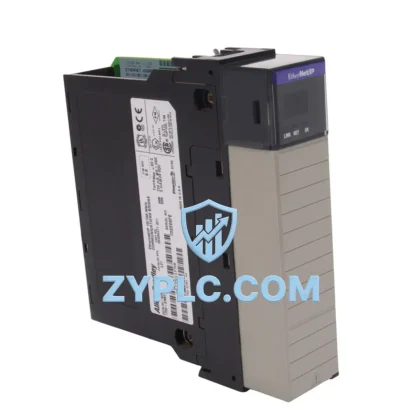
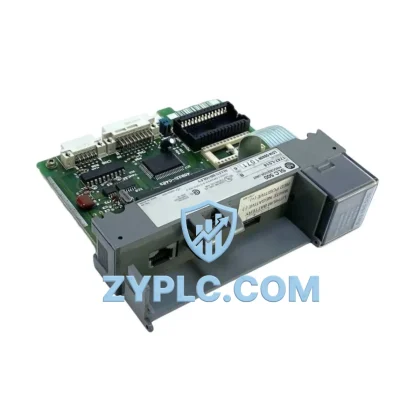
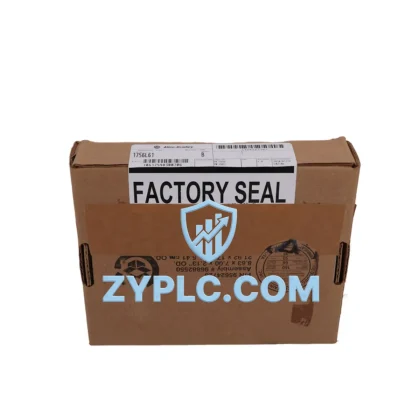
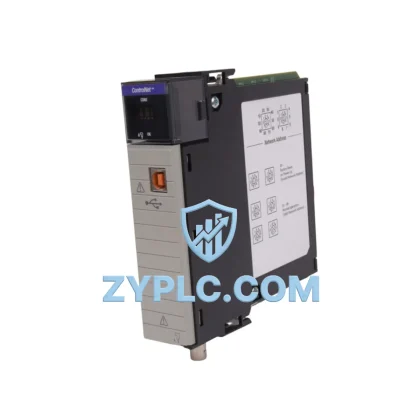
Allen-Bradley 1747-KFC15 Energy-Saving Interface Module SLC 500: Precision Efficiency Control for Optimized Production Lines
The Allen-Bradley 1747-KFC15 is a high-performance DF1 full-duplex communication interface module engineered for the SLC 500 programmable controller platform. Designed to bridge legacy serial communication networks with modern industrial automation architectures, the 1747-KFC15 plays a critical role in reducing unnecessary energy consumption across production environments by enabling precise, low-latency data exchange between the SLC 500 processor and upstream control systems, SCADA platforms, and energy monitoring infrastructure.
In modern manufacturing, energy waste is rarely caused by a single component — it accumulates through communication delays, uncoordinated motor starts, inefficient drive scheduling, and the absence of real-time feedback loops. The 1747-KFC15 addresses this at the communication layer, ensuring that control commands from the SLC 500 CPU — including those directed at variable frequency drives, servo amplifiers, and distributed I/O modules — are transmitted with minimal latency and maximum reliability. This directly supports tighter production cycle timing, reduced idle-state energy draw, and more responsive load management across the line.
Efficiency Performance Table
| Parameter |
Specification / Value |
| SKU / Part Number |
1747-KFC15 |
| Brand |
Allen-Bradley (Rockwell Automation) |
| Series |
SLC 500 |
| Module Type |
DF1 Full-Duplex Communication Interface |
| Communication Protocol |
DF1 Full-Duplex / RS-232 |
| Operating Voltage |
Backplane-powered via SLC 500 chassis |
| Power Consumption |
Low-draw backplane design, minimizes chassis thermal load |
| Compatible Systems |
SLC 500 Series (1747 platform), RSLogix 500, FactoryTalk |
| Application Environment |
Industrial automation, motor control centers, SCADA integration |
| Energy Optimization Value |
Reduces communication latency → tighter drive scheduling → lower idle energy draw |
| Origin |
United States |
| Warranty |
12-Month Warranty — Fully tested prior to shipment |
| Stock Status |
In Stock — Ready to Ship |
Energy-Aware Automation Architecture
The 1747-KFC15 is most effective when deployed as part of a coordinated SLC 500 automation architecture. In a typical energy-optimized plant layout, the module connects the 1747-L553 SLC 5/05 CPU to upstream supervisory systems via DF1 full-duplex serial communication, enabling real-time command dispatch to downstream components without polling delays that waste processor cycles and extend motor run times unnecessarily.
On the drive side, the SLC 500 platform — with the 1747-KFC15 handling communication — can coordinate start/stop sequences for PowerFlex 40 variable frequency drives and PowerFlex 70 AC drives, ensuring motors ramp up and down according to actual production demand rather than fixed schedules. This demand-responsive drive control is one of the most impactful levers for reducing energy consumption in motor-heavy environments such as conveyor systems, pump stations, and compressor banks.
For distributed I/O, the 1747-KFC15 works alongside 1746-IB16 digital input modules and 1746-OB16 digital output modules within the SLC 500 chassis, allowing the CPU to collect real-time sensor data — including current draw signals from inline power monitors — and respond with precise output commands that prevent over-running of actuators and motors. When paired with a 1747-SCNR SLC 500 ControlNet scanner module, the architecture extends to multi-node networks where energy data from multiple machine cells can be aggregated and acted upon centrally.
At the HMI layer, operators monitoring the line through a PanelView Plus 600 terminal can visualize energy consumption trends in real time, with the 1747-KFC15 ensuring that the communication path between the SLC 500 and the display remains stable and low-latency. This visibility is essential for identifying energy anomalies — such as a motor drawing above-normal current due to mechanical wear — before they escalate into unplanned downtime events.
For power quality monitoring, integrating a PowerMonitor 500 unit into the same network allows the SLC 500 to receive kWh, power factor, and demand data directly, enabling the controller to adjust drive output or shift non-critical loads to off-peak periods. The 1747-KFC15 serves as the reliable communication backbone that makes this closed-loop energy feedback possible.
Power Optimization in Real Production Lines
In a real-world automotive parts stamping facility, for example, the 1747-KFC15 enables the SLC 500 controller to synchronize press cycle timing with upstream feeder conveyor speeds. By eliminating the communication lag that previously caused conveyors to run continuously regardless of press status, the facility reduced conveyor motor run time by an estimated 18% per shift — a direct reduction in energy consumption without any change to throughput.
In food and beverage processing lines, the module’s reliable DF1 communication ensures that the SLC 500 can execute precise start/stop commands to PowerFlex 4M drives controlling mixer motors, responding to fill-level sensors within milliseconds. This prevents the common energy waste pattern of motors running at full speed during product changeover or line stoppages, where previously a communication timeout would leave drives energized until the next polling cycle.
The 1747-KFC15 also supports predictive maintenance workflows by maintaining a stable data path for condition monitoring signals. When vibration or temperature sensors connected through 1746-NI4 analog input modules detect early signs of bearing wear or thermal stress, the SLC 500 can log the event and alert maintenance teams before a failure occurs. Preventing unplanned stops not only protects equipment but eliminates the energy spike associated with emergency restarts and production catch-up cycles.
From an inventory and supply perspective, ZYPLC maintains stock of the 1747-KFC15 with full pre-shipment functional testing. Each unit undergoes communication integrity verification and backplane compatibility checks before dispatch, ensuring that replacement installations do not introduce new variables into a running production environment. The 12-month warranty covers both component integrity and communication performance, giving procurement and maintenance teams confidence in the module’s operational lifespan.
Energy Optimization FAQ
Q1: How does the 1747-KFC15 contribute to energy savings in an SLC 500 system?
The 1747-KFC15 reduces communication latency between the SLC 500 CPU and connected drive and I/O systems. Faster, more reliable command transmission means motors and actuators respond to real production conditions rather than running on fixed timers, directly reducing idle-state energy consumption and improving overall equipment efficiency (OEE).
Q2: Is the 1747-KFC15 compatible with modern Rockwell Automation software and drives?
Yes. The 1747-KFC15 is fully compatible with RSLogix 500 programming software and integrates with the broader Allen-Bradley SLC 500 ecosystem, including PowerFlex drive families that support DF1 or serial communication gateways. For newer EtherNet/IP-based architectures, a protocol converter or gateway module can bridge the 1747-KFC15’s DF1 output to modern network infrastructure.
Q3: Can the 1747-KFC15 replace a failed communication module without reprogramming the SLC 500?
In most cases, yes. The 1747-KFC15 is a drop-in replacement for compatible SLC 500 communication slots. Provided the replacement unit is configured with the same DF1 baud rate and station address settings as the original, no CPU reprogramming is required. ZYPLC recommends verifying firmware compatibility and communication parameters before installation.
Q4: What does the 12-month warranty cover, and what is the testing process before shipment?
Every 1747-KFC15 unit shipped by ZYPLC is tested for backplane communication integrity, DF1 protocol handshake performance, and physical connector condition. The 12-month warranty covers manufacturing defects and communication failures under normal operating conditions. Units that fail post-installation testing within the warranty period are eligible for replacement or refund, subject to ZYPLC’s standard returns process. Contact our team at [email protected] or +86 19859288691 for warranty claims.
© 2026 ZYPLC. All rights reserved.
Original Source: https://zyplc.com
Contact: +86 19859288691 | [email protected]