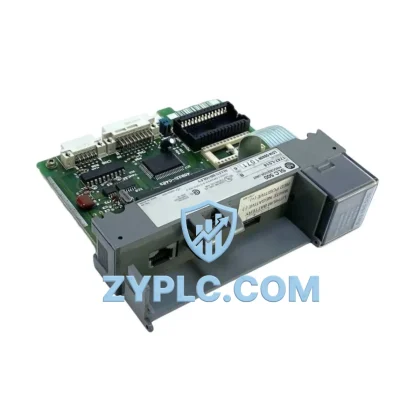
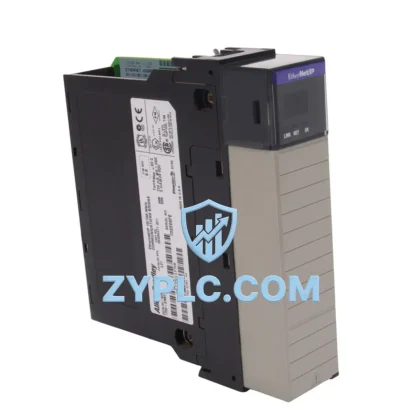
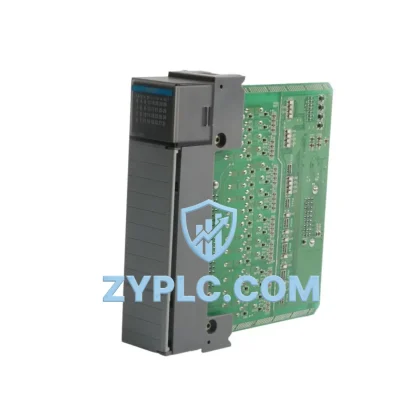
Allen-Bradley 1747-L553/C Energy-Saving PLC for SLC 500 Automation
The Allen-Bradley 1747-L553/C is a high-performance SLC 5/05 processor module designed for the SLC 500 programmable controller platform. With integrated Ethernet communication, deterministic scan-cycle execution, and robust instruction set support, this processor enables factories to tighten control loops, reduce idle energy consumption, and maximize equipment utilization across discrete and process manufacturing environments. Whether you are modernizing an aging control cabinet or expanding an existing SLC 500 network, the 1747-L553/C delivers the processing headroom and connectivity needed to support energy-aware automation strategies without a full system overhaul.
In real production environments, energy waste often originates not from the machines themselves but from poorly timed control sequences, excessive idle states, and uncoordinated motor starts. The 1747-L553/C addresses these root causes by executing ladder logic with consistent, low-latency scan cycles that keep downstream actuators, drives, and sensors synchronized. When paired with Allen-Bradley PowerFlex 40 or PowerFlex 70 variable frequency drives, the processor can issue speed-reference commands via EtherNet/IP, enabling soft-start and dynamic speed adjustment that directly reduces peak current draw and motor heat generation — two of the largest contributors to energy loss on the plant floor.
The onboard Ethernet port supports MSG instructions to communicate with remote I/O racks using 1746-A series chassis and 1746-IB16 or 1746-OB16 digital I/O modules, allowing the control architecture to scale across multiple production cells without adding communication overhead. This distributed I/O topology reduces wiring complexity and enables zone-level energy monitoring when combined with Allen-Bradley PowerMonitor 500 or PowerMonitor 1000 energy meters. Real-time kilowatt-hour data collected at the zone level can be fed back into the SLC 500 program via analog input modules such as the 1746-NI4, giving operators a closed-loop view of energy consumption relative to production output.
Efficiency Performance Table
| Parameter |
Specification / Value |
| SKU / Part Number |
1747-L553/C |
| Processor Series |
SLC 5/05 (SLC 500) |
| Communication Port |
Ethernet (EtherNet/IP), RS-232 (DH-485 / DF1) |
| User Memory |
64K Words |
| Power Consumption |
800 mA @ 5 VDC (typical) |
| Operating Temperature |
0 °C to 60 °C |
| Compatible Chassis |
1746-A4, 1746-A7, 1746-A10, 1746-A13 |
| Compatible I/O Modules |
1746 series digital and analog I/O |
| Compatible Software |
RSLogix 500, Studio 5000 (via gateway) |
| Energy Optimization Value |
Deterministic scan cycle reduces idle actuator time; EtherNet/IP enables real-time drive speed control |
| Application Environment |
Discrete manufacturing, material handling, packaging, HVAC control, water treatment |
| Warranty |
12-Month Warranty — tested and verified before shipment |
Energy-Aware Automation Architecture
A well-designed SLC 500 energy optimization architecture built around the 1747-L553/C typically integrates several coordinated subsystems. At the drive layer, Allen-Bradley PowerFlex 40 compact AC drives handle conveyor and pump motor control, while PowerFlex 70 drives manage higher-power spindle and fan applications. Both drive families accept speed references and enable/disable commands over EtherNet/IP, allowing the 1747-L553/C to implement demand-based speed profiles that cut energy use during low-throughput periods.
At the sensing and measurement layer, Allen-Bradley PowerMonitor 500 units installed at panel feeders provide per-circuit kWh, kW demand, and power factor data. This information is polled by the SLC 5/05 processor via Modbus RTU or EtherNet/IP, enabling the control program to trigger load-shedding routines when total demand approaches a preset threshold — a strategy that directly reduces peak demand charges on industrial electricity tariffs.
For motion-intensive cells, Kinetix 300 servo drives connected through the 1747-SCNR ControlNet scanner or via EtherNet/IP provide coordinated axis control with regenerative braking capability, feeding recovered energy back into the DC bus rather than dissipating it as heat. The 1747-L553/C orchestrates the sequencing of these axes through structured ladder logic, ensuring that acceleration ramps are staggered to prevent simultaneous inrush currents that spike demand readings.
At the HMI layer, a PanelView 800 or PanelView Plus 7 terminal connected via EtherNet/IP gives operators real-time visibility into energy KPIs, cycle counts, and alarm states. Operators can adjust setpoints, review trend data, and acknowledge energy-related alarms without leaving the production floor, reducing the response time to abnormal energy events from hours to seconds.
The communication backbone relies on a 1783-US8T Stratix 2000 unmanaged Ethernet switch to interconnect the 1747-L553/C, drives, HMI, and energy meters on a single flat network segment, minimizing latency and simplifying network commissioning. For legacy DH-485 devices still present in older cells, the 1761-NET-AIC Advanced Interface Converter bridges the two networks, preserving the investment in existing field devices while the SLC 500 system is upgraded incrementally.
Power Optimization in Real Production Lines
On a typical packaging line running three shifts, uncoordinated motor starts and extended idle periods can account for 15–25% of total electrical consumption. The 1747-L553/C addresses this by enabling time-based and event-based power management routines directly in the SLC 500 program. During scheduled breaks, the processor can issue coast-to-stop commands to non-critical conveyors and blowers via the connected PowerFlex drives, then execute a sequenced restart that staggers motor acceleration to stay within the facility’s demand window.
Predictive maintenance integration further reduces energy waste caused by degraded equipment. By monitoring analog inputs from vibration transmitters and temperature sensors through 1746-NI8 analog input modules, the 1747-L553/C can detect early signs of bearing wear or cooling fan degradation — conditions that cause motors to draw excess current before a mechanical failure occurs. Maintenance teams receive early warnings through the PanelView HMI and via MSG-triggered data logs, allowing planned interventions that prevent both unplanned downtime and the energy penalty of running degraded equipment.
Inventory availability and lead time are critical factors in energy system reliability. ZYPLC maintains in-stock inventory of the 1747-L553/C and related SLC 500 components, with outgoing shipment testing performed on every unit. Each processor is verified for communication port functionality, memory integrity, and firmware revision before dispatch. The 12-month warranty covers defects in materials and workmanship, giving maintenance engineers the confidence to specify refurbished SLC 500 processors as a cost-effective alternative to full system replacement — preserving capital budget for higher-priority energy efficiency projects.
Energy Optimization FAQ
Q1: How does the 1747-L553/C contribute to measurable energy savings on a production line?
The SLC 5/05 processor enables demand-based motor control through EtherNet/IP-connected PowerFlex drives, allowing speed profiles to track actual production demand rather than running at fixed full speed. Combined with zone-level energy monitoring via PowerMonitor meters, facilities typically report 10–20% reductions in motor-related energy consumption after implementing coordinated speed control and idle-state management routines.
Q2: Is the 1747-L553/C compatible with my existing SLC 500 chassis and I/O modules?
Yes. The 1747-L553/C is compatible with all 1746-A series chassis (4, 7, 10, and 13 slot) and the full range of 1746 series digital and analog I/O modules. Existing RSLogix 500 programs can be downloaded directly to the /C firmware revision without modification in most cases, making it a drop-in replacement for earlier SLC 5/05 revisions.
Q3: What is the recommended replacement or upgrade path if the 1747-L553/C is end-of-life in my application?
For applications requiring a direct replacement, the 1747-L553/C remains the recommended spare. For facilities planning a longer-term migration, Rockwell Automation’s Micro850 or CompactLogix 5380 platforms offer a migration path with Studio 5000 programming and enhanced EtherNet/IP capabilities. ZYPLC can advise on compatibility and transition planning based on your specific I/O count and communication requirements.
Q4: What testing and warranty coverage does ZYPLC provide for the 1747-L553/C?
Every 1747-L553/C unit shipped by ZYPLC undergoes functional testing that includes power-on verification, Ethernet port communication check, RS-232 port loopback test, and memory read/write validation. Units are shipped with a 12-month warranty covering manufacturing defects and functional failures. In the event of a warranty claim, ZYPLC provides advance replacement to minimize production downtime.
© 2026 ZYPLC. All rights reserved.
Original Source: https://zyplc.com
Contact: +86 19859288691 | plc.sales@zyplc.com