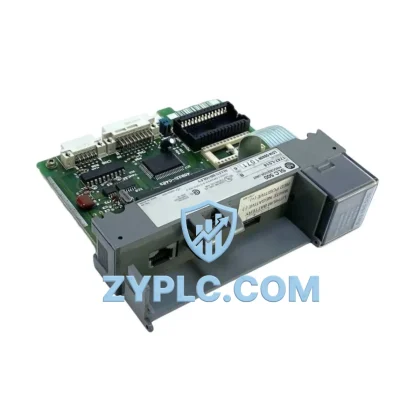
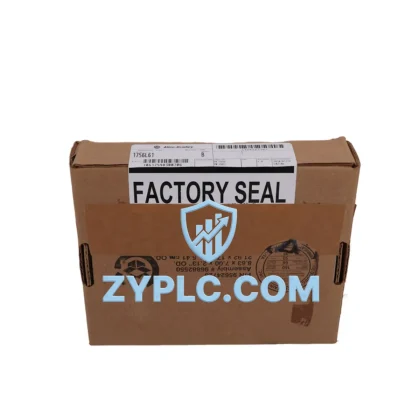
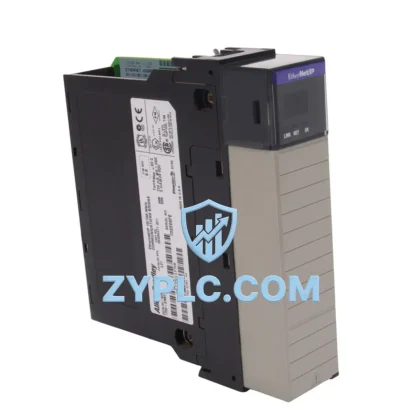
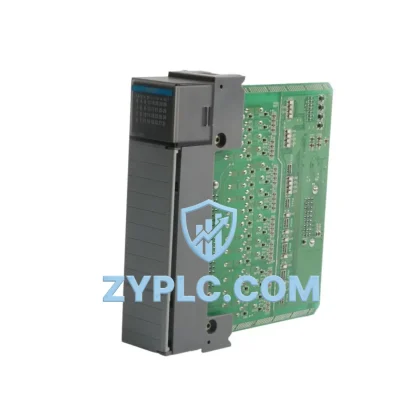
Allen-Bradley 1747-OCPCM2 System-Ready PCMCIA Interface for SLC 500 Control System Architecture
The Allen-Bradley 1747-OCPCM2 is a PCMCIA-type interface module engineered specifically for integration within the SLC 500 modular control platform. Rather than functioning as a standalone peripheral, this module occupies a defined role within a layered automation architecture — bridging the programming environment and the controller backplane to enable seamless program transfer, online monitoring, and real-time diagnostics. In distributed manufacturing and process control environments where system consistency, uptime, and long-term maintainability are non-negotiable, the 1747-OCPCM2 delivers the communication reliability that engineers and maintenance teams depend on.
Understanding the 1747-OCPCM2 requires viewing it within the full SLC 500 system context. The SLC 500 platform is a rack-based, modular control architecture that supports a wide range of CPU modules — including the 1747-L20, 1747-L30, 1747-L40, and 1747-L553 — each housed in fixed or modular chassis configurations such as the 1746-A4, 1746-A7, and 1746-A13. The 1747-OCPCM2 provides the PCMCIA communication channel that connects a programming terminal running RSLogix 500 to the SLC 500 processor, enabling engineers to upload and download ladder logic programs, monitor I/O status, and perform live fault diagnostics without interrupting production cycles.
In a complete SLC 500 control cabinet, the 1747-OCPCM2 works in coordination with the full I/O subsystem. Digital input modules such as the 1746-IB16 and 1746-IA16, digital output modules such as the 1746-OB16, and analog I/O modules such as the 1746-NI4 and 1746-NO4I all rely on the CPU’s ability to maintain a stable communication link with the programming environment. The 1747-OCPCM2 ensures that this link remains available for commissioning, parameter adjustment, and scheduled maintenance — reducing the need for costly on-site programming hardware and minimizing engineering downtime.
From a network and communication architecture perspective, the 1747-OCPCM2 complements the broader SLC 500 communication ecosystem. In systems where the SLC 500 controller communicates upstream to a supervisory SCADA or DCS layer via the 1747-SDN DeviceNet Scanner or the 1747-KE RS-232/DH-485 Interface, the PCMCIA interface module provides the local engineering access point that does not interfere with the production network. This separation of engineering access from operational communication is a best practice in industrial control system design, and the 1747-OCPCM2 is purpose-built to support it.
Power integrity is a foundational requirement in any SLC 500 installation. The 1746-P1, 1746-P2, and 1746-P4 power supply modules provide regulated DC power to the chassis backplane, ensuring that all installed modules — including communication interfaces — operate within their specified voltage and current tolerances. The 1747-OCPCM2 draws its operating power from the chassis backplane, eliminating the need for external power connections and simplifying cabinet wiring. This design also ensures that the module remains operational as long as the chassis power supply is active, supporting continuous engineering access during live system operation.
For human-machine interface integration, the SLC 500 architecture frequently pairs with PanelView terminals connected via DH-485 or DH+ networks. The 1747-OCPCM2 supports the engineering workflow that keeps these HMI configurations synchronized with the controller logic — allowing engineers to update tag databases, modify screen logic references, and validate communication paths without taking the system offline. In facilities where production continuity is critical, this capability directly reduces mean time to repair (MTTR) and supports lean maintenance strategies.
Long-term maintainability is one of the most important considerations in industrial control system procurement. The 1747-OCPCM2 is available as a tested, verified replacement module with a 12-Month Warranty, ensuring that facilities can maintain their SLC 500 infrastructure without committing to full platform migrations. For plants operating legacy SLC 500 systems in food and beverage, water treatment, mining, metallurgy, chemical processing, or discrete manufacturing environments, having a reliable source of tested communication interface modules is essential to sustaining operational continuity and meeting regulatory compliance requirements.
Architecture Specification Table
| Parameter |
Specification |
| Part Number |
1747-OCPCM2 |
| Brand |
Allen-Bradley (Rockwell Automation) |
| Series |
SLC 500 |
| Module Type |
PCMCIA Communication Interface |
| System Role |
Programming Terminal to CPU Communication Link |
| Compatible Processors |
SLC 5/02, 5/03, 5/04, 5/05 (1747-L20, L30, L40, L553) |
| Communication Protocol |
DH-485 / RS-232 via PCMCIA slot |
| Interface Type |
PCMCIA Type II Card |
| Power Source |
Chassis Backplane (no external power required) |
| Compatible Chassis |
1746-A4, 1746-A7, 1746-A10, 1746-A13 |
| Operating Temperature |
0°C to 60°C (32°F to 140°F) |
| Relative Humidity |
5% to 95% non-condensing |
| Installation Environment |
Industrial Control Cabinet, DIN Rail or Panel Mount Chassis |
| Warranty |
12-Month Warranty |
| Contextual Integration |
Supported — compatible with RSLogix 500 and full SLC 500 I/O architecture |
| Country of Origin |
United States |
Coordinated Control System Design
The 1747-OCPCM2 is most effective when evaluated as a component within a coordinated SLC 500 control system rather than as an isolated module. A typical SLC 500 architecture begins with the CPU — such as the 1747-L40 or 1747-L553 — installed in a 1746-A13 modular chassis powered by a 1746-P4 power supply. The I/O subsystem populates the remaining chassis slots with a combination of 1746-IB16 digital input modules, 1746-OB16 digital output modules, and 1746-NI4 analog input modules, all communicating with the processor via the chassis backplane.
The 1747-OCPCM2 inserts into the PCMCIA slot on the SLC 5/03, 5/04, or 5/05 processor faceplate, providing the RS-232 or DH-485 communication channel used by RSLogix 500 for program development and online monitoring. In systems where the SLC 500 controller also manages a DeviceNet field device network via the 1747-SDN scanner module, the PCMCIA interface provides a dedicated engineering access path that operates independently of the production network — preventing engineering traffic from impacting field device communication cycles.
For facilities that have standardized on the SLC 500 platform across multiple production lines, maintaining a verified stock of 1747-OCPCM2 modules ensures that engineering teams can rapidly commission new installations, replace failed interfaces, and perform scheduled firmware updates without waiting for long lead-time procurement cycles. This inventory strategy directly supports the 12-Month Warranty coverage period and aligns with best practices for industrial spare parts management.
Application in Layered Automation Systems
The 1747-OCPCM2 finds application across a broad range of industrial sectors where the SLC 500 platform remains the control standard. In discrete manufacturing environments — including automotive assembly, electronics production, and packaging lines — the module enables engineers to perform rapid program modifications and I/O diagnostics during scheduled maintenance windows, minimizing production downtime. In food and beverage facilities operating under HACCP and GMP compliance requirements, the ability to perform live monitoring and parameter adjustments via the PCMCIA interface supports audit trail documentation and process validation workflows.
In water and wastewater treatment plants, the SLC 500 platform controls pump stations, chemical dosing systems, and filtration processes. The 1747-OCPCM2 provides the communication interface that allows remote engineering teams to connect locally to individual SLC 500 controllers for troubleshooting and calibration, complementing the SCADA communication path provided by the 1747-KE or 1747-SDN modules. In mining and metallurgical applications, where control systems operate in high-vibration, high-temperature environments, the PCMCIA interface’s backplane-powered design eliminates one potential failure point, contributing to overall system reliability.
In oil and gas and petrochemical process control applications, the SLC 500 architecture supports batch process control, compressor management, and pipeline monitoring. The 1747-OCPCM2 enables engineering access to individual SLC 500 nodes within a distributed control network, supporting the detailed diagnostics and parameter verification required during process startup, shutdown, and turnaround maintenance cycles. Across all these applications, the 12-Month Warranty and Contextual Integration capability of the 1747-OCPCM2 provide procurement teams and plant engineers with the confidence to specify this module as a long-term replacement and spare parts solution.
Architecture Engineering FAQ
Q1: Is the 1747-OCPCM2 compatible with all SLC 500 processor variants, and does it support both DH-485 and RS-232 communication?
The 1747-OCPCM2 is designed for use with SLC 5/03, 5/04, and 5/05 processors (1747-L30, L40, L553) that include a PCMCIA interface slot on the processor faceplate. It supports RS-232 communication for direct connection to a programming terminal running RSLogix 500, and in conjunction with the appropriate cable and adapter, it can also support DH-485 network communication. It is not compatible with the SLC 5/01 or 5/02 fixed processors, which do not include a PCMCIA slot. Always verify the processor model and firmware revision before specifying the 1747-OCPCM2 for a replacement or new installation project.
Q2: Can the 1747-OCPCM2 be used in a redundant SLC 500 architecture, and how does it interact with the primary communication network?
The SLC 500 platform does not natively support CPU redundancy in the same manner as the ControlLogix 1756 platform with 1756-RM redundancy modules. However, in systems where redundancy is achieved through dual-processor configurations or hot-standby arrangements using third-party redundancy controllers, the 1747-OCPCM2 provides independent engineering access to each processor node without interfering with the inter-processor communication path. The PCMCIA interface operates as a dedicated engineering channel, separate from the DH-485 or DH+ production network managed by the 1747-KE or 1747-SDN modules, ensuring that engineering access does not introduce latency or communication conflicts into the control system.
Q3: What does the 12-Month Warranty cover for the 1747-OCPCM2, and what support is available for long-term maintenance planning?
The 12-Month Warranty covers the 1747-OCPCM2 against manufacturing defects and functional failures under normal industrial operating conditions. Each module is tested prior to shipment to verify communication functionality and electrical integrity. For long-term maintenance planning, we recommend maintaining at least one spare 1747-OCPCM2 per SLC 500 installation to ensure rapid replacement capability during unplanned failures. Our team provides pre-sales technical consultation to verify compatibility with your specific processor model and chassis configuration, and post-sales support throughout the warranty period to assist with installation, commissioning, and any functional issues that may arise.
© 2026 ZYPLC. All rights reserved.
Original Source: https://zyplc.com
Contact: +86 19859288691 | plc.sales@zyplc.com