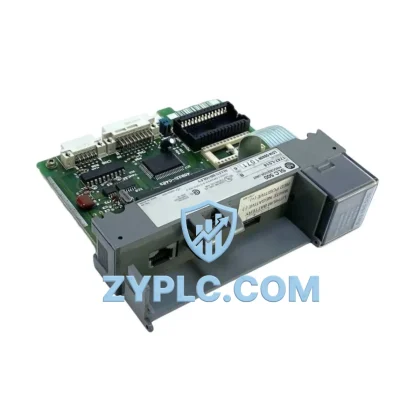
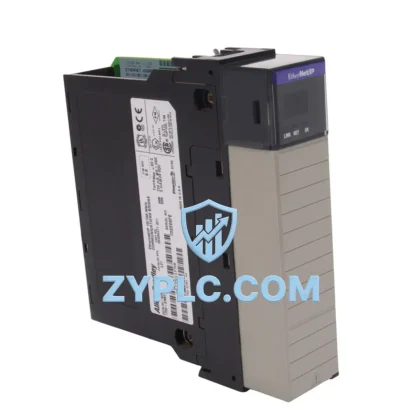
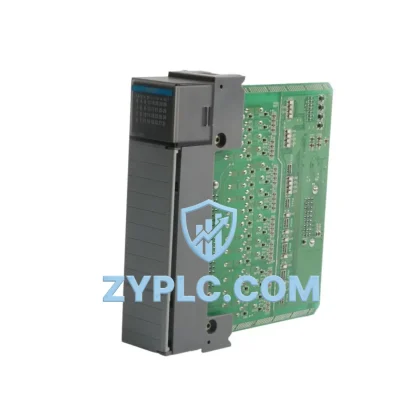
Allen-Bradley 1747-PIC System-Ready PC Interface for SLC 500 Architecture: Control System Coordination and Upstream-Downstream Synchronization
The Allen-Bradley 1747-PIC PC Interface Converter occupies a critical position within the SLC 500 control system architecture, serving as the dedicated communication bridge between a host PC or programming workstation and the SLC 500 processor backplane. In layered industrial automation environments — spanning the control layer, I/O layer, network layer, power layer, HMI layer, and actuator layer — the 1747-PIC ensures that engineering configuration, real-time diagnostics, and program upload/download operations remain stable, deterministic, and fully integrated with the broader system topology. Rather than functioning as a standalone peripheral, the 1747-PIC is a structural component whose reliability directly influences the commissioning efficiency, long-term maintainability, and operational continuity of the entire SLC 500 platform.
Within a typical SLC 500 rack assembly, the 1747-PIC connects to the processor’s DH-485 port and translates RS-232 serial signals from the programming terminal into the DH-485 multi-drop network protocol. This conversion is essential for maintaining communication integrity across multi-node DH-485 networks where multiple SLC 500 processors — such as the 1747-L532 or 1747-L541 — may share the same communication segment. The 1747-PIC’s role as a protocol translator ensures that RSLogix 500 programming software can maintain a stable session with the target processor without disrupting ongoing I/O scan cycles or ladder logic execution.
From a system architecture perspective, the 1747-PIC integrates seamlessly with the SLC 500 modular chassis family, including the 1746-A4, 1746-A7, and 1746-A13 backplanes. These chassis house the full complement of SLC 500 I/O modules — including digital input modules such as the 1746-IB16, digital output modules such as the 1746-OB16, and analog I/O modules such as the 1746-NI4 — all of which depend on a correctly configured and communicating processor to execute their assigned control functions. The 1747-PIC enables engineers to access, modify, and verify processor configurations without interrupting the live I/O scan, which is particularly valuable in continuous process environments where unplanned downtime carries significant operational cost.
Power integrity within the SLC 500 rack is maintained by dedicated power supply modules such as the 1746-P2 or 1746-P4, which provide regulated 5 VDC and 24 VDC rails to the backplane. The 1747-PIC draws its operating power directly from the backplane, eliminating the need for an external power source and simplifying cabinet wiring. This design choice reduces the overall component count within the control enclosure and contributes to a cleaner, more maintainable panel layout — a consideration that becomes increasingly important as system complexity scales across multiple racks or remote I/O drops.
For HMI integration, the SLC 500 architecture commonly pairs with PanelView terminals communicating over DH-485 or DH+ networks. The 1747-PIC supports the engineering workflow that precedes HMI deployment: once the processor program has been developed, tested, and validated via the 1747-PIC interface, the HMI configuration can be finalized with confidence that the underlying control logic is stable. In more complex architectures involving a 1747-SDN DeviceNet Scanner or a 1747-SCNR Remote I/O Scanner, the 1747-PIC remains the primary tool for processor-level access during initial commissioning and subsequent maintenance cycles.
Redundancy considerations in SLC 500 systems typically involve dual-processor configurations or hot-standby arrangements managed through specialized communication modules. The 1747-PIC supports maintenance access to both primary and standby processors, enabling engineers to verify program synchronization, review fault logs, and perform forced I/O tests without requiring physical relocation of the programming terminal. This capability is particularly relevant in critical infrastructure applications — including power distribution substations, water treatment facilities, and petrochemical process units — where system availability requirements demand that maintenance activities be performed online with minimal process disruption.
Long-term maintainability is a defining advantage of the 1747-PIC within established SLC 500 installations. As control systems age and original commissioning engineers transition out of active roles, the 1747-PIC provides the standardized interface through which replacement engineers can access historical program versions, compare current ladder logic against baseline configurations, and implement approved modifications under change management protocols. The converter’s compatibility with RSLogix 500 and the legacy APS programming software ensures that even older SLC 500 installations — some of which have been in continuous operation for over two decades — can be accessed and maintained using current engineering workstations equipped with standard RS-232 or USB-to-serial adapters.
From an inventory and supply chain perspective, maintaining a stocked 1747-PIC unit as part of a critical spare parts program is a recognized best practice in industrial maintenance management. Given the 1747-PIC’s role as the sole programming interface for DH-485-connected SLC 500 processors, a failed or unavailable converter can render an otherwise functional control system inaccessible for program modifications or fault diagnostics. ZYPLC maintains verified stock of the 1747-PIC, supported by a 12-Month Warranty and pre-shipment functional testing, ensuring that replacement units are available with the lead times and quality assurance standards that industrial maintenance schedules demand.
Architecture Specification Table
| Parameter |
Specification |
| System Role |
DH-485 to RS-232 PC Interface Converter |
| Compatible Platform |
Allen-Bradley SLC 500 Series |
| Communication Protocol |
DH-485 (Device-side) / RS-232 (Host-side) |
| Network Topology |
Multi-drop DH-485, up to 32 nodes |
| Baud Rate (DH-485) |
1200 / 2400 / 9600 / 19200 bps |
| Host Interface |
RS-232C, DB-9 connector |
| Power Source |
Backplane-powered (no external supply required) |
| Operating Temperature |
0°C to 60°C |
| Compatible Chassis |
1746-A4, 1746-A7, 1746-A10, 1746-A13 |
| Compatible Software |
RSLogix 500, APS |
| Installation Environment |
Industrial control panel, DIN rail enclosure |
| Warranty |
12-Month Warranty (ZYPLC) |
| Contextual Integration |
Supported — DH-485 multi-node network integration |
| Origin |
USA |
Coordinated Control System Design
The 1747-PIC operates at the intersection of the programming layer and the processor layer within the SLC 500 control hierarchy. Its functional value is best understood in the context of the complete system it supports. A representative SLC 500 architecture built around the 1747-PIC interface includes the following coordinated components:
-
1747-L532 / 1747-L541 SLC 500 Processors — The primary control engines that execute ladder logic and manage I/O data tables. The 1747-PIC provides direct DH-485 access to these processors for program development and online monitoring.
-
1746-A7 / 1746-A13 Modular Chassis — The backplane infrastructure that houses the processor and I/O modules. The 1747-PIC draws power from the backplane and communicates through the processor’s DH-485 port.
-
1746-P2 / 1746-P4 Power Supply Modules — Provide regulated backplane power, ensuring stable operating conditions for the 1747-PIC and all co-resident modules.
-
1746-IB16 Digital Input Modules — Capture field-level discrete signals from sensors, limit switches, and pushbuttons. Program logic governing these inputs is developed and verified via the 1747-PIC interface.
-
1746-OB16 Digital Output Modules — Drive actuators, solenoids, and motor starters based on processor logic. Output forcing and verification are performed through the 1747-PIC during commissioning.
-
1746-NI4 Analog Input Modules — Provide 4–20 mA or 0–10 VDC process variable inputs for PID control loops. Analog scaling parameters are configured via RSLogix 500 through the 1747-PIC connection.
-
1747-SDN DeviceNet Scanner — Extends the SLC 500 architecture to DeviceNet field devices. The 1747-PIC supports processor-level configuration of the scanner’s I/O mapping tables.
-
1747-SCNR Remote I/O Scanner — Enables distributed I/O drops across the plant floor. The 1747-PIC is used to configure and troubleshoot the scanner’s node addressing and communication parameters.
-
PanelView 550 / PanelView 600 HMI Terminals — Operator interface devices communicating over DH-485. The 1747-PIC supports the processor-side configuration that underpins HMI tag mapping and alarm management.
-
1492-AIFM Analog Interface Modules — Terminal block assemblies that simplify field wiring to analog I/O modules. Wiring verification and signal calibration are performed with the processor online via the 1747-PIC.
Application in Layered Automation Systems
The 1747-PIC finds application across a broad spectrum of industrial sectors where the SLC 500 platform has established a long operational history:
Manufacturing and Assembly Lines: In automotive component manufacturing and discrete parts assembly, SLC 500 systems control conveyor sequencing, robotic cell interlocks, and quality inspection stations. The 1747-PIC enables maintenance engineers to access processor programs during scheduled downtime windows, implement approved logic changes, and restore systems to production-ready status with minimal delay.
Power Distribution and Utilities: Substation automation and distribution feeder control systems built on SLC 500 platforms rely on the 1747-PIC for periodic program audits and relay logic updates. The converter’s ability to maintain a stable DH-485 session without disrupting the processor’s I/O scan is essential in environments where control system availability is directly tied to grid reliability.
Petrochemical and Refinery Process Control: In hazardous area control applications, SLC 500 systems manage pump sequencing, valve control, and emergency shutdown logic. The 1747-PIC supports the engineering access required for Management of Change (MOC) procedures, enabling controlled program modifications with full audit trail documentation through RSLogix 500.
Water and Wastewater Treatment: Municipal water treatment facilities use SLC 500 systems to control filtration, chemical dosing, and pump station operations. The 1747-PIC provides the programming interface for seasonal process adjustments and regulatory compliance updates, supporting the long maintenance cycles typical of public infrastructure assets.
Mining and Mineral Processing: Conveyor drive control, crusher sequencing, and flotation cell management systems built on SLC 500 platforms benefit from the 1747-PIC’s robust DH-485 interface in electrically noisy environments. The converter’s backplane-powered design eliminates a potential failure point in high-vibration installations.
Architecture Engineering FAQ
Q1: Is the 1747-PIC compatible with all SLC 500 processor models, and does it support online program editing?
The 1747-PIC is compatible with all SLC 500 processor models that include a DH-485 communication port, including the 1747-L20, 1747-L30, 1747-L40, 1747-L531, 1747-L532, and 1747-L541 series. It fully supports online program editing through RSLogix 500, allowing engineers to monitor data table values, force I/O states, and implement online edits while the processor remains in Run mode — a capability essential for continuous process applications where stopping the processor is not operationally feasible.
Q2: Can the 1747-PIC be used in a multi-node DH-485 network alongside other SLC 500 processors and HMI devices?
Yes. The DH-485 network supports up to 32 nodes, and the 1747-PIC can be connected to any node on the network, allowing a single programming workstation to access multiple SLC 500 processors and PanelView HMI terminals on the same segment. Node addressing is configured through RSLogix 500, and the 1747-PIC automatically manages token-passing arbitration to ensure communication integrity across all active nodes without requiring manual network configuration at the converter level.
Q3: What does the 12-Month Warranty cover, and what pre-shipment testing is performed on the 1747-PIC?
ZYPLC’s 12-Month Warranty covers functional defects in the 1747-PIC under normal industrial operating conditions, including communication failures, connector integrity issues, and backplane interface faults. Prior to shipment, each unit undergoes functional verification testing that confirms DH-485 communication establishment, RS-232 signal integrity, and backplane power draw within specification. Units that do not pass functional testing are not shipped. Warranty claims are processed through ZYPLC’s technical support team, with replacement units dispatched to minimize control system downtime.
© 2026 ZYPLC. All rights reserved.
Original Source: https://zyplc.com
Contact: +86 19859288691 | plc.sales@zyplc.com