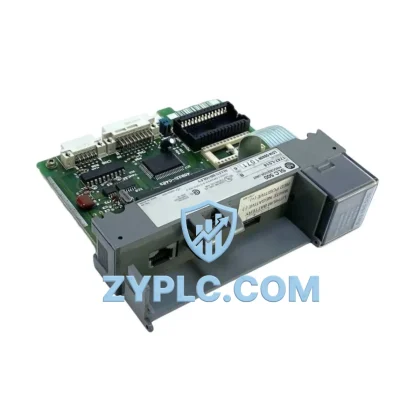
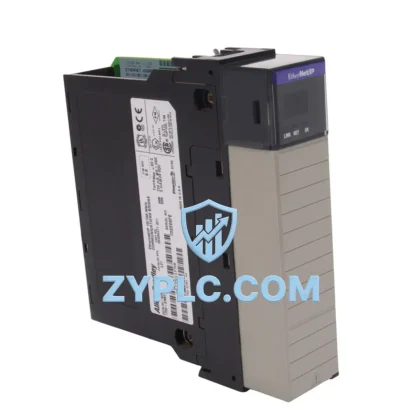
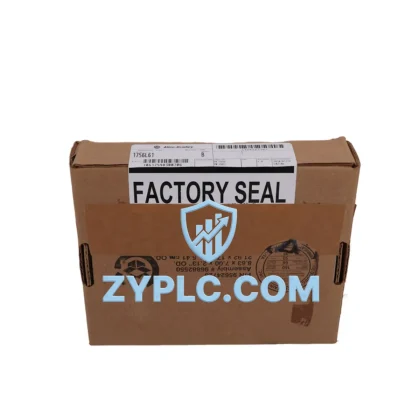
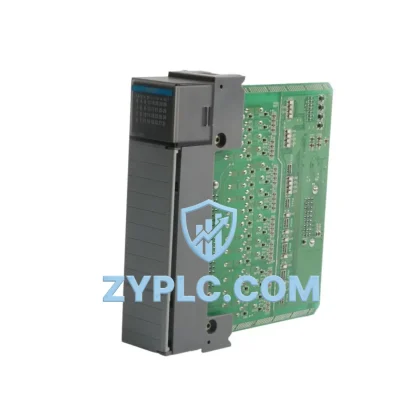
Allen-Bradley 1747-SCNR Energy-Saving ControlNet Scanner SLC 500: Precision Energy Control and Production Line Optimization
The Allen-Bradley 1747-SCNR is a high-performance ControlNet Scanner Module engineered for the SLC 500 programmable controller platform. In modern industrial environments where energy costs and equipment utilization directly impact profitability, the 1747-SCNR delivers deterministic, high-speed network scanning that eliminates wasted control cycles, reduces idle power draw across connected nodes, and enables tighter synchronization between drive systems, I/O subsystems, and supervisory controllers. Whether deployed in automotive assembly, food and beverage processing, material handling, or discrete manufacturing, this module serves as the backbone of an energy-aware automation architecture.
Unlike conventional scanner modules that poll devices at fixed intervals regardless of process state, the 1747-SCNR’s ControlNet-based scheduled communication model ensures that data is exchanged only when needed, at precisely defined intervals. This reduces unnecessary bus traffic, lowers CPU overhead on the SLC 5/05 processor, and allows connected variable frequency drives — such as the PowerFlex 40 and PowerFlex 700 — to receive speed reference and torque commands with minimal latency. The result is smoother motor acceleration profiles, reduced inrush current events, and measurable reductions in peak demand charges on the facility’s energy bill.
Efficiency Performance Table
| Parameter |
Specification / Value |
| SKU / Part Number |
1747-SCNR |
| Brand |
Allen-Bradley (Rockwell Automation) |
| Series |
SLC 500 |
| Module Type |
ControlNet Scanner Module |
| Network Protocol |
ControlNet (IEEE 802.4 / ANSI/EIA-709) |
| Max Scheduled Connections |
Up to 48 scheduled connections |
| Communication Rate |
5 Mbps (ControlNet) |
| Power Consumption |
≤ 800 mA @ 5 VDC (backplane) |
| Operating Temperature |
0°C to 60°C (32°F to 140°F) |
| Compatible Systems |
SLC 500 (SLC 5/02, 5/03, 5/04, 5/05), RSLogix 500, RSNetWorx for ControlNet |
| Application Environment |
Discrete manufacturing, process control, material handling, energy management |
| Energy Optimization Value |
Scheduled I/O reduces bus idle cycles; enables precise VFD speed control to cut motor energy waste |
| Warranty |
12-Month Warranty |
| Origin |
USA |
Energy-Aware Automation Architecture
The 1747-SCNR integrates seamlessly into a layered industrial automation architecture designed around energy efficiency. At the drive layer, PowerFlex 40 and PowerFlex 700 variable frequency drives connect to the ControlNet network via 20-COMM-C ControlNet adapters, receiving precise speed and torque references from the SLC 5/05 processor through the 1747-SCNR scanner. This closed-loop drive control eliminates the energy waste associated with fixed-speed motor operation — a critical advantage in pump, fan, and conveyor applications where load varies significantly throughout the production cycle.
At the I/O layer, 1794 FLEX I/O modules distributed across the production line report real-time sensor data — including current transformers, pressure transducers, and temperature sensors — back to the SLC 500 controller via ControlNet. The 1747-SCNR manages these scheduled connections with microsecond-level repeatability, ensuring that the controller always has fresh process data without polling overhead. This architecture supports integration with the PowerMonitor 1000 and PowerMonitor 5000 energy monitoring units, which can be connected to the same ControlNet segment to provide per-circuit power consumption data directly accessible to the SLC 500 program logic.
For human-machine interface and supervisory visibility, PanelView Plus 6 terminals connected via ControlNet display real-time energy KPIs — kilowatt-hours per production unit, motor load percentage, and drive efficiency ratings — giving operators immediate feedback on energy performance. The 1747-SCNR’s deterministic communication schedule ensures that HMI data updates remain consistent even under high network load, preventing the display lag that can cause operators to make suboptimal manual interventions. At the network infrastructure level, ControlNet repeaters and taps maintain signal integrity across long cable runs in large facilities, preserving the scheduled communication model that underpins the entire energy optimization strategy.
The 1747-SCNR also supports unscheduled (explicit) messaging for configuration and diagnostics, allowing RSNetWorx for ControlNet to perform live network health checks without interrupting scheduled I/O traffic. This capability is essential for predictive maintenance workflows: maintenance engineers can query drive fault logs, I/O module diagnostics, and network error counters from a connected laptop without taking the production line offline, reducing both planned and unplanned downtime.
Power Optimization in Real Production Lines
In a typical discrete manufacturing environment, the 1747-SCNR contributes to energy savings across multiple dimensions. First, by enabling precise variable frequency drive control, it eliminates the energy penalty of throttling drives with mechanical dampers or inlet vanes — a common workaround in facilities still using fixed-speed motor starters. A conveyor system controlled through the 1747-SCNR and a PowerFlex 700 drive can reduce motor energy consumption by 20–40% compared to across-the-line starting, simply by matching belt speed to actual production demand.
Second, the module’s scheduled communication model reduces the SLC 5/05 processor’s scan time overhead, allowing the controller to execute energy management logic — such as load shedding during peak tariff periods, staggered motor start sequences to reduce demand charges, and automatic speed reduction during line stoppages — with greater precision and lower latency. These control strategies, when implemented correctly, can reduce a facility’s peak demand charge by 10–15%, a significant cost reduction given that demand charges often represent 30–50% of an industrial electricity bill.
Third, the 1747-SCNR’s support for up to 48 scheduled connections means that a single SLC 500 rack can monitor and control a large number of energy-consuming devices simultaneously. This consolidation reduces the need for multiple standalone controllers, each with its own power supply and backplane current draw, lowering the overall control system energy footprint. Combined with 1746 SLC 500 analog input modules reading current and voltage signals from the production line, the controller can implement real-time power factor correction commands to connected drives, further improving energy efficiency at the point of load.
From a maintenance perspective, the 1747-SCNR’s network diagnostics capabilities support condition-based maintenance programs. By monitoring ControlNet error rates and scheduled connection health, maintenance teams can identify degrading cable connections, failing network taps, or overloaded network segments before they cause production stoppages. Preventing a single unplanned downtime event — which in a high-throughput manufacturing environment can cost tens of thousands of dollars in lost production and energy waste from restart sequences — more than justifies the investment in a quality scanner module with a 12-month warranty and pre-shipment functional testing.
Every 1747-SCNR unit supplied by ZYPLC undergoes outgoing quality control testing that verifies ControlNet communication functionality, backplane interface integrity, and scheduled connection establishment before shipment. Stock availability is maintained to support urgent replacement requirements, with fast dispatch to minimize production downtime. The 12-month warranty covers manufacturing defects and ensures that your investment in energy-efficient automation infrastructure is protected.
Energy Optimization FAQ
Q1: How does the 1747-SCNR contribute to measurable energy savings in motor-driven applications?
The 1747-SCNR enables deterministic, low-latency communication between the SLC 500 controller and connected variable frequency drives such as the PowerFlex 40 and PowerFlex 700. By delivering precise speed reference commands on a scheduled ControlNet cycle, the module allows drives to operate motors at exactly the speed required by the process — eliminating the energy waste of fixed-speed operation. In pump and fan applications following affinity laws, even a 20% speed reduction yields approximately 50% energy savings, and the 1747-SCNR’s reliable communication is what makes that precise speed control possible.
Q2: Is the 1747-SCNR compatible with existing SLC 500 systems and RSLogix 500 programming environments?
Yes. The 1747-SCNR is designed for direct installation in any SLC 500 modular chassis (1746 series) and is fully supported by RSLogix 500 and RSNetWorx for ControlNet. It is compatible with SLC 5/02, 5/03, 5/04, and 5/05 processors. No firmware upgrades to the host processor are required for basic scanner functionality, making it a straightforward drop-in addition to existing SLC 500 installations seeking to add ControlNet network scanning capability.
Q3: Can the 1747-SCNR replace a failed scanner module without reprogramming the entire SLC 500 system?
In most cases, yes. The ControlNet network configuration is stored in RSNetWorx for ControlNet and can be re-downloaded to the replacement 1747-SCNR after installation. The SLC 500 program logic referencing the scanner’s I/O image table does not need to be modified, provided the replacement module is configured with the same network address and scheduled connection parameters as the original. ZYPLC recommends maintaining a backup of the RSNetWorx network configuration file to facilitate rapid replacement and minimize downtime.
Q4: What does the 12-month warranty cover, and what is the testing process before shipment?
The 12-month warranty covers manufacturing defects and functional failures under normal operating conditions. Prior to shipment, each 1747-SCNR unit undergoes functional testing that verifies ControlNet port operation, backplane communication integrity, and LED status indicator functionality. Units that do not pass outgoing quality control are not shipped. In the event of a warranty claim, ZYPLC provides replacement or repair support. Contact our team at [email protected] or +86 19859288691 for warranty service inquiries.
© 2026 ZYPLC. All rights reserved.
Original Source: https://zyplc.com
Contact: +86 19859288691 | [email protected]