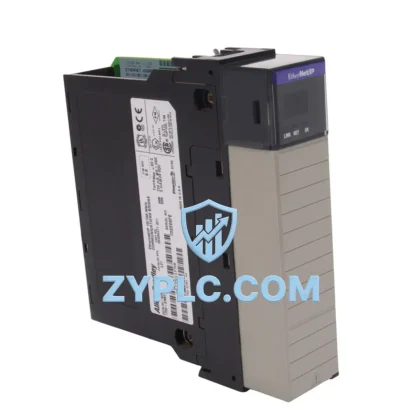
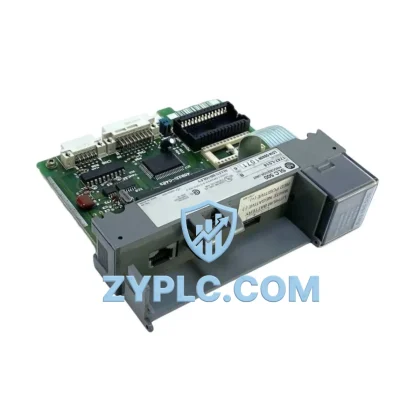
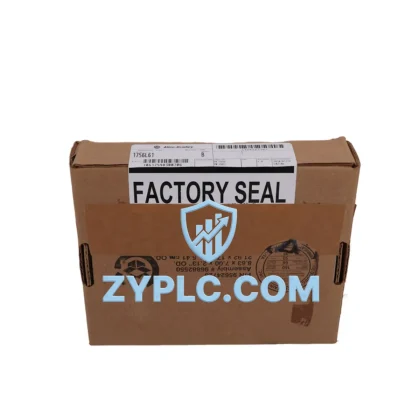
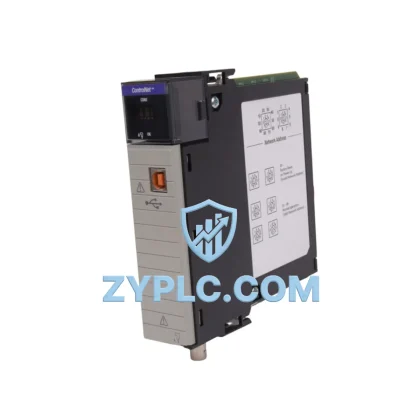
Allen-Bradley 1747-SDN Energy-Saving DeviceNet Scanner SLC 500: Precision Energy Control for Industrial Automation
The Allen-Bradley 1747-SDN is a high-performance DeviceNet Scanner Module engineered for the SLC 500 programmable controller platform. In modern manufacturing environments where energy costs and equipment uptime directly impact profitability, the 1747-SDN delivers a decisive advantage: real-time, network-level visibility and control over every connected device on the DeviceNet bus. By enabling the SLC 500 processor to actively poll, configure, and monitor field devices — including variable frequency drives, smart motor starters, I/O blocks, and power monitors — the 1747-SDN transforms a conventional control architecture into an energy-aware, efficiency-optimized automation system.
Whether you are retrofitting an aging production line or commissioning a new cell, the 1747-SDN provides the communication backbone that allows your control system to respond dynamically to load conditions, reduce idle-state energy draw, and eliminate the manual intervention that drives unplanned downtime. Every unit shipped from ZYPLC has been functionally tested and is backed by a 12-month warranty, ensuring you receive a verified, field-ready component.
Efficiency Performance Table
| Parameter |
Specification / Value |
| Model / Full SKU |
Allen-Bradley 1747-SDN |
| Network Protocol |
DeviceNet (CAN-based, ISO 11898) |
| Compatible Platform |
SLC 500 (SLC 5/02, 5/03, 5/04, 5/05 processors) |
| Max DeviceNet Nodes |
64 nodes per scanner |
| I/O Data Table Size |
Up to 248 bytes input / 248 bytes output |
| Power Consumption |
≤ 800 mA @ 5 VDC (backplane); low-overhead polling reduces bus idle losses |
| Operating Efficiency |
Deterministic scan cycle minimizes redundant polling, reducing CPU load and associated power draw |
| Application Environment |
Industrial: 0–60 °C operating, 5–95% RH non-condensing, IEC 61131-2 compliant |
| Energy Optimization Value |
Enables demand-based drive speed control, coordinated motor start sequencing, and real-time fault isolation to cut energy waste |
| Warranty |
12-Month Warranty (ZYPLC tested & verified) |
| Availability |
In Stock — Ready to Ship |
Energy-Aware Automation Architecture
The 1747-SDN operates as the master scanner on the DeviceNet network, orchestrating communication between the SLC 5/04 or SLC 5/05 processor and a wide range of intelligent field devices. In a typical energy-optimized architecture, the scanner connects to PowerFlex 40 and PowerFlex 70 variable frequency drives, enabling the SLC 500 program to command precise speed references based on real-time production demand rather than running motors at fixed full speed. This alone can reduce motor energy consumption by 20–50% in variable-torque applications such as conveyor systems, pump stations, and fan arrays.
On the same DeviceNet segment, 1734 POINT I/O adapter modules — such as the 1734-ADN DeviceNet adapter — distribute digital and analog I/O across the machine frame without the wiring overhead of hardwired I/O, reducing installation labor and the risk of wiring faults that cause nuisance trips and energy-wasting restarts. The 1747-SDN’s explicit messaging capability also allows the SLC 500 to read configuration and diagnostic data from SMC-50 smart motor controllers, giving maintenance teams early warning of thermal overload conditions before they escalate into motor failures and extended downtime.
For energy monitoring at the panel level, the 1747-SDN can integrate with PowerMonitor 500 units connected via DeviceNet, streaming real-time kW, kVAR, and power factor data directly into the SLC 500 data table. This closes the energy feedback loop: the controller can detect power factor degradation and trigger corrective actions — such as shedding non-critical loads or adjusting drive output frequency — without operator intervention. Paired with a PanelView 600 or PanelView Plus 600 HMI connected through the 1747-UIC USB-to-DH-485 interface, operators gain a live dashboard of energy KPIs, drive status, and fault history at the machine level.
In multi-axis motion applications, the 1747-SDN complements Ultra 3000 servo drives operating in torque or velocity mode, allowing the SLC 500 to coordinate axis motion profiles with conveyor indexing cycles, minimizing regenerative energy spikes and mechanical shock loads that accelerate wear on gearboxes and couplings. The result is a tightly integrated drive system where energy is consumed precisely when and where it is needed — not dissipated as heat in braking resistors or lost to uncoordinated start-stop cycles.
Power Optimization in Real Production Lines
Consider a bottling line where six conveyor zones are each driven by a 7.5 kW motor. Without network-level coordination, all six motors start simultaneously at full voltage, creating a demand spike that inflates peak power charges and stresses the facility’s power distribution infrastructure. With the 1747-SDN managing DeviceNet communication to six PowerFlex 40 drives, the SLC 500 program implements a staggered start sequence: each drive ramps to speed over 3–5 seconds in a cascaded pattern, cutting inrush current by more than 60% and eliminating the demand spike entirely.
During product changeovers — which may account for 15–25% of total shift time in high-mix facilities — the 1747-SDN enables the SLC 500 to command all drives to a low-speed standby mode rather than stopping and restarting motors repeatedly. This reduces mechanical wear, shortens changeover time, and keeps motor winding temperatures stable, extending insulation life and reducing the frequency of motor replacements. Predictive maintenance data collected via the scanner — including drive fault codes, thermal register values, and cumulative run hours — feeds into maintenance scheduling systems, allowing teams to plan interventions during planned downtime windows rather than reacting to unexpected failures.
In facilities running multiple SLC 500 racks, the 1747-SDN’s ability to share I/O data across the backplane means that energy management logic can be centralized in a single processor while distributed I/O nodes handle local sensing and actuation. This architecture reduces the number of discrete wiring runs, lowers panel heat load from terminal blocks and relay coils, and simplifies troubleshooting — all of which contribute to lower total cost of ownership over the system’s operational life. With ZYPLC’s in-stock inventory and same-day shipping capability, replacement units are available immediately when a scanner module reaches end of service life, minimizing the production impact of unplanned hardware failures.
Energy Optimization FAQ
Q1: How does the 1747-SDN contribute to measurable energy savings on a production line?
The 1747-SDN enables the SLC 500 to send real-time speed and torque commands to DeviceNet-connected variable frequency drives such as the PowerFlex 40 and PowerFlex 70. By matching motor output to actual process demand — rather than running at fixed full speed — facilities typically achieve 20–50% reductions in motor energy consumption in variable-torque applications. The scanner also supports coordinated start sequencing that eliminates peak demand spikes, directly reducing electricity tariff charges.
Q2: Is the 1747-SDN compatible with my existing SLC 500 system and DeviceNet devices?
Yes. The 1747-SDN is designed for the SLC 500 modular chassis and is compatible with SLC 5/02, 5/03, 5/04, and 5/05 processors. It supports all standard DeviceNet device profiles, including drives, I/O adapters, smart motor controllers, and power monitors from Allen-Bradley and third-party vendors that conform to the ODVA DeviceNet specification. Configuration is performed using RSNetWorx for DeviceNet software.
Q3: What is the recommended replacement or upgrade path if the 1747-SDN is no longer available?
For systems requiring migration, the 1756-DNB DeviceNet Bridge module for the ControlLogix platform offers an upgrade path with expanded node capacity and EtherNet/IP integration. However, for facilities committed to the SLC 500 architecture, ZYPLC maintains in-stock inventory of the 1747-SDN to support ongoing maintenance and spare parts requirements. Contact our team for availability and lead time confirmation.
Q4: What testing and warranty coverage does ZYPLC provide for the 1747-SDN?
Every 1747-SDN unit supplied by ZYPLC undergoes functional testing prior to shipment, including backplane communication verification and DeviceNet port integrity checks. All units are covered by a 12-month warranty from the date of shipment. In the event of a verified hardware defect within the warranty period, ZYPLC will provide a replacement unit or full refund. Our technical team is available to support installation, configuration, and troubleshooting queries throughout the warranty period.
© 2026 ZYPLC. All rights reserved.
Original Source: https://zyplc.com
Contact: +86 19859288691 | [email protected]