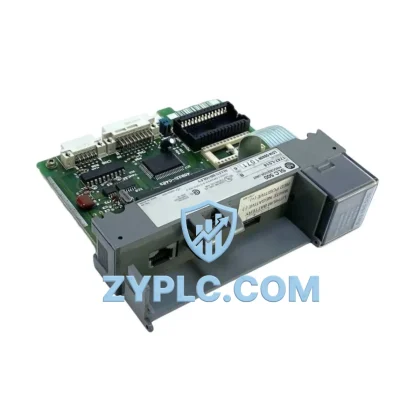
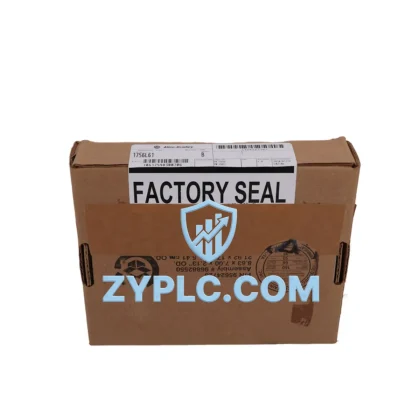
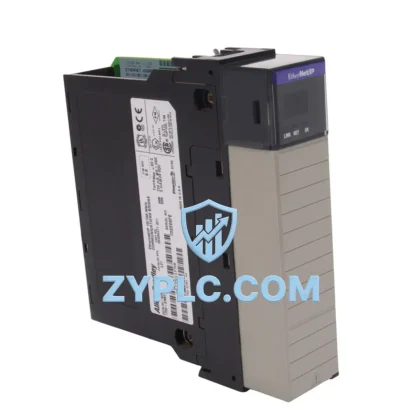
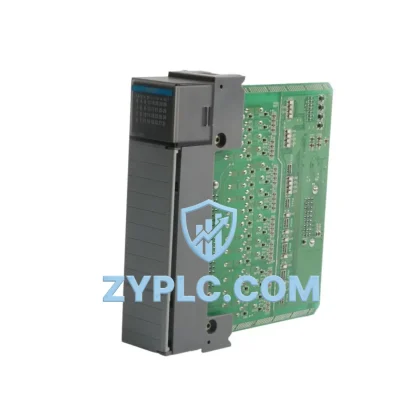
Allen-Bradley 1756-BA2 System-Ready Battery Module for ControlLogix Architecture
The Allen-Bradley 1756-BA2 is a dedicated lithium battery module engineered to sustain memory retention and real-time clock functionality within the Rockwell Automation ControlLogix platform. In any layered industrial automation architecture, power continuity at the controller level is not a peripheral concern — it is a foundational requirement. The 1756-BA2 addresses this requirement directly, providing reliable backup energy to the 1756 series CPU modules during power interruptions, planned shutdowns, and maintenance windows. Its role within the control system extends beyond simple energy storage: it is a critical enabler of system integrity, data persistence, and rapid recovery across the entire automation stack.
When deployed alongside ControlLogix processors such as the 1756-L71, 1756-L73, or 1756-L83E, the 1756-BA2 ensures that user program memory, I/O configuration data, and tag databases remain intact even when primary power is removed. This is particularly significant in process-critical environments where re-downloading controller programs or reconfiguring I/O maps would introduce unacceptable downtime. The battery module installs directly into the CPU module housing without requiring tools or system shutdown, supporting hot-swap capability that aligns with the ControlLogix platform’s emphasis on maintainability and uptime.
From a system architecture perspective, the 1756-BA2 operates at the control layer but its influence cascades across every dependent layer. The I/O layer — populated with modules such as the 1756-IB16 digital input module, 1756-OB16E digital output module, and 1756-IF8 analog input module — relies on the CPU retaining its configuration and scan cycle parameters. If the controller loses its program due to a power event without battery backup, the entire I/O subsystem becomes non-functional until a full program restore is completed. The 1756-BA2 eliminates this risk, preserving the controller state and allowing the system to resume normal operation immediately upon power restoration.
At the network and communications layer, ControlLogix systems frequently integrate EtherNet/IP communication modules such as the 1756-EN2T or 1756-EN3TR for high-speed peer-to-peer and controller-to-HMI communications. These modules depend on the CPU maintaining its routing tables and connection parameters. Battery-backed memory retention ensures that network topology configurations, producer-consumer relationships, and scheduled messaging parameters are preserved across power cycles, reducing commissioning time after any unplanned outage. Similarly, ControlNet and DeviceNet gateway modules integrated into the chassis benefit from the controller’s ability to resume communications without manual intervention.
The power layer of a ControlLogix system — typically anchored by the 1756-PA75 or 1756-PB75 chassis power supply — delivers regulated DC power to all modules within the 1756 backplane. The 1756-BA2 complements this infrastructure by providing localized backup power specifically to the CPU’s volatile memory circuits, a function the chassis power supply is not designed to perform. This division of responsibility reflects the modular design philosophy of the ControlLogix platform, where each component fulfills a precise role within the overall system architecture.
In redundancy-critical applications, the 1756-BA2 is equally important in both primary and secondary controller chassis. ControlLogix redundancy systems — built around the 1756-RM2 redundancy module — require both CPUs to maintain synchronized program states. Battery backup in each chassis ensures that a switchover event does not result in memory loss on either controller, preserving the integrity of the redundancy architecture and meeting the availability requirements of SIL-rated safety systems and high-availability process control loops.
For human-machine interface integration, PanelView Plus terminals and FactoryTalk View SE servers communicate with ControlLogix CPUs over EtherNet/IP. The HMI layer depends on the controller maintaining consistent tag values and alarm states. Battery-backed memory retention means that after a power event, the HMI can reconnect to the controller and immediately display accurate process data without requiring operator intervention to reset or reinitialize the controller program.
Long-term maintenance planning is simplified by the 1756-BA2’s straightforward replacement procedure and clear battery status indication through the CPU module’s BAT LED. Maintenance teams can schedule battery replacements during planned outages without disrupting production, and the module’s compatibility across the 1756 CPU family reduces the number of spare part SKUs required in the maintenance inventory. Stocking the 1756-BA2 as a standard spare ensures rapid response to battery depletion alerts, minimizing the window of exposure to unprotected memory loss.
All 1756-BA2 units supplied by ZYPLC are covered by a 12-Month Warranty and undergo functional testing prior to shipment. Each unit is verified for correct voltage output, terminal integrity, and compatibility with the 1756 CPU module interface. This quality assurance process supports Contextual Integration — ensuring that the battery module performs correctly within the specific control system architecture in which it is deployed, rather than simply meeting generic electrical specifications.
Architecture Specification Table
| Parameter |
Specification |
| System Role |
CPU Memory Backup Battery Module |
| Compatible Platform |
Rockwell Automation ControlLogix 1756 Series |
| Compatible CPUs |
1756-L71, 1756-L73, 1756-L74, 1756-L75, 1756-L83E, 1756-L85E and compatible variants |
| Battery Chemistry |
Lithium (Li/SOCl₂) |
| Nominal Voltage |
3.0 V DC |
| Typical Backup Duration |
Up to 1.5 years (varies by CPU model and operating temperature) |
| Installation Method |
Tool-free, hot-swap capable |
| Backplane Interface |
Direct CPU module housing mount (no backplane slot required) |
| Communication Dependency |
None (passive component; supports EtherNet/IP, ControlNet, DeviceNet CPU configurations) |
| Operating Temperature |
0 °C to 60 °C |
| Storage Temperature |
-40 °C to 85 °C |
| Certifications |
UL Listed, CE Marked, RoHS Compliant |
| Warranty |
12-Month Warranty (ZYPLC) |
| Origin |
United States |
Coordinated Control System Design
The 1756-BA2 is most effectively understood within the context of the complete ControlLogix system it supports. A typical architecture begins with the 1756-A17 or 1756-A7 chassis, which houses the CPU, power supply, and I/O modules on a common backplane. The 1756-L73 or 1756-L83E processor occupies the controller slot, with the 1756-BA2 installed directly into the CPU’s battery compartment. The 1756-PA75 power supply provides regulated 1.2 A at 5 V DC and 3 A at 24 V DC to the backplane, while the 1756-BA2 independently sustains the CPU’s SRAM and real-time clock during power interruptions.
Digital I/O modules such as the 1756-IB16 (16-point 24 V DC input) and 1756-OB16E (16-point electronically fused output) populate the remaining chassis slots, with their configuration data preserved in the CPU’s battery-backed memory. Analog signal acquisition is handled by modules such as the 1756-IF8, which provides eight channels of 4–20 mA or 0–10 V DC input, and the 1756-OF8, which provides eight channels of analog output for valve positioners and variable-speed drive setpoints.
Network connectivity is established through the 1756-EN2T EtherNet/IP communication module, enabling high-speed messaging to SCADA servers, historian platforms, and remote I/O adapters. In redundant architectures, the 1756-RM2 redundancy module synchronizes program state between primary and secondary chassis, with the 1756-BA2 installed in both CPUs to ensure memory integrity across switchover events. Terminal modules and wiring systems from the 1492 series complete the field wiring interface, providing organized, labeled termination points for field instrument cables.
Application in Layered Automation Systems
The 1756-BA2 finds application across a broad range of industrial sectors where ControlLogix platforms are deployed as the primary control architecture. In power generation and distribution facilities, ControlLogix systems manage turbine control, switchgear sequencing, and protection relay coordination. Battery backup ensures that control programs and setpoints are retained during grid disturbances or planned outages, supporting rapid restart without manual program restoration.
In oil and gas processing and petrochemical plants, ControlLogix controllers manage compressor sequencing, separator control, and pipeline pressure regulation. These applications demand continuous controller availability, and the 1756-BA2 provides the memory retention necessary to resume control immediately after a power event without operator intervention. Water and wastewater treatment facilities rely on ControlLogix for pump sequencing, chemical dosing, and SCADA integration, where battery-backed memory ensures that treatment process parameters are preserved across power interruptions.
Mining and minerals processing operations deploy ControlLogix in conveyor control, crusher management, and flotation cell automation. The harsh electrical environment of mining facilities — characterized by frequent voltage sags and transients — makes battery backup particularly valuable for protecting controller memory. In metals and metallurgy applications, ControlLogix manages furnace temperature profiles, rolling mill sequencing, and casting line control, where program loss would require time-consuming manual re-entry of complex process recipes.
Packaging and material handling lines use ControlLogix for high-speed motion coordination and vision system integration, where the 1756-BA2 ensures that motion profiles and cam tables stored in controller memory are preserved across shift changes and planned maintenance windows. Process control applications in food and beverage, pharmaceutical, and specialty chemical manufacturing benefit from battery-backed memory retention that supports FDA 21 CFR Part 11 compliance by preserving audit trail data and batch records in controller memory.
Architecture Engineering FAQ
Q1: Which ControlLogix CPU models are compatible with the 1756-BA2, and can it be replaced without powering down the system?
The 1756-BA2 is compatible with the full range of 1756 series ControlLogix CPU modules, including the 1756-L71, 1756-L73, 1756-L74, 1756-L75, 1756-L83E, and 1756-L85E. The battery module installs into a dedicated compartment on the CPU module housing and does not occupy a backplane slot. Replacement can be performed while the CPU is powered and running, as the module is designed for hot-swap operation. Rockwell Automation recommends replacing the battery when the BAT LED on the CPU module illuminates solid red, indicating that battery voltage has dropped below the minimum threshold for reliable memory retention. ZYPLC supplies the 1756-BA2 with a 12-Month Warranty and recommends maintaining at least one spare unit per ControlLogix chassis in the site maintenance inventory.
Q2: How does the 1756-BA2 interact with ControlLogix redundancy architectures using the 1756-RM2 module?
In a ControlLogix redundancy system, both the primary and secondary chassis contain independent CPU modules, each requiring its own 1756-BA2 battery. The 1756-RM2 redundancy module synchronizes program state, I/O data, and tag values between the two CPUs in real time. If a switchover event occurs — whether due to a detected fault or a manual command — the secondary CPU assumes control with its program state fully intact, provided its battery is functional. A depleted or missing battery in the secondary CPU creates a vulnerability: if the secondary chassis loses power during the period between synchronization and switchover, its program memory may be corrupted, defeating the purpose of the redundancy architecture. ZYPLC recommends replacing both batteries simultaneously during scheduled maintenance to ensure consistent backup capability across the redundancy pair.
Q3: What is the expected service life of the 1756-BA2, and how should long-term maintenance be planned for multi-chassis installations?
The 1756-BA2 has a typical service life of approximately 1.5 years under normal operating conditions (25 °C ambient, CPU powered continuously). Elevated operating temperatures reduce battery life, and installations in warm control cabinets or outdoor enclosures should plan for more frequent replacement intervals. For multi-chassis installations, ZYPLC recommends implementing a staggered replacement schedule based on installation date records, replacing batteries on a 12-month cycle to ensure that no battery approaches end-of-life without a planned replacement. All 1756-BA2 units supplied by ZYPLC are covered by a 12-Month Warranty and are tested prior to shipment to verify correct voltage output and terminal integrity. Contextual Integration support is available to assist engineering teams in planning battery replacement schedules that align with planned maintenance outages and minimize exposure to unprotected memory loss.
© 2026 ZYPLC. All rights reserved.
Original Source: https://zyplc.com
Contact: +86 19859288691 | [email protected]