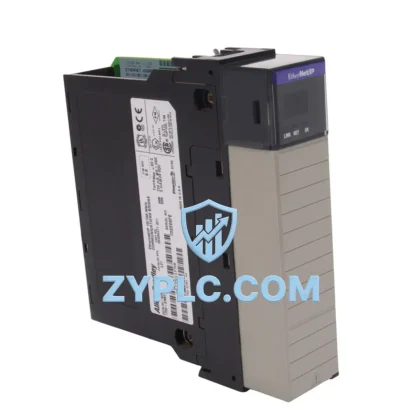
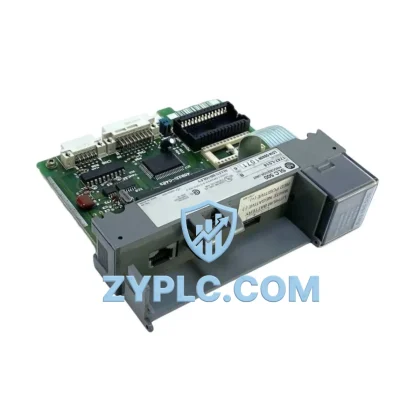
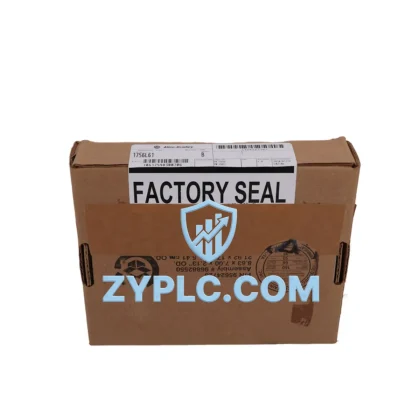
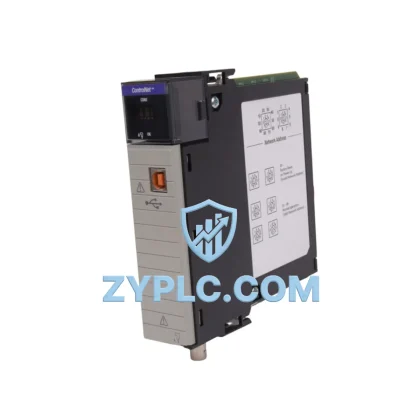
Allen-Bradley 1756-CN2/C Energy-Saving ControlNet Bridge Module for Optimized ControlLogix Automation
The Allen-Bradley 1756-CN2/C is a high-performance ControlNet Bridge Module designed for the ControlLogix platform, engineered to deliver deterministic, high-speed communication across industrial networks while actively contributing to energy-efficient plant operations. In modern manufacturing environments where every watt of consumed power and every second of unplanned downtime translates directly into operational cost, the 1756-CN2/C provides the communication backbone that enables smarter energy management, tighter motor control loops, and optimized production line throughput.
Unlike passive network bridges, the 1756-CN2/C integrates seamlessly into energy-aware automation architectures. By maintaining scheduled and unscheduled ControlNet traffic with microsecond-level precision, it ensures that energy data collected from field devices reaches the control layer without latency-induced distortion — a critical requirement when the control system is making real-time decisions about drive speed, motor load, and process setpoints.
Efficiency Performance Table
| Parameter |
Specification / Value |
| SKU / Part Number |
1756-CN2/C |
| Brand |
Allen-Bradley (Rockwell Automation) |
| Series |
ControlLogix 1756 |
| Product Type |
ControlNet Bridge Module |
| Network Protocol |
ControlNet (IEC 61158) |
| Max Network Nodes |
99 nodes per network |
| Communication Speed |
5 Mbps |
| Power Consumption |
≤ 4.5 W (backplane draw) |
| Operating Efficiency |
Deterministic scheduled I/O + unscheduled messaging |
| Compatible Systems |
ControlLogix, GuardLogix, SoftLogix platforms |
| Application Environment |
Discrete manufacturing, process control, energy management, motion coordination |
| Energy Optimization Value |
Enables real-time drive feedback loops, reduces polling overhead, supports predictive maintenance data pipelines |
| Origin |
USA |
| Warranty |
12-Month Warranty — tested and verified before shipment |
Energy-Aware Automation Architecture
The 1756-CN2/C operates as the communication hub within a ControlLogix chassis, bridging the controller backplane to the ControlNet field network. In a typical energy-optimized plant layout, the module works in concert with a 1756-L73 or 1756-L83E ControlLogix CPU, which executes the energy management logic and production scheduling algorithms. The controller’s scan cycle is synchronized with the ControlNet scheduled update time (NUT), ensuring that I/O data from field devices — including power meters, drive status words, and temperature sensors — arrives at the controller at precisely defined intervals without wasted polling cycles.
On the drive side, PowerFlex 755 and PowerFlex 525 variable frequency drives connected via ControlNet adapters such as the 20-COMM-C report real-time energy consumption, motor speed, and torque data back through the 1756-CN2/C to the ControlLogix controller. This closed-loop architecture allows the PLC program to dynamically adjust drive output frequency based on actual load demand rather than running motors at fixed speed — a practice that can reduce motor energy consumption by 20–50% in variable-torque applications such as pumps, fans, and compressors.
For distributed I/O, 1794-ACN15 FLEX I/O ControlNet adapters extend the network to remote I/O panels across the production floor, collecting analog signals from current transformers, power transducers, and pressure transmitters without requiring dedicated point-to-point wiring runs. This topology reduces installation material costs and simplifies energy sub-metering at the machine level. Similarly, 1756-CNB ControlNet Bridge Modules in adjacent chassis allow multi-chassis ControlLogix systems to share energy data across production zones, enabling plant-wide energy dashboards without additional communication infrastructure.
At the HMI layer, PanelView Plus 7 terminals connected to the ControlLogix system via EtherNet/IP display real-time energy KPIs — kWh per production unit, peak demand windows, and drive efficiency curves — giving operators immediate visibility into energy performance without leaving the production floor. When integrated with a FactoryTalk View SE SCADA system, the data collected through the 1756-CN2/C network becomes the foundation for energy trending reports, shift-based consumption analysis, and demand response strategies.
For motion-intensive applications, the 1756-CN2/C supports coordination with Kinetix 6000 multi-axis servo drives via ControlNet, enabling synchronized multi-axis motion profiles that minimize mechanical shock, reduce regenerative energy waste, and improve cycle time consistency. The deterministic nature of ControlNet is particularly valuable here — jitter in motion command delivery directly translates to positional error and wasted servo energy.
Power Optimization in Real Production Lines
In automotive body-in-white welding lines, the 1756-CN2/C enables the ControlLogix controller to monitor weld gun transformer power draw in real time, automatically reducing idle-state power consumption between weld cycles by commanding servo positioners and weld timers through coordinated ControlNet I/O updates. Plants using this architecture have reported measurable reductions in standby energy consumption during shift changeovers and scheduled breaks.
In food and beverage processing, the module’s ability to maintain deterministic communication with remote FLEX I/O panels controlling conveyor drives, filling station actuators, and CIP pump VFDs allows the control system to implement demand-based speed control across the entire line. Rather than running all conveyors at maximum speed regardless of upstream buffer levels, the ControlLogix program — fed by real-time I/O data through the 1756-CN2/C — adjusts conveyor speeds dynamically, reducing aggregate motor energy consumption and mechanical wear simultaneously.
Predictive maintenance is another area where the 1756-CN2/C delivers measurable energy savings. By providing a reliable, low-latency communication path for vibration sensor data, motor current signatures, and drive fault histories, the module enables condition-based maintenance strategies that replace fixed-interval maintenance schedules. Catching a deteriorating bearing before it causes a motor failure eliminates not only the energy wasted in an uncontrolled shutdown and restart sequence but also the production losses associated with unplanned downtime.
Every unit of the 1756-CN2/C supplied by ZYPLC undergoes full functional testing prior to shipment, including ControlNet network initialization verification, scheduled I/O communication validation, and backplane communication integrity checks. Stock is maintained on-hand for immediate dispatch, supporting urgent maintenance and replacement requirements without extended lead times.
Energy Optimization FAQ
Q1: How does the 1756-CN2/C contribute to reducing energy consumption in a ControlLogix system?
The 1756-CN2/C enables deterministic, scheduled communication between the ControlLogix controller and field devices including variable frequency drives, power meters, and remote I/O. This real-time data pipeline allows the PLC to implement demand-based control strategies — adjusting motor speeds, sequencing loads, and shedding non-critical power consumers based on actual process conditions rather than fixed setpoints. The result is measurable reduction in motor energy consumption, particularly in variable-torque applications.
Q2: Is the 1756-CN2/C compatible with my existing ControlLogix chassis and software?
The 1756-CN2/C is compatible with all ControlLogix 1756 series chassis and is supported by RSLogix 5000 and Studio 5000 Logix Designer software. It operates alongside other 1756 series modules including 1756-EN2T EtherNet/IP bridges, 1756-IB16 digital input modules, and 1756-OF8 analog output modules within the same chassis without conflict. Firmware revision compatibility should be verified against your controller’s current firmware version prior to installation.
Q3: Can the 1756-CN2/C replace a failed 1756-CN2 or 1756-CN2R module in an existing installation?
The 1756-CN2/C is the current revision of the 1756-CN2 series and is designed as a direct replacement for earlier revisions including 1756-CN2 and 1756-CN2/B. The /C revision incorporates firmware and hardware improvements for enhanced network stability. Configuration is retained in the controller project file, so replacement typically requires only physical module swap and network re-initialization. ZYPLC recommends verifying the NUT setting and node address configuration after replacement.
Q4: What testing and warranty coverage does ZYPLC provide for the 1756-CN2/C?
All 1756-CN2/C modules supplied by ZYPLC are tested prior to shipment, including ControlNet communication initialization, backplane power draw verification, and scheduled I/O data exchange validation. Each unit is covered by a 12-month warranty from the date of shipment. In the event of a verified module fault within the warranty period, ZYPLC will arrange replacement or repair. Contact our technical team at plc.sales@zyplc.com or +86 19859288691 for warranty claims and technical support.
© 2026 ZYPLC. All rights reserved.
Original Source: https://zyplc.com
Contact: +86 19859288691 | plc.sales@zyplc.com