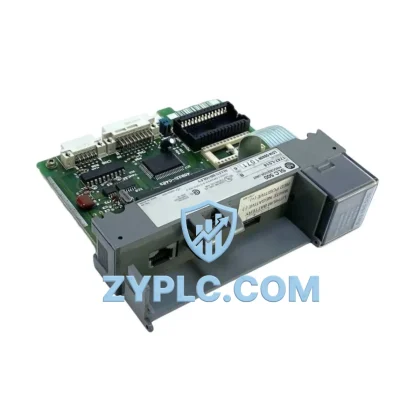
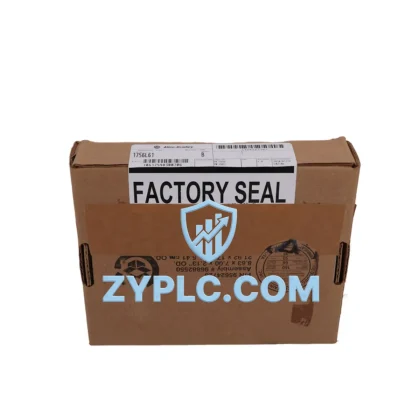
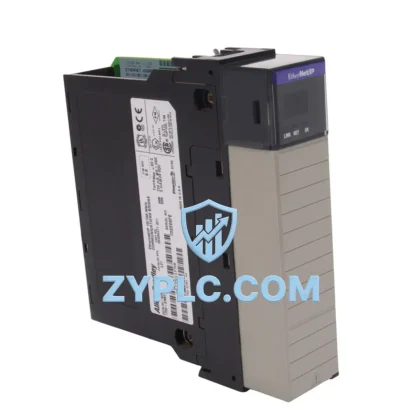
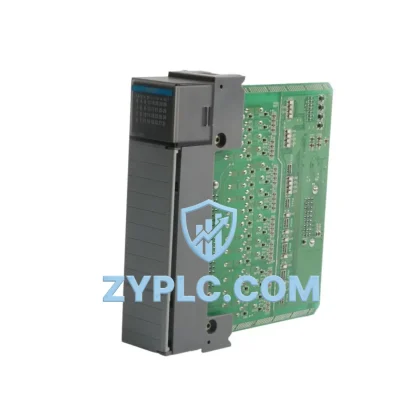
Allen-Bradley 1756-IA16 System-Ready AC Input for ControlLogix Architecture
The Allen-Bradley 1756-IA16 is a 16-point, 120V AC digital input module engineered for seamless integration within the Rockwell Automation ControlLogix 1756 platform. Rather than functioning as a standalone component, the 1756-IA16 occupies a defined role within a layered control architecture — bridging field-level AC signal acquisition with the deterministic scan cycle of the ControlLogix CPU. Its design supports high-density I/O expansion, consistent signal conditioning, and long-term maintainability across demanding industrial environments including power generation, water treatment, petrochemical processing, mining, metallurgy, and discrete manufacturing.
In a fully realized ControlLogix system, the 1756-IA16 is installed into a 1756 chassis backplane — typically a 1756-A7, 1756-A10, or 1756-A13 — and communicates directly with the controller via the high-speed backplane bus. This eliminates the latency associated with remote I/O networks for time-sensitive AC signal inputs, making it ideal for motor starter feedback, valve position confirmation, and field device status monitoring where scan-cycle accuracy is critical.
Architecture Specification Table
| Parameter |
Specification |
| System Role |
Digital AC Input Module — ControlLogix I/O Layer |
| SKU / Catalog Number |
1756-IA16 |
| Brand / Manufacturer |
Allen-Bradley / Rockwell Automation |
| Series |
ControlLogix 1756 |
| Input Points |
16 Points (120V AC) |
| Input Voltage Range |
74–132V AC (47–63 Hz) |
| Input Current (per point) |
Approx. 10 mA at 120V AC |
| Isolation |
Group isolated (8 points per group) |
| Backplane Communication |
1756 ControlLogix Backplane Bus |
| Compatible Chassis |
1756-A4, 1756-A7, 1756-A10, 1756-A13, 1756-A17 |
| Wiring Style |
Removable terminal block (RTB) |
| Operating Temperature |
0°C to 60°C (32°F to 140°F) |
| Relative Humidity |
5–95% non-condensing |
| Installation Environment |
Panel-mount, control cabinet, DIN rail chassis |
| Certifications |
UL, CE, CSA (Class I Div 2) |
| Warranty |
12-Month Warranty — Tested, verified, and ready to deploy |
Coordinated Control System Design
The 1756-IA16 achieves its full value when considered within the broader ControlLogix system architecture. At the controller layer, it pairs directly with processors such as the 1756-L71 or 1756-L73 ControlLogix CPU, which execute ladder logic and function block programs that consume the AC input data delivered by the module. The controller’s scan cycle reads the 1756-IA16’s input image table at each program scan, enabling real-time process decisions based on field AC signal states.
Power integrity for the chassis is maintained by the 1756-PA72 or 1756-PB72 power supply modules, which provide regulated DC power to the backplane and all installed I/O modules including the 1756-IA16. In redundant architectures, a secondary power supply and a 1756-RM2 redundancy module ensure uninterrupted operation during primary controller or power supply faults — a critical requirement in continuous process industries.
On the output side, the 1756-IA16 is commonly paired with digital output modules such as the 1756-OA16 (AC output) or 1756-OB16E (DC output with diagnostics) to form complete input/output pairs for motor control circuits, solenoid valve actuation, and relay-driven field devices. For analog process variables — pressure, temperature, flow — the 1756-IF16 analog input module complements the 1756-IA16 by handling 4–20 mA and voltage signals within the same chassis.
Network connectivity and remote I/O expansion are handled by communication modules such as the 1756-EN2T EtherNet/IP module, which bridges the ControlLogix backplane to plant-level Ethernet networks, SCADA systems, and HMI platforms. For legacy DeviceNet or ControlNet field devices, the 1756-DNB or 1756-CN2 modules extend the system’s communication reach without requiring a separate controller. At the human-machine interface layer, PanelView Plus 7 terminals connect via EtherNet/IP to visualize the AC input states monitored by the 1756-IA16, providing operators with real-time field status dashboards and alarm management.
Terminal block accessories — including the 1756-TBCH cage clamp RTB — simplify field wiring to the 1756-IA16 and support quick module replacement without rewiring, a significant advantage during scheduled maintenance windows or emergency module swaps. This modular wiring approach, combined with the module’s removable terminal block design, reduces mean time to repair (MTTR) and supports the long-term maintainability goals of the overall control system.
Application in Layered Automation Systems
In manufacturing and discrete automation, the 1756-IA16 monitors AC-powered field devices such as motor starter auxiliary contacts, limit switches, and safety relay outputs. Its 16-point density allows a single module slot to cover an entire machine section, reducing chassis slot consumption and simplifying system documentation.
In power generation and electrical substation applications, the module captures AC status signals from circuit breakers, transformer tap changers, and protection relay outputs. The group isolation design prevents fault propagation between field circuits, protecting the controller backplane from transient overvoltages common in high-voltage switchgear environments.
In water and wastewater treatment facilities, the 1756-IA16 integrates with pump motor starters, valve actuator feedback circuits, and level switch arrays. Its compatibility with the full ControlLogix redundancy architecture — including the 1756-RM2 redundancy module and redundant chassis configurations — ensures continuous monitoring even during planned maintenance or unplanned equipment failures.
In petrochemical and refinery environments, the module operates reliably within Class I Division 2 hazardous locations when installed in appropriately rated enclosures. Its deterministic backplane communication ensures that safety-critical AC input states — such as emergency shutdown switch positions and flame detector outputs — are processed within the controller’s defined scan cycle without communication jitter.
In mining and metallurgical operations, the 1756-IA16 supports conveyor system interlocking, crusher motor feedback, and hoisting equipment status monitoring. The module’s robust operating temperature range and vibration tolerance make it suitable for the demanding physical environments typical of underground and surface mining control rooms.
Architecture Engineering FAQ
Q1: Is the 1756-IA16 compatible with all ControlLogix chassis sizes, and can it be used in a redundant controller configuration?
The 1756-IA16 is compatible with all standard 1756-series chassis, including the 1756-A4, A7, A10, A13, and A17. In a redundant ControlLogix configuration using the 1756-RM2 redundancy module, I/O modules including the 1756-IA16 are typically installed in a separate I/O chassis connected via 1756-EN2T EtherNet/IP modules, as the redundant controller chassis pair is reserved for the primary and secondary CPUs and their communication modules. This architecture ensures that I/O remains accessible to whichever controller is currently in the primary role.
Q2: What wiring accessories are required for field connection, and how does the removable terminal block support long-term maintenance?
The 1756-IA16 uses a removable terminal block (RTB) for field wiring — specifically the 1756-TBCH (36-position cage clamp) or 1756-TBS6H (spring clamp variant). The RTB remains in the chassis when the module is removed, meaning field wiring stays intact during module replacement. This design eliminates rewiring time during module swaps, reduces the risk of wiring errors during maintenance, and supports the 12-Month Warranty service process by allowing rapid module exchange without disrupting field connections.
Q3: How does the 1756-IA16 fit into a system with mixed AC and DC I/O requirements, and what is the recommended approach for signal segregation?
In mixed-signal ControlLogix systems, the 1756-IA16 handles 120V AC field inputs while DC digital inputs are managed by modules such as the 1756-IB16 (24V DC) or 1756-IB32 (32-point 24V DC). Best practice is to segregate AC and DC modules within the chassis by grouping them in separate chassis slots or separate chassis altogether when field wiring distances and cabinet layout permit. This segregation minimizes electrical noise coupling between AC and DC circuits and simplifies troubleshooting during commissioning and long-term maintenance. The Contextual Integration approach — designing the I/O layer as a coherent system rather than a collection of individual modules — ensures that signal types, wiring practices, and module selections are aligned from the initial engineering phase through the full operational lifecycle.
© 2026 ZYPLC. All rights reserved.
Original Source: https://zyplc.com
Contact: +86 19859288691 | [email protected]