Allen-Bradley 1756-IA16I Energy-Saving Digital Input Module: Precision Input Control for Optimized ControlLogix Automation
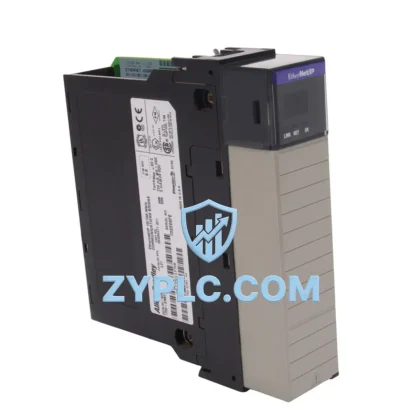
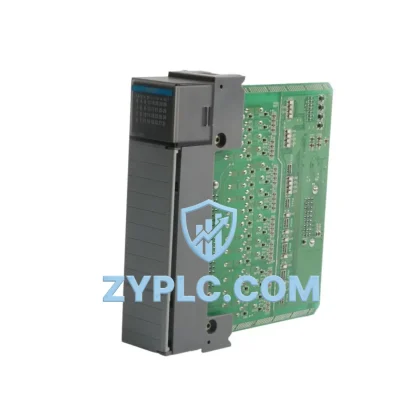
The Allen-Bradley 1756-IA16I is a 16-point, 120V AC isolated digital input module engineered for the ControlLogix platform. In high-demand industrial environments where every watt and every millisecond of cycle time matters, the 1756-IA16I delivers reliable, low-latency signal acquisition that forms the foundation of an energy-aware automation architecture. By ensuring that field-level signals are captured accurately and without delay, this module eliminates the false triggers and missed events that force unnecessary actuator cycles, wasted drive energy, and unplanned downtime.
Each of the 16 input channels is individually isolated, which means ground loops and common-mode noise from adjacent high-power equipment — variable frequency drives, servo amplifiers, or large contactors — cannot corrupt the input signal. Clean, noise-free data reaching the ControlLogix L7x or L8x controller means the control program can make correct decisions on the first scan, avoiding redundant motor starts, over-travel of pneumatic cylinders, and repeated conveyor indexing that silently inflate energy consumption on the production floor.
Efficiency Performance Table
| Parameter |
Specification / Value |
| SKU / Part Number |
1756-IA16I |
| Brand / Series |
Allen-Bradley / ControlLogix 1756 |
| Input Points |
16 (individually isolated) |
| Input Voltage |
74–132V AC, 47–63 Hz |
| Input Current per Point |
≤ 12 mA @ 120V AC (ON state) |
| Backplane Power Consumption |
≤ 75 mA @ 5V DC (backplane) |
| Operating Efficiency |
Individual isolation eliminates cross-channel noise; reduces false-trigger energy waste |
| Compatible Systems |
ControlLogix 1756 chassis, Studio 5000 Logix Designer, RSLogix 5000 |
| Communication / Backplane |
ControlLogix backplane (EtherNet/IP via 1756-EN2T or 1756-EN3TR gateway) |
| Application Environment |
Industrial manufacturing, process control, energy management, discrete automation |
| Energy Optimization Value |
Prevents spurious actuator cycles; supports predictive maintenance data loops |
| Origin |
USA |
| Warranty |
12-Month Warranty — tested and verified before shipment |
Energy-Aware Automation Architecture
The 1756-IA16I does not operate in isolation — it is one node in a tightly integrated energy-aware control system. In a typical ControlLogix-based production cell, field sensors wired to the 1756-IA16I report machine states — door interlocks, proximity switches, pressure confirmation contacts, and motor run-feedback signals — back to the controller at scan rates that keep the program loop tight and responsive.
The controller, often a 1756-L73 or 1756-L83E ControlLogix processor, uses those inputs to command output modules such as the 1756-OA16 AC output module, which drives contactors and solenoids only when the process actually requires them. Pairing the 1756-IA16I with a 1756-IF16 analog input module allows the system to simultaneously monitor process variables — temperature, pressure, flow — alongside discrete states, giving the controller the full picture needed to minimize idle-state energy draw.
On the drive side, a PowerFlex 755 variable frequency drive receives speed references from the ControlLogix program. Because the 1756-IA16I confirms actual machine-ready conditions before the controller issues a run command, the PowerFlex 755 is never commanded to accelerate a motor into a blocked or unready process — a common source of energy waste and mechanical stress. Similarly, Kinetix 5700 servo drives coordinating multi-axis motion benefit from the clean interlock signals the 1756-IA16I provides, ensuring servo axes do not execute positioning moves until upstream conditions are confirmed.
For energy monitoring at the panel level, a 1756-IB16 DC input module can capture pulse outputs from power meters, while a PowerMonitor 5000 unit feeds real-time kWh and power-factor data into the ControlLogix tag database via EtherNet/IP through a 1756-EN2T communication module. The 1756-IA16I’s role in this architecture is to ensure that every discrete event — a conveyor arriving at position, a press completing a stroke, a robot signaling cycle-complete — is captured with the timing accuracy needed to correlate energy consumption with production output.
HMI visibility is provided by a PanelView Plus 7 terminal connected over EtherNet/IP, where operators can view real-time energy dashboards, input channel status, and alarm histories. When an input channel on the 1756-IA16I detects an abnormal state — a limit switch that fails to close within the expected window — the controller can immediately reduce drive speed, park servo axes in a low-power hold state, and alert maintenance before a fault escalates into an unplanned shutdown.
Power Optimization in Real Production Lines
Consider a bottling line where 16 proximity sensors monitor fill-level confirmation, cap-press completion, label-apply verification, and conveyor jam detection. Without isolated, reliable input signals, the PLC must apply conservative timing margins — adding dwell time between operations to avoid acting on a potentially false signal. Those extra milliseconds per cycle, multiplied across millions of bottles per year, translate directly into extended motor run time, higher compressed-air consumption, and increased heat generation in drive cabinets.
With the 1756-IA16I providing individually isolated, noise-immune inputs, the ControlLogix program can operate at its tightest validated cycle time. The PowerFlex 755 drives on the conveyor and pump circuits run only as fast as the confirmed process state demands, not at a fixed conservative speed that assumes worst-case signal latency. The result is measurable reduction in kWh per 1,000 units produced — a metric that plant energy managers track directly on the PowerMonitor 5000 dashboard.
Predictive maintenance also benefits. The 1756-IA16I’s input response time data, logged via the ControlLogix controller to a historian or SCADA system, reveals gradual degradation in sensor response — a proximity switch that once closed in 8 ms now takes 22 ms. That trend, visible before the switch fails entirely, allows a planned replacement during a scheduled maintenance window rather than an emergency stop that idles an entire production line. Avoiding a single unplanned 4-hour shutdown on a high-throughput line can save more energy (and cost) than months of incremental efficiency tuning.
Every unit of the 1756-IA16I supplied by ZYPLC undergoes functional testing across all 16 input channels prior to shipment, with results logged against the serial number. Stock is maintained for immediate dispatch, and all units are covered by a 12-month warranty from the date of delivery.
Energy Optimization FAQ
Q1: How does the 1756-IA16I contribute to reducing energy consumption on a production line?
By providing individually isolated, noise-free discrete inputs, the 1756-IA16I eliminates false triggers that cause unnecessary actuator cycles, redundant motor starts, and wasted compressed-air pulses. The ControlLogix controller can operate at its tightest validated scan cycle, allowing variable frequency drives like the PowerFlex 755 to run motors only at the speed and duration the confirmed process state requires — directly reducing kWh per unit produced.
Q2: Is the 1756-IA16I compatible with my existing ControlLogix chassis and Studio 5000 project?
Yes. The 1756-IA16I is a standard 1756-series module that installs into any ControlLogix 1756 chassis slot and is fully supported in Studio 5000 Logix Designer (and legacy RSLogix 5000). No special firmware or licensing is required. It coexists with other 1756-series modules — output modules, analog modules, communication modules — in the same chassis without configuration conflicts.
Q3: Can the 1756-IA16I replace an older 1756-IA16 (non-isolated) module, and what should I verify before swapping?
The 1756-IA16I is the isolated variant of the 1756-IA16. Before substituting, verify that your Studio 5000 project module definition is updated to 1756-IA16I, and confirm that your field wiring is compatible with the isolated channel architecture (each channel has its own return, unlike the grouped commons on the non-isolated version). No changes to the ladder or function block logic are required — the tag structure is identical.
Q4: What does the 12-month warranty cover, and how is the module tested before shipment?
Every 1756-IA16I supplied by ZYPLC is functionally tested across all 16 input channels — ON-state current draw, OFF-state leakage, and response timing — before dispatch. The 12-month warranty covers defects in materials and workmanship from the date of delivery. If a module fails within the warranty period, ZYPLC provides a replacement or repair at no additional cost. Test records are retained against each unit’s serial number for traceability.
© 2026 ZYPLC. All rights reserved.
Original Source: https://zyplc.com
Contact: +86 19859288691 | plc.sales@zyplc.com