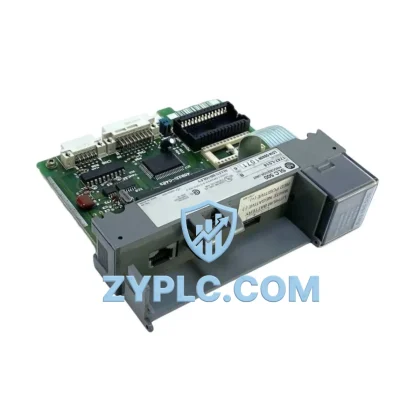
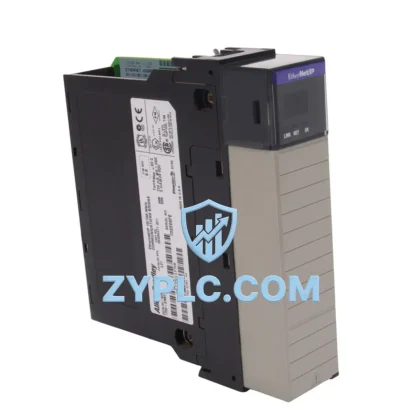
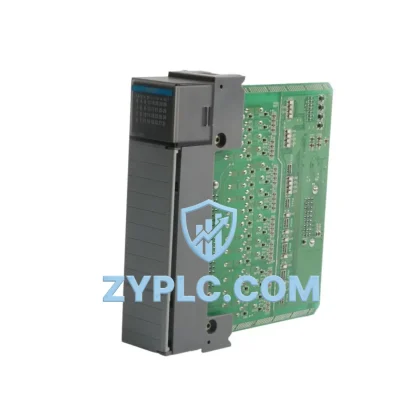
Allen-Bradley 1756-IB16/A System-Ready Digital Input for ControlLogix Architecture
The Allen-Bradley 1756-IB16/A is a 16-point digital input module engineered for seamless integration within the ControlLogix platform. Designed to serve as a critical node in layered automation architectures, this module bridges field-level discrete signals to the control layer with exceptional signal fidelity, deterministic response, and robust noise immunity. Whether deployed in manufacturing execution systems, power distribution networks, petrochemical process lines, or water treatment facilities, the 1756-IB16/A ensures reliable digital signal acquisition that supports real-time decision-making across the entire control hierarchy.
Within a fully configured ControlLogix chassis, the 1756-IB16/A operates in concert with the system’s backplane infrastructure, enabling high-speed data exchange with processors such as the 1756-L72S GuardLogix controller or the 1756-L85E ControlLogix PAC. The module draws its operational power from the 1756-PA75 or 1756-PB72 power supply units, which deliver regulated DC voltage across the backplane to all resident modules. This architecture eliminates the need for external per-module power wiring, reducing installation complexity and improving long-term maintenance efficiency.
Architecture Specification Table
| Parameter |
Specification |
| System Role |
Field-Level Digital Signal Acquisition |
| Input Points |
16 Channels (Sink/Source Compatible) |
| Rated Input Voltage |
24V DC Nominal |
| Backplane Current Draw |
110 mA @ 5.1V DC, 2 mA @ 24V DC |
| Communication Interface |
ControlLogix Backplane (ControlBus) |
| Input Filter Response |
Configurable 0.5 ms – 64 ms per channel |
| Operating Temperature |
0°C to 60°C (32°F to 140°F) |
| Installation Platform |
1756-Series Chassis (4, 7, 10, 13, 17 Slot) |
| Contextual Integration |
Full ControlLogix I/O Tree, RSLogix 5000 / Studio 5000 |
| Warranty |
12-Month Warranty |
Coordinated Control System Design
The 1756-IB16/A functions as a fundamental building block within the ControlLogix I/O subsystem. In a typical distributed control architecture, this module occupies a slot in the 1756-A7 or 1756-A13 chassis alongside complementary modules that collectively define the system’s sensing and actuation capabilities. Digital output modules such as the 1756-OB16E extend the control loop by driving solenoids, indicator lamps, and relay coils based on logic resolved in the processor.
For applications requiring analog process variables, the 1756-IF16 analog input module and 1756-OF8 analog output module provide continuous signal paths for temperature, pressure, flow, and level measurements. Communication between remote chassis segments is facilitated by the 1756-EN2T EtherNet/IP bridge module, which enables distributed I/O topologies spanning multiple equipment skids or geographic zones within a plant. In redundancy-critical installations, dual 1756-RM2 redundancy modules ensure seamless controller failover without loss of I/O state data.
The 1756-TBCH terminal base provides secure field wiring termination for the 1756-IB16/A, supporting both spring-clamp and screw-type connections. This modular termination approach allows maintenance personnel to replace I/O modules without disturbing field wiring—a significant advantage during scheduled turnarounds or unplanned fault recovery. When integrated with the 1756-DNB DeviceNet scanner module, the system extends its reach to lower-tier field devices including motor starters, variable frequency drives, and pneumatic valve manifolds, completing the vertical integration from field device to enterprise data layer.
Application in Layered Automation Systems
In layered automation architectures, the 1756-IB16/A occupies the field interface layer, converting physical switch states, proximity sensor outputs, limit switch positions, and safety interlock signals into digital data accessible by the control layer. This positioning makes it indispensable in applications where deterministic input scanning directly influences process safety and throughput optimization.
In steel manufacturing and metallurgical processing, the module monitors conveyor position sensors, furnace door interlocks, and hydraulic press limit switches. In packaging lines, it captures product presence signals from photoelectric sensors and registration marks from encoder interfaces, enabling precise motion coordination. Water treatment plants rely on the 1756-IB16/A to monitor pump run-status feedback, valve position confirmations, and level switch alarms across distributed lift stations and clarifier systems.
Petrochemical facilities leverage the module’s configurable input filtering to reject transient noise from high-voltage switchgear and variable frequency drive environments. The ability to configure per-channel filter times allows engineers to balance response speed against noise immunity based on specific field conditions. In power generation and distribution substations, the module interfaces with protective relay status outputs and breaker auxiliary contacts, feeding critical state information to the SCADA layer through the ControlLogix communication infrastructure.
The 1756-IB16/A supports scheduled and event-driven I/O update modes through the ControlLogix task architecture, enabling engineers to allocate scan bandwidth proportionally to process criticality. This deterministic scheduling capability distinguishes the ControlLogix platform from conventional PLC architectures and supports compliance with IEC 61131-3 programming standards across manufacturing, mining, and process control domains.
Architecture Engineering FAQ
Q1: What chassis and power supply configuration is required to support the 1756-IB16/A in a multi-module system?
The 1756-IB16/A installs in any 1756-series chassis (1756-A4 through 1756-A17). Power is supplied through the backplane by a 1756-PA75 (AC input) or 1756-PB75 (DC input) power supply. When calculating power budgets for chassis with high module density, ensure total backplane current draw does not exceed the supply’s rated capacity. For systems requiring more than 10 I/O modules, consider distributing modules across multiple chassis linked via 1756-EN2T EtherNet/IP bridges to maintain optimal scan performance.
Q2: How does the 1756-IB16/A integrate with redundant controller architectures?
In redundant ControlLogix configurations using 1756-RM2 modules, the 1756-IB16/A maintains continuous I/O state synchronization between primary and secondary controllers. During a failover event, the standby controller assumes ownership of all I/O connections without requiring module re-initialization. This architecture is essential for continuous process industries where unplanned control interruptions result in significant production losses or safety hazards, and it supports the Contextual Integration model that ZYPLC recommends for mission-critical deployments.
Q3: What is the warranty coverage and long-term supply availability for the 1756-IB16/A?
All 1756-IB16/A modules supplied through ZYPLC carry a 12-Month Warranty covering manufacturing defects and functional failures under normal operating conditions. ZYPLC maintains strategic inventory of ControlLogix components to support both new project deployments and emergency replacement requirements, minimizing lead time risk for critical automation infrastructure. Our engineering team provides pre-sales compatibility verification and post-sales technical support to ensure seamless system integration.
© 2026 ZYPLC. All rights reserved.
Original Source: https://zyplc.com
Contact: +86 19859288691 | plc.sales@zyplc.com