Allen-Bradley 1756-IF6I System-Ready Isolated Analog Input for ControlLogix Architecture
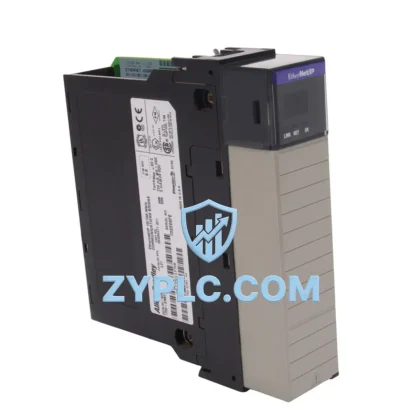
The Allen-Bradley 1756-IF6I is a six-channel isolated analog input module engineered for seamless integration within the Rockwell Automation ControlLogix platform. As a core component of the 1756 backplane ecosystem, this module occupies a precise position in the control system hierarchy — bridging field-level instrumentation with the CPU’s real-time data processing layer. Its isolated channel architecture ensures signal integrity across long cable runs and mixed-potential field environments, making it an indispensable element in high-reliability automation designs across manufacturing, power generation, petrochemical processing, and water treatment facilities.
In a fully layered automation system, the 1756-IF6I does not operate in isolation. It functions as part of a coordinated signal chain that begins at the field device level and terminates at the supervisory control layer. Understanding its role within this chain is essential for engineers designing scalable, redundant, and maintainable control architectures.
Architecture Specification Table
| Parameter |
Specification |
| System Role |
Isolated Analog Input — ControlLogix I/O Layer |
| Input Channels |
6 Channels, Fully Isolated (Channel-to-Channel & Channel-to-Backplane) |
| Input Signal Range |
±10V DC, 0–10V DC, 0–20 mA, 4–20 mA (software selectable per channel) |
| Resolution |
16-bit (1 in 65,535) |
| Backplane Current Draw |
125 mA @ 5V DC; 3 mA @ 24V DC |
| Isolation Voltage |
250V AC continuous (channel-to-channel and channel-to-backplane) |
| Communication |
ControlLogix Backplane (1756 Series); Producer/Consumer Model |
| Compatible CPUs |
1756-L6x, 1756-L7x, 1756-L8x ControlLogix Processors |
| Installation Environment |
DIN Rail / Chassis Mount; IP20; -20°C to +60°C Operating Range |
| Certifications |
UL, CE, C-Tick; Class I Div 2 Groups A–D |
| Warranty |
12-Month Warranty — Covered for defects in materials and workmanship |
Coordinated Control System Design
The 1756-IF6I achieves its full potential when deployed within a complete ControlLogix chassis assembly. A typical high-availability architecture pairs this module with a 1756-L73 or 1756-L83 ControlLogix CPU as the primary processing unit, responsible for executing ladder logic, function block diagrams, and structured text programs that consume the analog data produced by the IF6I. For redundant CPU configurations, the 1756-RM2 redundancy module synchronizes primary and secondary controllers, ensuring that analog input data is continuously available even during a controller switchover event.
Power integrity is maintained through the 1756-PA75 or 1756-PB75 power supply modules, which provide regulated backplane voltage to all installed I/O modules including the 1756-IF6I. In critical process environments, dual power supply configurations using the 1756-PSCA2 power supply chassis adapter eliminate single points of failure at the power layer.
Network communication is handled by dedicated gateway modules such as the 1756-EN2T EtherNet/IP communication module, which connects the ControlLogix chassis to plant-wide SCADA systems, historian servers, and MES platforms. For legacy integration or multi-network environments, the 1756-DNB DeviceNet Bridge module or 1756-CN2 ControlNet module may be deployed alongside the EN2T to support multi-protocol architectures.
On the human-machine interface layer, operator stations running FactoryTalk View SE or connected PanelView Plus 7 terminals display real-time analog values sourced from the 1756-IF6I, enabling operators to monitor process variables such as temperature, pressure, flow, and level with full engineering unit scaling. Tag-based data binding between the HMI and the ControlLogix tag database ensures that analog values are presented with appropriate alarm limits and trend histories.
For digital output coordination, the 1756-OB16I isolated digital output module works in tandem with the IF6I to execute control actions based on analog threshold conditions — for example, activating a pump relay when a tank level analog input crosses a setpoint. Terminal block assemblies such as the 1492-CABLE series wiring systems simplify field wiring connections to the IF6I’s screw-terminal interface, reducing installation time and wiring errors during commissioning.
Application in Layered Automation Systems
In manufacturing and discrete production environments, the 1756-IF6I is commonly deployed to monitor servo drive feedback signals, tension control loops, and temperature profiling in heat treatment lines. Its 16-bit resolution supports precise closed-loop PID control, where even minor signal deviations must be detected and corrected within milliseconds.
In power generation and electrical substation automation, the module’s channel-to-channel isolation is critical for monitoring current transformer (CT) and potential transformer (PT) secondary outputs without introducing ground loops that could corrupt measurement accuracy or damage sensitive instrumentation.
In petrochemical and refinery process control, the 1756-IF6I handles 4–20 mA signals from pressure transmitters, flow meters, and analytical instruments distributed across hazardous area field junction boxes. Its Class I Division 2 certification allows installation in control panels located adjacent to classified areas, reducing signal cable lengths and improving noise immunity.
In water and wastewater treatment facilities, the module monitors dissolved oxygen sensors, pH analyzers, turbidity meters, and pump discharge pressure transmitters. Integration with the ControlLogix CPU’s PID instruction set enables automatic dosing control and pump speed regulation through coordinated analog input and analog output modules.
In mining and metallurgical processing plants, the 1756-IF6I supports conveyor load cell monitoring, crusher motor current feedback, and flotation cell level control — applications where signal isolation is essential due to the high electrical noise generated by large variable frequency drives and motor control centers operating in close proximity to control panels.
Architecture Engineering FAQ
Q1: Is the 1756-IF6I compatible with both 1756 ControlLogix and 1756 GuardLogix chassis?
Yes. The 1756-IF6I is fully compatible with all standard 1756-series chassis, including those hosting GuardLogix safety CPUs such as the 1756-L7xS. However, the IF6I itself is a standard (non-safety) analog input module and must not be used for SIL-rated safety instrumented functions. For safety-rated analog inputs, the 1756-IF8H or equivalent TÜV-certified module should be specified. The IF6I can coexist in the same chassis as safety modules without affecting the safety CPU’s SIL rating, provided it is assigned to standard (non-safety) tasks only.
Q2: How should the 1756-IF6I be configured for multi-drop 4–20 mA loop-powered transmitter installations?
Each channel of the 1756-IF6I must be configured for current input mode via the module’s configuration tag in the ControlLogix I/O tree. For loop-powered (2-wire) transmitters, an external 24V DC loop power supply must be provided, as the IF6I does not supply loop power internally. The module’s input impedance of approximately 249 ohms at current input mode is compatible with standard HART-capable transmitters. For HART pass-through communication, a HART multiplexer such as the Pepperl+Fuchs HiDMux2700 or equivalent can be installed in series with the 4–20 mA loop without affecting the IF6I’s measurement accuracy.
Q3: What does the 12-Month Warranty cover, and how does it support long-term system maintenance planning?
The 12-Month Warranty covers all defects in materials and workmanship under normal operating conditions. For system architects and maintenance engineers, this warranty period provides a defined baseline for spare parts planning and lifecycle cost modeling. During the warranty period, defective modules are repaired or replaced, minimizing unplanned downtime costs. For installations requiring extended coverage beyond 12 months, we recommend maintaining a minimum of one spare 1756-IF6I module per chassis in your site inventory — a best practice aligned with Rockwell Automation’s recommended spare parts strategy for critical process control systems. Our global logistics network ensures rapid dispatch of replacement units to minimize mean time to repair (MTTR) across all supported regions.
© 2026 ZYPLC. All rights reserved.
Original Source: https://zyplc.com
Contact: +86 19859288691 | [email protected]