Allen-Bradley 1756-IR12 System-Ready RTD Input for ControlLogix Architecture
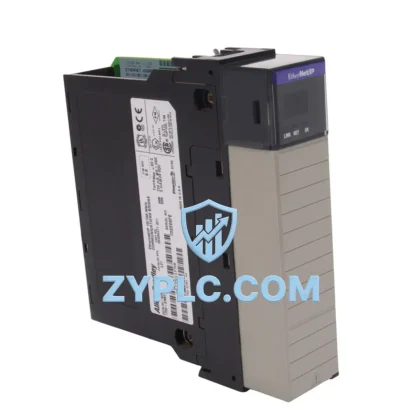
The Allen-Bradley 1756-IR12 is a 12-channel RTD and resistance analog input module engineered for seamless integration within the Rockwell Automation ControlLogix 1756 control platform. Rather than functioning as a standalone component, the 1756-IR12 occupies a precise role within a layered automation architecture — bridging the physical process environment and the CPU’s real-time data processing engine. Its design philosophy centers on system consistency, signal fidelity, and long-term maintainability across demanding industrial environments including power generation, petrochemical processing, water treatment, metallurgy, and continuous manufacturing lines.
In a fully realized ControlLogix system, the 1756-IR12 resides in the I/O layer, mounted directly into a 1756 chassis alongside other I/O modules, communication adapters, and power supplies. Its 12 individually configurable RTD channels accept Pt100, Pt1000, Ni120, Cu10, and resistance inputs, delivering high-resolution temperature data to the 1756-L series CPU modules — such as the 1756-L71, 1756-L73, or 1756-L85E — via the ControlLogix backplane. This backplane communication eliminates the need for external signal conditioning hardware, reducing panel footprint and wiring complexity while improving signal integrity across the entire control loop.
System architects integrating the 1756-IR12 benefit from its native Producer/Consumer communication model, which allows temperature data to be shared across multiple controller nodes without polling overhead. In redundant control architectures, the module pairs with the 1756-RM2 redundancy module and a mirrored chassis to ensure uninterrupted process monitoring even during controller switchover events. This makes the 1756-IR12 particularly valuable in critical process applications where sensor data continuity is non-negotiable.
Architecture Specification Table
| Parameter |
Specification |
| System Role |
RTD / Resistance Analog Input Module — I/O Layer |
| Platform |
Rockwell Automation ControlLogix 1756 Series |
| Number of Input Channels |
12 Channels (individually configurable) |
| Input Types Supported |
Pt100, Pt1000, Ni120, Cu10, 2/3/4-wire Resistance |
| Resolution |
16-bit |
| Backplane Communication |
ControlLogix 1756 Backplane (Producer/Consumer) |
| Electrical Isolation |
Channel-to-backplane isolated |
| Operating Temperature |
0°C to 60°C (32°F to 140°F) |
| Storage Temperature |
-40°C to 85°C (-40°F to 185°F) |
| Relative Humidity |
5% to 95% non-condensing |
| Backplane Current Draw |
125 mA @ 5.1 VDC; 2 mA @ 24 VDC |
| Module Keying |
Electronic keying via RSLogix 5000 / Studio 5000 |
| Chassis Compatibility |
1756-A4, 1756-A7, 1756-A10, 1756-A13, 1756-A17 |
| Certifications |
UL, CE, C-Tick |
| Country of Origin |
United States |
| Warranty |
12-Month Warranty — Tested, verified, and ready for deployment |
Coordinated Control System Design
The 1756-IR12 achieves its full potential when deployed as part of a coordinated ControlLogix system rather than in isolation. At the control layer, the 1756-L73 or 1756-L85E CPU module processes the RTD data delivered via the backplane, executing temperature-based PID loops, alarm management, and interlock logic at scan rates appropriate for thermal process control. The 1756-PA75 or 1756-PB75 power supply modules provide stable, regulated backplane power to the chassis, ensuring that analog signal accuracy is not compromised by power rail fluctuations — a critical consideration when measuring small resistance differentials in Pt100 circuits.
At the I/O layer, the 1756-IR12 frequently operates alongside the 1756-OF8 analog output module, which closes the control loop by driving 4–20 mA signals to control valves, variable frequency drives, or heating elements based on the temperature readings acquired by the IR12. For discrete process interlocks, the 1756-IB16 digital input module and 1756-OB16E digital output module complement the analog layer, providing the binary signal handling required for pump starts, valve open/close commands, and safety shutdowns.
At the network layer, the 1756-EN2T or 1756-EN3TR EtherNet/IP communication modules connect the ControlLogix chassis to the plant-wide SCADA network, enabling real-time temperature data visibility at the supervisory level. In distributed architectures, the 1756-DNB DeviceNet bridge or 1756-CN2 ControlNet module may be used to extend I/O reach across larger facilities. The 1756-IR12’s Producer/Consumer data model ensures that temperature values are available to all subscribing controllers and HMI nodes simultaneously, without creating communication bottlenecks.
For operator interface, PanelView Plus 7 HMI terminals connected via EtherNet/IP provide real-time trending, alarm acknowledgment, and process visualization directly from the ControlLogix tag database. The seamless tag-based integration between the 1756-IR12 channel data and the HMI display eliminates the need for manual address mapping, reducing commissioning time and the risk of configuration errors during system startup.
Application in Layered Automation Systems
In power generation facilities, the 1756-IR12 monitors turbine bearing temperatures, cooling water inlet/outlet differentials, and generator winding temperatures — all critical parameters for predictive maintenance and protection relay coordination. Its 12-channel capacity allows a single module to cover an entire turbine train’s thermal monitoring requirements within one chassis slot, maximizing rack density in space-constrained control rooms.
In petrochemical and refinery applications, the module handles reactor temperature profiling, heat exchanger monitoring, and distillation column temperature gradient measurement. The 4-wire RTD input capability eliminates lead resistance errors across long cable runs from field junction boxes to the control room, ensuring measurement accuracy that meets process safety instrumented system (SIS) requirements.
Water and wastewater treatment plants deploy the 1756-IR12 for monitoring aeration basin temperatures, digester process temperatures, and UV disinfection system thermal management. The module’s robust isolation design protects the ControlLogix backplane from ground loops that are common in wet process environments with multiple grounded sensor installations.
In metallurgical and mining operations, the 1756-IR12 supports furnace temperature zone control, conveyor drive thermal monitoring, and crusher bearing temperature surveillance. Its wide operating temperature range and vibration tolerance make it suitable for installation in control panels located near heavy process equipment. Packaging and food processing lines use the module for oven temperature profiling, pasteurization monitoring, and CIP (clean-in-place) thermal validation — applications where precise, multi-point temperature data directly impacts product quality and regulatory compliance.
Architecture Engineering FAQ
Q1: Is the 1756-IR12 compatible with both older and newer ControlLogix chassis and CPU generations?
Yes. The 1756-IR12 is compatible with all standard 1756 chassis sizes — including the 1756-A4, 1756-A7, 1756-A10, 1756-A13, and 1756-A17 — and operates with ControlLogix CPU modules from the 1756-L55 generation through the current 1756-L8 series. Electronic keying configured in Studio 5000 Logix Designer ensures that module identity is verified at startup, preventing accidental substitution with incompatible module types during maintenance. This backward and forward compatibility protects capital investment in existing ControlLogix infrastructure while supporting phased system upgrades.
Q2: How does the 1756-IR12 support redundant control architectures, and what additional components are required?
In a ControlLogix redundancy configuration, the 1756-IR12 is installed in both the primary and secondary chassis. The 1756-RM2 redundancy module synchronizes controller state between the two chassis, and the 1756-SYNCH fiber-optic synchronization cable maintains real-time data mirroring. During a switchover event, the secondary controller assumes control with current I/O data already synchronized, ensuring that temperature monitoring and control loops continue without interruption. This architecture is particularly important in power generation and chemical processing applications where process upsets during controller switchover are unacceptable.
Q3: What does the 12-Month Warranty cover, and how does ZYPLC support long-term maintenance and spare parts availability?
Every 1756-IR12 supplied by ZYPLC is covered by a 12-Month Warranty against manufacturing defects and functional failures under normal operating conditions. Prior to shipment, each module undergoes functional verification testing to confirm channel accuracy, backplane communication integrity, and isolation performance. ZYPLC maintains stock of the 1756-IR12 and related ControlLogix components to support both immediate replacement needs and planned maintenance programs. For long-term maintenance planning, our engineering team can assist with spare parts strategy, system architecture review, and Contextual Integration support to ensure that your ControlLogix system remains operational and supportable throughout its service life. Contact us at [email protected] or +86 19859288691 for availability and technical consultation.
© 2026 ZYPLC. All rights reserved.
Original Source: https://zyplc.com
Contact: +86 19859288691 | [email protected]