Allen-Bradley 1756-IR6I: Industrial Data Link for ControlLogix Smart Factory Networks
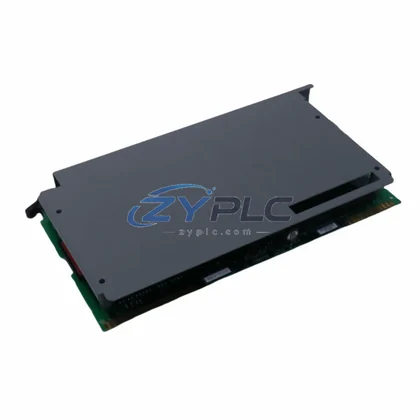
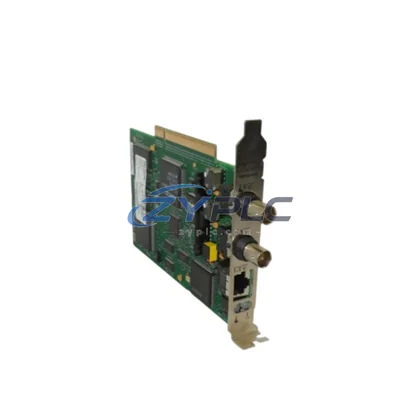
The Allen-Bradley 1756-IR6I is a 6-channel isolated RTD input module engineered for the ControlLogix 1756 Series backplane, delivering precision temperature signal acquisition at the field device layer and transmitting real-time process data across the plant-wide automation network. In modern smart factory architectures, reliable signal integrity from RTD sensors to the PLC controller is the foundation of every data-driven decision — from SCADA dashboards to edge analytics platforms. The 1756-IR6I closes that gap with galvanic isolation on every channel, supporting Pt100, Pt1000, Ni120, and Cu10 RTD types across a wide measurement range, ensuring that temperature data from furnaces, reactors, extruders, and HVAC systems reaches the ControlLogix L8x processor without noise, drift, or signal loss.
Within a ControlLogix chassis, the 1756-IR6I communicates over the ControlBus backplane at high-speed cyclic rates, feeding structured tag data directly into the Logix Designer ladder logic or function block programs. This tight integration with the 1756-L85E or 1756-L84E processor means that temperature exceedance alarms, PID loop setpoints, and trend data are available to FactoryTalk View SE HMI screens and FactoryTalk Historian in milliseconds — enabling operators to respond to thermal anomalies before they escalate into unplanned downtime.
Compatibility & Integration Notes
| Attribute |
Specification |
| SKU / Part Number |
1756-IR6I |
| Brand / Manufacturer |
Allen-Bradley (Rockwell Automation) |
| Series |
ControlLogix 1756 |
| Module Type |
RTD / Resistance Input Module |
| Input Channels |
6 Channels, Individually Isolated |
| Supported RTD Types |
Pt100, Pt1000, Ni120, Cu10, Resistance (1–600 Ω) |
| Communication Protocol |
ControlBus Backplane (EtherNet/IP via 1756-EN2T / 1756-EN3TR bridge) |
| Network Compatibility |
EtherNet/IP, ControlNet, DeviceNet (via gateway modules) |
| Gateway Integration |
Compatible with 1756-EN2T, 1756-EN3TR, 1756-CN2 communication modules |
| SCADA / HMI Integration |
FactoryTalk View SE, FactoryTalk Historian, Ignition SCADA, Wonderware |
| System Application |
Temperature monitoring, PID control, process analytics, smart factory IIoT |
| Backplane Current Draw |
125 mA @ 5 VDC; 2 mA @ 24 VDC |
| Operating Temperature |
0 °C to 60 °C (32 °F to 140 °F) |
| Certifications |
UL, CE, C-Tick |
| Warranty |
Warranty and support terms confirmed before quote |
Connected Automation Data Flow
In a typical ControlLogix-based production line, the 1756-IR6I sits at the signal acquisition layer, collecting RTD readings from thermocouples and resistance sensors embedded in motors, pipelines, and process vessels. These readings are passed over the ControlBus backplane to the 1756-L85E ControlLogix processor, which executes PID algorithms and generates control outputs to Allen-Bradley PowerFlex 755 variable frequency drives — adjusting motor speed in response to thermal load changes in real time.
For plant-wide network visibility, the 1756-EN2T EtherNet/IP communication module bridges the ControlLogix chassis to the facility’s industrial Ethernet backbone. From there, temperature tag data flows upstream to FactoryTalk View SE SCADA servers, where operators monitor multi-zone thermal profiles across production cells. Simultaneously, the 1756-ENBT or 1756-EN3TR modules can route data to edge gateway devices running Ignition Edge, enabling remote diagnostics and OEE dashboards accessible from any browser on the plant network.
At the remote I/O layer, the 1756-IR6I works alongside 1756-OB16I digital output modules and 1756-IF16 analog input modules within the same chassis, creating a unified I/O platform that handles temperature, pressure, flow, and discrete signals under a single Logix tag namespace. This eliminates the need for separate signal conditioning hardware and reduces wiring complexity across the panel. For distributed installations, the 1756-IR6I data can be extended to remote ControlLogix racks via 1756-CN2 ControlNet modules, maintaining deterministic scan times even across long cable runs in large facilities.
Integration with Kepware KEPServerEX OPC-UA server allows the 1756-IR6I temperature data to be published to MES platforms, cloud historians, and third-party SCADA systems without custom middleware. Paired with Allen-Bradley 1734 POINT I/O modules at the field level and 1783-series managed industrial Ethernet switches at the network layer, the 1756-IR6I becomes a critical node in a fully transparent, end-to-end industrial data architecture — from sensor to cloud.
Solving Data Isolation in Industrial Sites
Many industrial facilities still operate with legacy RTD transmitters that output 4–20 mA analog signals, creating data silos where temperature information never reaches the plant’s digital control layer. The 1756-IR6I eliminates this isolation by converting RTD resistance values directly into digital engineering-unit tags within the ControlLogix tag database — no separate signal conditioner, no analog-to-digital converter, no additional wiring panel required.
Protocol fragmentation is another common barrier. Older temperature controllers may speak Modbus RTU while the plant’s SCADA system expects EtherNet/IP or OPC-UA. By integrating the 1756-IR6I into a ControlLogix chassis equipped with a 1756-EN2T communication module, all RTD data is automatically published as EtherNet/IP tags, accessible to any compliant HMI, historian, or analytics platform on the network. This single-protocol approach dramatically simplifies system integration and reduces the risk of data loss during protocol translation.
For remote monitoring and predictive maintenance, the 1756-IR6I supports FactoryTalk Diagnostics logging, which captures channel-level fault codes, over-range conditions, and sensor open-circuit alarms directly in the Logix event log. Maintenance teams can access these diagnostics remotely via FactoryTalk Remote Access or through the plant’s VPN-connected SCADA terminal, enabling condition-based maintenance scheduling without requiring a physical site visit. This capability is especially valuable for unmanned substations, remote pump stations, and offshore process platforms where on-site intervention is costly and time-consuming.
As production lines scale, the 1756-IR6I’s modular architecture allows additional RTD channels to be added simply by inserting more modules into available chassis slots — no rewiring of existing channels, no software reconfiguration of unaffected loops. This plug-and-expand design supports phased capacity growth without production interruption, making the 1756-IR6I a long-term investment in scalable industrial connectivity.
Industrial Connectivity FAQ
Q1: What is the communication latency of the 1756-IR6I within a ControlLogix system?
The 1756-IR6I updates its channel data on the ControlBus backplane at the controller’s requested packet interval (RPI), which is configurable from 1 ms to 750 ms. For most temperature monitoring applications, an RPI of 20–100 ms provides an optimal balance between data freshness and backplane bandwidth consumption. End-to-end latency from RTD sensor to SCADA display — including EtherNet/IP network traversal — is typically under 200 ms in a well-configured system.
Q2: Is the 1756-IR6I compatible with third-party SCADA and HMI platforms beyond FactoryTalk?
Yes. Because the 1756-IR6I publishes data as standard ControlLogix tags accessible via EtherNet/IP, it is compatible with any SCADA or HMI platform that supports EtherNet/IP or OPC-DA/OPC-UA via a Kepware or similar OPC server. Verified integrations include Ignition by Inductive Automation, Wonderware System Platform, Siemens WinCC OA, and GE iFIX.
Q3: How does the 1756-IR6I handle network instability or communication interruptions?
The module stores the last valid RTD reading in its backplane buffer during brief communication interruptions. The ControlLogix processor can be configured to hold the last value, go to a safe default, or trigger a fault routine if communication is not restored within a configurable timeout period. Channel-level diagnostics are logged automatically, and alarm tags can be mapped to HMI alarm banners for immediate operator notification.
Q4: What warranty and quality assurance does ZYPLC provide for the 1756-IR6I?
Every 1756-IR6I unit supplied by ZYPLC undergoes pre-shipment functional testing, including channel-level RTD simulation and backplane communication verification. Warranty terms are confirmed during quotation. In the event of a confirmed hardware defect within the warranty period, ZYPLC provides replacement or repair at no additional cost. Inventory is maintained Availability confirmed by RFQ for fast global dispatch, with lead times typically under 3 business days for standard orders.