Allen-Bradley 1756-IV16 System-Ready DC Input for ControlLogix Architecture
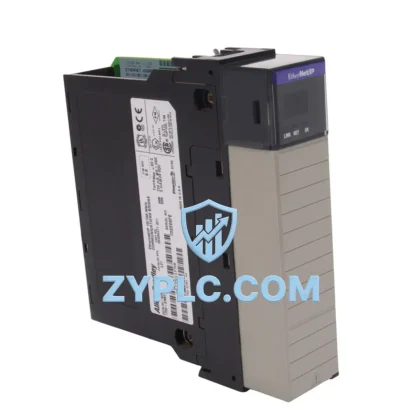
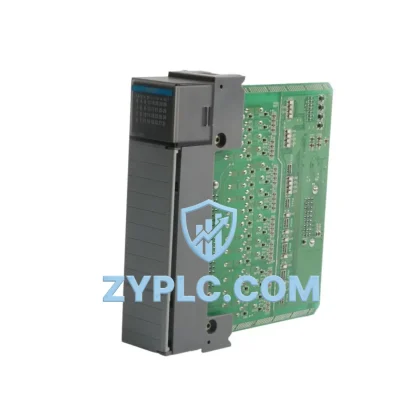
The Allen-Bradley 1756-IV16 is a 16-point DC input module engineered for seamless integration within the Rockwell Automation ControlLogix 1756 chassis-based control platform. Rather than functioning as a standalone component, the 1756-IV16 occupies a defined role within a layered automation architecture — bridging field-level sensing devices and the central processing environment to deliver reliable, deterministic signal acquisition across demanding industrial applications.
In a fully realized ControlLogix system, the 1756-IV16 operates in close coordination with the 1756-L8x or 1756-L7x series CPUs, which execute the ladder logic, function block, or structured text programs that interpret incoming discrete signals. The module slots directly into the 1756-A7, 1756-A10, or 1756-A17 backplane chassis, sharing the high-speed backplane bus that enables low-latency communication between I/O modules and the processor. This tight architectural coupling ensures that field signals captured by the 1756-IV16 are available to the CPU within a single scan cycle, supporting time-critical interlock and sequencing logic.
From a signal flow perspective, the 1756-IV16 accepts 10–31.2V DC discrete inputs across its 16 channels, each electrically isolated in groups to protect the control system from field-side transients and ground loops. The module’s input filtering and diagnostics capabilities allow engineers to detect open-wire conditions and verify field device health without interrupting production — a critical advantage in continuous process environments such as petrochemical refining, water treatment, and power generation substations.
Architecture Specification Table
| Parameter |
Specification |
| System Role |
Discrete DC Input Module — ControlLogix I/O Layer |
| Input Points |
16 Channels, Sourcing DC Input |
| Input Voltage Range |
10–31.2V DC |
| Input Current (Nominal) |
8.0 mA @ 24V DC |
| Isolation |
Group Isolated (8 points per group) |
| Backplane Compatibility |
1756-A7 / 1756-A10 / 1756-A13 / 1756-A17 |
| Communication |
ControlLogix Backplane (1756 Series) |
| Input Filter Time |
1 ms (hardware), configurable in RSLogix 5000 / Studio 5000 |
| Diagnostics |
Open-wire detection, module fault reporting |
| Operating Temperature |
0°C to 60°C (32°F to 140°F) |
| Relative Humidity |
5–95% non-condensing |
| Installation |
DIN rail or panel mount via 1756 chassis |
| Certifications |
UL, CE, CSA, RCM |
| Warranty |
12-Month Warranty — Tested & Verified Before Shipment |
Coordinated Control System Design
The 1756-IV16 achieves its full value when deployed as part of a coordinated ControlLogix architecture. In a typical mid-scale automation cell, the module shares a 1756-A10 chassis with a 1756-L73 ControlLogix CPU, which manages program execution and tag-based data handling. Power to the chassis is supplied by a 1756-PA75 AC power supply or a 1756-PB75 DC power supply for installations requiring 24V DC bus compatibility — both units providing regulated, redundant-capable power distribution across the backplane.
On the output side, the 1756-IV16 works in tandem with discrete output modules such as the 1756-OB16I isolated DC output module, which drives solenoids, motor starters, and pilot devices based on the logic conditions derived from the input signals captured by the 1756-IV16. For analog process variables — pressure, flow, temperature — the 1756-IF16 analog input module complements the discrete I/O layer, providing a complete signal acquisition environment within a single chassis.
Network connectivity is managed through 1756-EN2T or 1756-EN2TR EtherNet/IP communication modules, which expose the ControlLogix tag database to SCADA systems, historian platforms, and remote I/O adapters over standard Ethernet infrastructure. In redundancy-critical applications such as power distribution or pipeline control, a 1756-RM2 redundancy module paired with a secondary chassis ensures seamless CPU failover without disrupting the I/O scan cycle — the 1756-IV16 continues reporting field states transparently through the switchover event.
At the field termination level, 1492-AIFM series analog interface modules and 1756-TBCH or 1756-TBS6H terminal base assemblies provide organized, labeled wiring infrastructure that simplifies commissioning and reduces troubleshooting time during maintenance windows. HMI visibility into the 1756-IV16 channel states is delivered through PanelView Plus 7 terminals connected via EtherNet/IP, enabling operators to monitor discrete input status, acknowledge faults, and review historical alarm data from a centralized interface.
Application in Layered Automation Systems
The 1756-IV16 is deployed across a broad spectrum of industrial sectors where discrete signal integrity and system-level coordination are non-negotiable requirements.
In manufacturing and automotive assembly environments, the module monitors proximity sensors, limit switches, and safety interlocks along high-speed production lines. Its 1 ms hardware filter time ensures that mechanical bounce and electrical noise from servo drives and variable frequency drives do not generate false input transitions that could disrupt sequencing logic.
In power generation and electrical substation applications, the 1756-IV16 captures breaker status, relay contact states, and protection relay outputs, feeding this data to the ControlLogix CPU for automated switching logic and fault isolation routines. The group isolation architecture prevents ground potential differences between substation panels from propagating into the control backplane.
In oil, gas, and petrochemical facilities, the module integrates with safety instrumented systems by monitoring field device health signals and process interlock contacts. When paired with a 1756-L8xE Safety CPU and 1756-IB16S safety input modules in a SIL-rated architecture, the 1756-IV16 handles standard control-layer inputs while the safety layer manages SIL-rated shutdown logic — a common partitioned architecture in process plant design.
In water and wastewater treatment plants, the 1756-IV16 monitors pump run/fault contacts, valve position switches, and level float inputs across distributed lift stations, with data aggregated via EtherNet/IP to a central SCADA platform for remote monitoring and compliance reporting.
In mining and metals processing, the module’s wide operating temperature range and robust isolation make it suitable for conveyor control panels, crusher interlock systems, and mill drive coordination — environments characterized by high vibration, dust ingress, and variable power quality.
Architecture Engineering FAQ
Q1: Is the 1756-IV16 compatible with both 1756-L7x and 1756-L8x series ControlLogix CPUs?
Yes. The 1756-IV16 is fully compatible with all current and legacy ControlLogix processors, including the 1756-L71, 1756-L73, 1756-L75, 1756-L81E, 1756-L83E, and 1756-L85E. The module is configured via RSLogix 5000 or Studio 5000 Logix Designer using standard Add-On Instructions and tag-based I/O mapping. No firmware changes are required when migrating between L7x and L8x platforms — the module’s electronic keying and I/O tree configuration transfer automatically through the project file.
Q2: Can the 1756-IV16 be used in a redundant ControlLogix architecture, and how does it behave during a CPU switchover?
Yes. In a 1756-RM2 redundancy configuration, the 1756-IV16 installed in the primary chassis continues scanning field inputs during normal operation. Upon a redundancy switchover event, the secondary CPU assumes control and the I/O modules — including the 1756-IV16 — resume scanning within the configured RPI (Requested Packet Interval) without requiring a module reset. Field input states are preserved across the switchover, ensuring that interlock logic and alarm conditions are not lost during the transition. This behavior is validated during Factory Acceptance Testing and is covered under the 12-Month Warranty supplied with each unit.
Q3: What is included in the 12-Month Warranty, and how is long-term spare parts availability managed?
Every 1756-IV16 unit supplied by ZYPLC is tested under operational conditions prior to shipment and covered by a 12-Month Warranty against manufacturing defects and functional failure. The warranty covers module replacement or repair at no additional cost within the warranty period. For long-term maintenance planning, ZYPLC maintains buffer stock of 1756-series I/O modules to support planned shutdowns, emergency replacements, and capital spares programs — ensuring that your ControlLogix architecture remains operational without extended lead-time exposure on obsolete or allocated components.
—
© 2026 ZYPLC. All rights reserved.
Original Source: https://zyplc.com
Contact: +86 19859288691 | plc.sales@zyplc.com