Allen-Bradley 1756-L7SP System-Ready Safety Partner for ControlLogix Architecture
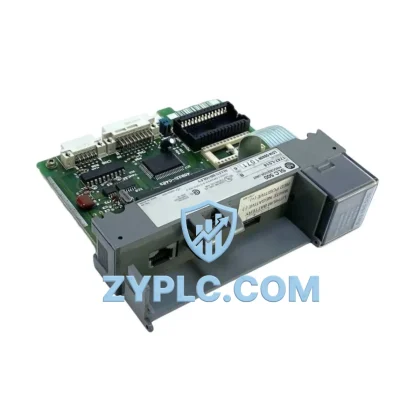
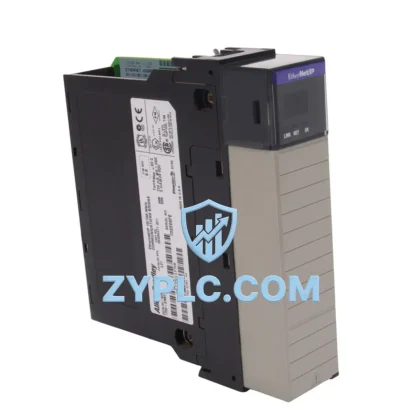
The Allen-Bradley 1756-L7SP GuardLogix Safety Partner is a dedicated safety co-processor engineered to operate in tandem with a standard ControlLogix controller within the 1756 chassis platform. Rather than functioning as a standalone safety device, the 1756-L7SP is architecturally defined by its role as the safety execution layer within a broader, integrated control system. It achieves SIL 3 (IEC 61508) and PLe/Cat. 4 (ISO 13849) certification by working in close coordination with a primary 1756-L7x or 1756-L8x series ControlLogix CPU, sharing the same backplane, I/O infrastructure, and EtherNet/IP communication fabric. This design philosophy — where safety and standard control coexist on a unified platform — is what makes the 1756-L7SP a cornerstone component in modern layered automation architectures.
In a fully realized ControlLogix system, the 1756-L7SP occupies a specific and non-negotiable position in the control layer. It does not replace the primary CPU; instead, it extends the system’s functional safety capability without requiring a separate safety PLC cabinet, separate I/O drops, or a parallel communication network. Engineers deploying this module benefit from a single programming environment — Rockwell Automation’s Studio 5000 Logix Designer — where both standard and safety logic coexist in a unified project file. This dramatically reduces engineering hours, simplifies version control, and lowers the total cost of ownership across the system lifecycle. The 1756-L7SP’s Contextual Integration capability ensures that safety logic is not siloed but is instead woven into the fabric of the overall control architecture, enabling seamless data exchange between safety and standard program tasks.
Architecture Specification Table
| Parameter |
Specification |
| System Role |
GuardLogix Safety Partner Co-Processor |
| Safety Rating |
SIL 3 (IEC 61508), PLe / Cat. 4 (ISO 13849) |
| Compatible Primary CPU |
1756-L71S, 1756-L72S, 1756-L73S, 1756-L74S, 1756-L75S (GuardLogix series) |
| Chassis Compatibility |
1756 ControlLogix Chassis — 1756-A4, 1756-A7, 1756-A10, 1756-A13, 1756-A17 |
| Communication Interface |
Backplane (1756 chassis bus); EtherNet/IP via primary CPU |
| Programming Environment |
Studio 5000 Logix Designer (unified standard + safety project) |
| Safety Memory |
Shared safety task memory with primary GuardLogix CPU |
| Electrical Supply |
Supplied via 1756 chassis backplane; compatible with 1756-PA75 / 1756-PB75 power supply |
| Operating Temperature |
0°C to 60°C (32°F to 140°F) |
| Mounting |
1756 chassis slot — adjacent to primary CPU recommended for backplane integrity |
| Certifications |
TÜV Rheinland, CE, UL, cUL |
| Contextual Integration |
Unified safety + standard logic in single Studio 5000 project; shared tag database |
| 12-Month Warranty |
Covers hardware defects and functional failures under normal operating conditions from shipment date |
Coordinated Control System Design
The 1756-L7SP does not operate in isolation — its value is realized only when integrated into a complete ControlLogix system architecture built for Contextual Integration across all control layers. A typical deployment begins with a GuardLogix primary CPU such as the 1756-L73S or 1756-L75S, which handles both standard and safety program execution. The 1756-L7SP is installed in an adjacent slot within the same 1756-A17 or 1756-A7 chassis, where it continuously cross-checks safety task execution against the primary CPU to maintain SIL 3 integrity across every scan cycle.
Power to the chassis is supplied by a 1756-PA75 or 1756-PB75 power supply module, which must be sized to accommodate the combined load of the CPU, safety partner, I/O modules, and communication cards. For applications requiring high availability, a redundant power supply configuration using dual 1756-PA75R units ensures uninterrupted operation even during a single power supply failure — a critical consideration in continuous process industries where an unplanned shutdown carries significant financial and safety consequences.
Safety I/O is distributed across the network using 1791DS series Guard I/O modules connected via DeviceNet Safety or EtherNet/IP Safety. These modules interface directly with safety-rated field devices — emergency stop buttons, light curtains, safety door switches, and two-hand control stations — and report their status back to the 1756-L7SP through the safety I/O connection managed by the primary CPU’s EtherNet/IP scanner. Standard process I/O, such as analog input modules (1756-IF16) and digital output modules (1756-OB16E), continues to be managed by the standard portion of the GuardLogix program, maintaining clean separation between safety and non-safety signal paths while preserving the benefits of a unified backplane architecture.
Network connectivity is handled by a 1756-EN2T or 1756-EN2TR EtherNet/IP communication module, which provides the system’s upstream connection to SCADA, historian, and MES platforms. For facilities using a Device Level Ring (DLR) topology, the 1756-EN2TR dual-port variant is preferred, as it supports ring redundancy at the network layer without additional managed switches. Communication with operator workstations and HMI panels — typically a PanelView Plus 7 or PanelView 5500 — is routed through this same EtherNet/IP backbone, ensuring that safety status, alarm states, and interlock conditions are visible to operators in real time, supporting rapid decision-making and reducing mean time to respond (MTTR) during fault conditions.
For applications requiring controller-level redundancy beyond what the safety partner provides, the ControlLogix platform supports a full redundancy configuration using a 1756-RM2 redundancy module pair, enabling bumpless switchover between primary and secondary controller chassis. In this configuration, the 1756-L7SP in each chassis maintains synchronized safety state, ensuring that a chassis-level failure does not result in a safety system trip. This multi-layer redundancy — spanning the power layer, control layer, network layer, and I/O layer — is what defines a truly resilient, production-grade safety architecture built around the 1756-L7SP.
Application in Layered Automation Systems
The 1756-L7SP finds its most demanding applications in industries where functional safety is not optional — where a failure to detect a hazardous condition can result in injury, environmental damage, or catastrophic equipment loss. Its Contextual Integration with the broader ControlLogix platform makes it uniquely suited to environments where safety and process control must coexist without compromise.
In automotive manufacturing and general machine safety, the 1756-L7SP is deployed on robotic work cells, press lines, and assembly stations where safety zones must be dynamically managed based on operator presence. The module’s ability to execute safety logic at the same scan rate as the standard control program — without the latency of a separate safety PLC — makes it ideal for high-speed production environments where safety response time directly impacts throughput and OEE metrics.
In the oil and gas and petrochemical sectors, the 1756-L7SP is used in Emergency Shutdown (ESD) systems and Burner Management Systems (BMS) where SIL 2 and SIL 3 requirements are mandated by IEC 61511. Its integration into the same ControlLogix platform used for basic process control simplifies the engineering of cause-and-effect matrices and reduces the risk of logic conflicts between the safety and control layers — a common source of commissioning delays on large-scale process plants.
In power generation and utilities, including hydroelectric, thermal, and renewable energy facilities, the 1756-L7SP supports turbine protection, generator interlock, and grid synchronization safety functions. Its compatibility with the broader ControlLogix ecosystem means that safety logic can be updated and validated using the same change management procedures as standard control logic, reducing the administrative burden of safety lifecycle management under IEC 61511 and NFPA 85.
In water and wastewater treatment facilities, the module is used to protect high-voltage pump drives, chemical dosing systems, and confined space entry interlocks. In mining and metallurgy applications, it safeguards conveyor systems, crusher interlocks, and high-voltage switchgear. Across all these sectors, the 12-Month Warranty and ZYPLC’s commitment to long-term inventory supply ensure that replacement modules can be sourced quickly, minimizing unplanned downtime in critical infrastructure environments.
Architecture Engineering FAQ
Q1: Can the 1756-L7SP be used with any ControlLogix CPU, or does it require a specific GuardLogix variant?
The 1756-L7SP is exclusively compatible with GuardLogix-series CPUs — specifically the 1756-L7xS family (e.g., 1756-L71S through 1756-L75S). It cannot be paired with standard ControlLogix CPUs such as the 1756-L71 or 1756-L83E, as those processors do not include the safety execution firmware required to coordinate with the safety partner. Attempting to install the 1756-L7SP in a chassis with a non-GuardLogix CPU will result in a module fault and the safety partner will not execute any safety logic. Contextual Integration between safety and standard tasks is only available within the GuardLogix platform.
Q2: How does the 12-Month Warranty apply in a redundant or multi-chassis architecture?
The 12-Month Warranty covers each 1756-L7SP unit individually, regardless of how many are deployed in a system. In a redundant architecture where two chassis each contain a GuardLogix CPU and a 1756-L7SP safety partner, both safety partner modules are covered under their respective warranty periods from the date of shipment. Warranty service includes hardware replacement for confirmed defects and functional failures under normal operating conditions. Customers are advised to document their system architecture and module serial numbers at commissioning to streamline any warranty claims. ZYPLC maintains stock of 1756-L7SP modules to support rapid warranty replacement with minimal lead time.
Q3: What is the recommended procedure for replacing a 1756-L7SP in a live system without triggering a full safety system shutdown?
Replacing the 1756-L7SP in a live system requires careful coordination with the safety lifecycle documentation and the site’s management of change (MOC) procedure. In a non-redundant GuardLogix system, replacing the safety partner will require the primary CPU to enter a safe state, as the safety task cannot execute without the partner present. In a redundant system using a 1756-RM2 redundancy module, the switchover to the secondary chassis should be initiated before removing the primary chassis’s safety partner, allowing the process to continue running on the secondary controller. After replacement, the new 1756-L7SP must be configured with the correct safety network number (SNN) and the safety task must be re-verified before the system is returned to automatic mode. ZYPLC recommends maintaining a spare 1756-L7SP module on-site to minimize mean time to repair (MTTR) in critical applications — a practice fully supported by our 12-Month Warranty and dedicated inventory program.
© 2026 ZYPLC. All rights reserved.
Original Source: https://zyplc.com
Contact: +86 19859288691 | plc.sales@zyplc.com