Allen-Bradley 1756-L81E Energy-Saving PLC for ControlLogix Automation
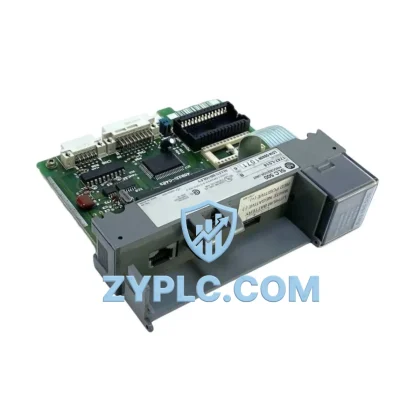
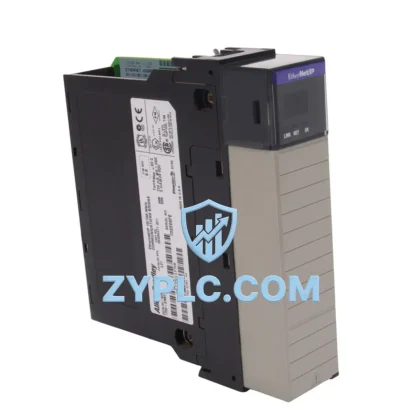
The Allen-Bradley 1756-L81E is a high-performance ControlLogix series programmable logic controller engineered to deliver precision control, reduced energy overhead, and seamless integration across layered industrial automation architectures. As manufacturing facilities face increasing pressure to reduce operational energy costs while maintaining production throughput, the 1756-L81E stands as a central execution node capable of coordinating energy-aware control strategies across the entire plant floor. Its advanced processing architecture minimizes idle-cycle power draw while sustaining deterministic scan times, making it a preferred choice for energy-conscious system integrators and plant engineers working across discrete, process, and hybrid automation environments.
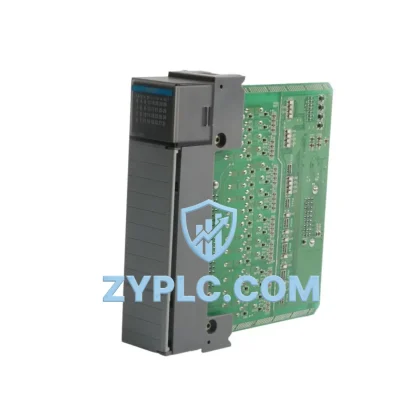
Unlike conventional PLC platforms that treat energy management as a secondary concern, the 1756-L81E is designed from the ground up to support real-time feedback loops between the control layer and energy consumption data. When paired with PowerFlex 755 variable frequency drives, the controller can dynamically adjust motor speed references based on load demand signals, eliminating the fixed-speed energy waste that accounts for a significant portion of industrial electricity consumption. This closed-loop approach to motor control — executed through the ControlLogix backplane via 1756-IB16 digital input modules and 1756-OB16 digital output modules — ensures that actuators and drives receive precisely timed commands without unnecessary relay cycling or redundant signal processing.
In production environments where conveyor systems, pumping stations, and compressor banks operate continuously, the 1756-L81E enables production line rhythm optimization through structured task scheduling. By separating continuous tasks from periodic and event-driven tasks within the Logix Designer programming environment, engineers can assign priority levels to energy-critical control loops, ensuring that high-frequency motor regulation tasks execute without interference from lower-priority diagnostic routines. This architecture directly reduces peak demand spikes — a key factor in industrial energy billing — by smoothing the load profile across shift cycles.
The 1756-L81E integrates natively with the 1756-EN2T EtherNet/IP communication module, enabling real-time data exchange with energy monitoring systems, SCADA platforms, and MES layers. Through EtherNet/IP, the controller can publish live power consumption tags to Rockwell’s FactoryTalk Historian or third-party energy management systems, providing plant managers with granular visibility into per-machine energy utilization. This data-driven approach supports predictive maintenance scheduling — identifying motors or drives operating outside their efficiency curves before they cause unplanned downtime or energy waste.
For facilities operating multi-axis servo systems, the 1756-L81E coordinates with Kinetix 5700 servo drives through the Integrated Motion on EtherNet/IP framework. This eliminates the need for dedicated motion controllers in many applications, consolidating control hardware and reducing panel space, wiring complexity, and standby power consumption. The servo coordination capability is particularly valuable in packaging lines, press operations, and robotic welding cells where precise torque and velocity control directly impacts both product quality and energy efficiency per unit produced.
The controller’s memory architecture — supporting up to 40 MB of user memory in the L81E variant — allows engineers to implement comprehensive energy monitoring logic directly within the PLC program, without offloading calculations to external processors. Energy accumulation routines, demand peak detection algorithms, and shift-based consumption reporting can all reside within the controller’s task structure, reducing system complexity and communication latency. When combined with 1756-IF16 analog input modules reading current transformer signals or power transducer outputs, the 1756-L81E becomes a self-contained energy intelligence node within the control cabinet.
In process industries such as water treatment, chemical processing, and oil and gas, the 1756-L81E supports HART pass-through communication via compatible I/O modules, enabling direct integration with smart field instruments without additional gateways. This reduces the number of active network nodes in the system, lowering both communication overhead and the power consumed by intermediate devices. The controller’s support for redundancy configurations — using the 1756-RM2 redundancy module — ensures that energy-critical processes such as boiler control, pump station management, and compressor sequencing remain online during controller switchover events, preventing the energy-intensive restart cycles associated with unplanned shutdowns.
From a maintenance and lifecycle perspective, the 1756-L81E’s non-volatile memory and energy-backed SRAM retain program and data integrity through power interruptions, eliminating the need for battery-dependent backup systems in many installations. This reduces maintenance overhead and the environmental impact associated with battery disposal. The controller’s diagnostic capabilities — including built-in fault logging, I/O health monitoring, and communication status reporting — allow maintenance teams to identify degraded components before they cause energy-wasting fault conditions such as motor overloads, communication retries, or sensor signal drift.
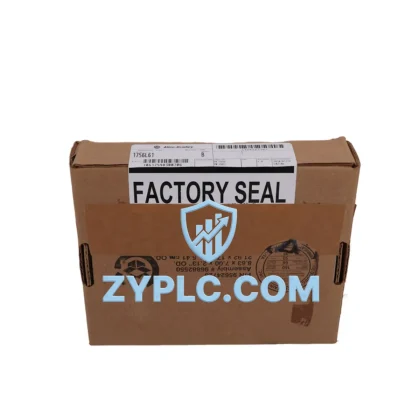
Every 1756-L81E unit supplied by ZYPLC undergoes full functional testing prior to shipment, including program load verification, I/O channel validation, and communication port integrity checks. Units are sourced from verified supply channels and backed by a 12-Month Warranty, providing procurement teams and plant engineers with the confidence to deploy this controller in critical energy management applications without the risk exposure associated with unverified surplus components.
Efficiency Performance Table
| Parameter |
Specification |
| Model |
Allen-Bradley 1756-L81E |
| Series |
ControlLogix |
| User Memory |
40 MB |
| Communication |
EtherNet/IP (built-in), backplane |
| Power Consumption |
Optimized low-idle draw; backplane-powered |
| Operating Voltage |
Via 1756-PA75 or 1756-PB75 power supply |
| Operating Temperature |
0°C to 60°C |
| Compatible Systems |
ControlLogix, GuardLogix, redundancy-capable |
| Programming Software |
Studio 5000 Logix Designer |
| Energy Optimization |
Dynamic task scheduling, demand peak reduction |
| Redundancy Support |
Yes, via 1756-RM2 Redundancy Module |
| Origin |
United States |
| Warranty |
12-Month Warranty (ZYPLC) |
Energy-Aware Automation Architecture
The 1756-L81E operates as the central intelligence layer in an energy-aware ControlLogix architecture. At the drive layer, PowerFlex 755 variable frequency drives receive speed and torque references directly from the controller via EtherNet/IP, enabling demand-responsive motor control that eliminates fixed-speed energy waste across pump, fan, and conveyor applications. The 1756-EN2T EtherNet/IP bridge module connects the ControlLogix backplane to the plant network, facilitating real-time energy data exchange with SCADA and MES systems without introducing communication bottlenecks.
At the I/O layer, 1756-IF16 analog input modules collect signals from power transducers, current transformers, and flow meters, feeding live consumption data into the controller’s energy monitoring routines. Digital control signals are distributed through 1756-OB16 output modules to motor starters, solenoid valves, and relay panels, ensuring precise actuation timing that minimizes inrush current events. For servo-driven axes in packaging and assembly lines, Kinetix 5700 servo drives integrate through Integrated Motion on EtherNet/IP, consolidating motion and energy control within a single controller platform.
The PanelView Plus 7 HMI provides operators with real-time energy dashboards, shift consumption summaries, and drive efficiency trend displays, enabling informed decisions about production scheduling and load balancing. At the power supply layer, the 1756-PA75 AC power supply delivers stable backplane voltage with built-in protection against transient events that could cause controller resets and energy-wasting restart sequences. For high-availability applications, the 1756-RM2 redundancy module ensures seamless controller switchover, maintaining continuous energy management without process interruption.
Power Optimization in Real Production Lines
In automotive body welding lines, the 1756-L81E coordinates robot controllers, servo press systems, and conveyor drives through a unified EtherNet/IP network. By implementing demand-based speed control on transfer conveyors and synchronizing robot idle modes with line stoppages, the controller reduces non-productive energy consumption during buffer accumulation periods. Plants implementing this architecture have reported measurable reductions in conveyor and robot standby power draw during scheduled micro-stops.
In water and wastewater treatment facilities, the 1756-L81E manages pump station sequencing, aeration blower control, and chemical dosing systems. By implementing pump duty cycling based on real-time flow demand signals from ultrasonic flow meters connected through 1756-IF16 analog modules, the controller eliminates the constant-speed pump operation that wastes energy during low-demand periods. Blower speed references sent to PowerFlex 755 drives are continuously adjusted based on dissolved oxygen sensor feedback, maintaining treatment efficiency while minimizing aeration energy — typically the largest energy cost in a wastewater facility.
In food and beverage packaging lines, the controller’s structured task architecture allows high-speed servo coordination for filling, capping, and labeling stations to execute independently of lower-priority energy logging tasks. This separation ensures that production throughput is never compromised by energy monitoring overhead, while still providing complete shift-level consumption data for sustainability reporting and utility cost allocation.
Energy Optimization FAQ
Q1: How does the 1756-L81E contribute to measurable energy savings in motor-driven applications?
The 1756-L81E enables closed-loop speed control of PowerFlex variable frequency drives through EtherNet/IP, allowing motor speed to track actual load demand rather than running at fixed rated speed. This demand-responsive control eliminates the cubic relationship between speed and power consumption that makes fixed-speed motor operation so energy-intensive. Engineers can implement load-shedding logic, soft-start sequencing, and peak demand limiting directly within the controller’s task structure.
Q2: Is the 1756-L81E compatible with existing ControlLogix chassis and I/O infrastructure?
Yes. The 1756-L81E is fully compatible with the 1756 ControlLogix chassis family, including the 1756-A4, 1756-A7, 1756-A10, and 1756-A17 chassis sizes. It operates alongside existing 1756-series I/O modules, communication modules, and motion modules without requiring hardware modifications. Firmware upgrades are managed through Studio 5000 Logix Designer, and existing ladder logic, function block, and structured text programs are compatible with the L81E platform.
Q3: What does the 12-Month Warranty cover, and what is the testing process before shipment?
Every 1756-L81E supplied by ZYPLC is tested for full functional operation prior to shipment, including processor boot verification, memory integrity checks, EtherNet/IP port communication validation, and backplane communication testing. The 12-Month Warranty covers hardware defects and functional failures under normal operating conditions. ZYPLC maintains stock of verified units and supports fast global shipping to minimize procurement lead times for urgent replacement and new project requirements.
Q4: Can the 1756-L81E support redundancy configurations for energy-critical processes?
Yes. The 1756-L81E supports ControlLogix redundancy when paired with the 1756-RM2 redundancy module and a mirrored chassis configuration. In redundancy mode, the primary and secondary controllers synchronize program data and I/O states continuously, enabling bumpless switchover in the event of a controller fault. This is essential for energy-critical applications such as boiler control, compressor management, and pump station operation, where an uncontrolled shutdown would trigger energy-intensive restart sequences and potential process waste.
© 2026 ZYPLC. All rights reserved.
Original Source: https://zyplc.com
Contact: +86 19859288691 | plc.sales@zyplc.com