Allen-Bradley 1756-OB32 Energy-Saving Digital Output Module: Precision Energy Control for ControlLogix Automation
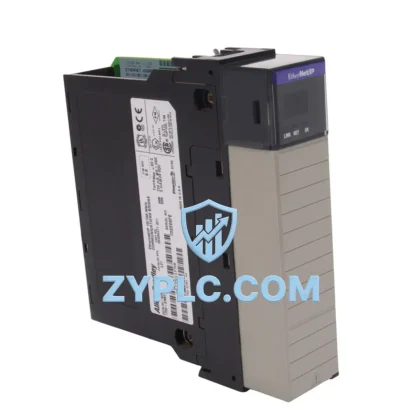
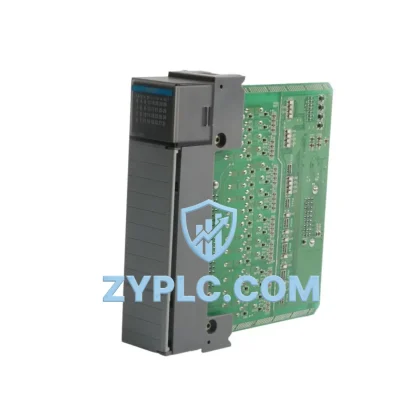
The Allen-Bradley 1756-OB32 is a 32-point, 12/24V DC digital output module engineered for the ControlLogix platform — one of the most widely deployed programmable automation controller (PAC) architectures in discrete and process manufacturing. In modern industrial environments where energy accountability is no longer optional, the 1756-OB32 plays a critical role in translating control logic into precise, low-latency switching actions that directly govern actuator engagement, solenoid valve cycling, motor starter commands, and indicator load management. By minimizing unnecessary output dwell time and enabling tight synchronization with upstream PLC scan cycles, this module helps production engineers reduce parasitic energy consumption at the field device level — one of the most overlooked sources of inefficiency on the plant floor.
Unlike generic relay-based output solutions, the 1756-OB32 operates with solid-state DC switching, delivering faster response times, lower heat dissipation per channel, and significantly longer service life under high-cycle-rate conditions. When integrated into a ControlLogix chassis alongside modules such as the 1756-IB32 digital input module and the 1756-EN2T EtherNet/IP communication module, the 1756-OB32 forms part of a tightly coupled I/O subsystem capable of sub-millisecond command execution — a prerequisite for energy-aware motion sequencing and demand-side load management strategies.
Efficiency Performance Table
| Parameter |
Specification / Value |
| Output Points |
32 (sourcing) |
| Output Voltage Range |
12–24V DC |
| Max Output Current per Point |
1.0 A |
| Max Module Power Dissipation |
5.75 W (backplane) |
| Output Type |
Solid-State (MOSFET) |
| Response Time (ON) |
≤ 0.1 ms |
| Response Time (OFF) |
≤ 1.0 ms |
| Compatible Platform |
Allen-Bradley ControlLogix (1756 Series) |
| Compatible Controllers |
1756-L71, 1756-L72, 1756-L73, 1756-L74, 1756-L75, 1756-L81E, 1756-L82E, 1756-L83E, 1756-L84E, 1756-L85E |
| Communication Protocol |
ControlNet, EtherNet/IP (via backplane) |
| Application Environment |
Discrete manufacturing, process control, material handling, automotive assembly, food & beverage, energy utilities |
| Operating Temperature |
0–60°C |
| Energy Optimization Value |
Reduces field-level switching losses; enables demand-based output scheduling; supports load shedding logic |
| Warranty |
12-Month Warranty (ZYPLC) |
| Inventory Status |
In Stock — Ships within 1–3 business days |
| Testing |
Full functional outgoing inspection prior to shipment |
Energy-Aware Automation Architecture
The 1756-OB32 does not operate in isolation — its energy optimization value is fully realized when it is deployed as part of a coordinated automation architecture. In a typical ControlLogix-based energy management configuration, the 1756-OB32 receives output commands from a 1756-L73 or 1756-L85E controller running Studio 5000 Logix Designer programs that incorporate energy-aware ladder logic or function block routines. These routines can implement demand-based output scheduling, where non-critical loads are de-energized during peak production windows or when process conditions allow, reducing the aggregate current draw on the 24V DC power distribution network.
On the drive side, the 1756-OB32 frequently interfaces with PowerFlex 525 or PowerFlex 755 variable frequency drives (VFDs) through discrete start/stop and direction commands. When the PLC program detects that a conveyor or pump motor is operating below its efficiency threshold — data often sourced from a 1756-IF16 analog input module monitoring current transducers — the output module can issue a controlled stop command, allowing the VFD to execute a deceleration ramp rather than an abrupt cutoff, thereby recovering kinetic energy and reducing mechanical stress on the drivetrain.
For facilities running energy monitoring programs, the 1756-OB32 works in conjunction with power metering devices such as the PowerMonitor 5000 or PowerMonitor 1000, which feed real-time kWh and demand data back into the ControlLogix system via EtherNet/IP. The controller can then use this data to trigger load-shedding output sequences through the 1756-OB32, automatically switching off non-essential actuators when the facility approaches its contracted demand limit — a strategy that can yield measurable reductions in monthly energy billing without any changes to production throughput.
In multi-axis motion applications, the 1756-OB32 complements Kinetix 5700 or Kinetix 6500 servo drive systems by managing auxiliary digital outputs such as brake release signals, axis-enable permissives, and safety gate interlocks. Coordinating these signals with precision through the 1756-OB32 ensures that servo axes are only energized when motion is actually required, eliminating the idle-state power draw that accumulates over multi-shift production schedules. The module’s fast OFF response time (≤1.0 ms) is particularly valuable here, as it ensures brake engagement occurs within the servo drive’s deceleration window, preventing unnecessary holding torque and associated heat generation in the motor windings.
HMI integration via a PanelView Plus 7 or FactoryTalk View SE station allows operators to visualize the real-time state of all 32 output channels, identify channels with abnormally high cycle rates (a potential indicator of process instability or valve wear), and manually override outputs for maintenance purposes without interrupting the broader control program. This level of visibility is foundational to any predictive maintenance strategy targeting output-side field devices.
Power Optimization in Real Production Lines
On automotive body-in-white assembly lines, the 1756-OB32 is commonly used to control weld gun solenoids, clamp actuators, and part-present indicators across multiple stations. By implementing output pulse-width optimization in the ControlLogix program — reducing solenoid hold current after initial actuation using a peak-and-hold strategy managed through the output module’s fast switching capability — engineers have documented reductions in solenoid power consumption of 30–50% per cycle without any loss of clamping force or positional accuracy.
In food and beverage filling lines, where sanitary washdown cycles consume significant compressed air and electrical energy, the 1756-OB32 enables precise sequencing of pneumatic valve outputs to minimize overlap between actuator engagement windows. Rather than energizing all downstream valves simultaneously at the start of a fill cycle, the PLC program staggers output activation through the 1756-OB32 in a calculated sequence, reducing peak current demand on the 24V DC bus and lowering the load on the facility’s power factor correction equipment.
For water and wastewater treatment facilities operating pump stations, the 1756-OB32 provides the discrete output interface for pump motor starters and valve actuators. When integrated with a SCADA system via the 1756-EN2T EtherNet/IP bridge module, the output module participates in demand-response programs where pump scheduling is adjusted in real time based on utility pricing signals. This allows facility operators to shift energy-intensive pumping operations to off-peak tariff windows, achieving cost savings that directly improve the operational budget without capital expenditure on new equipment.
Across all these applications, the 1756-OB32’s solid-state output design eliminates the contact wear, arcing losses, and coil power consumption associated with relay-based alternatives. Over a 24-month operational period in a high-cycle application (e.g., 10 million output transitions per year), the cumulative energy savings from eliminating relay coil power draw alone — typically 1.5–3W per relay — can represent a meaningful reduction in the facility’s electrical consumption, particularly in installations with hundreds of output points distributed across multiple ControlLogix chassis.
Every 1756-OB32 unit supplied by ZYPLC undergoes a full functional outgoing inspection, including channel-by-channel output verification, backplane communication integrity testing, and thermal cycling checks. Units are shipped with a 12-month warranty covering manufacturing defects and functional failures under normal operating conditions. In-stock units are available for same-week dispatch, supporting both planned maintenance schedules and emergency replacement scenarios where production continuity is at risk.
Energy Optimization FAQ
Q1: How does the 1756-OB32 contribute to measurable energy savings in a ControlLogix system?
The 1756-OB32 enables energy savings primarily through precise, demand-based output control. By allowing the ControlLogix controller to energize field devices only when process conditions require it — and to de-energize them immediately when they do not — the module eliminates the idle-state power draw that accumulates across solenoids, contactors, and indicator loads. When combined with energy monitoring data from devices such as the PowerMonitor 5000, the controller can implement automated load-shedding sequences through the 1756-OB32, reducing peak demand charges and overall kWh consumption without impacting production output.
Q2: Is the 1756-OB32 compatible with my existing ControlLogix chassis and controller firmware?
The 1756-OB32 is compatible with all standard 1756 ControlLogix chassis sizes (4, 7, 10, 13, and 17 slots) and is supported by Studio 5000 Logix Designer across a wide range of firmware revisions. It operates alongside controllers including the 1756-L71 through 1756-L85E series. If you are running an older RSLogix 5000 environment, the module is also backward-compatible. For specific firmware revision compatibility, consult the Rockwell Automation product compatibility matrix or contact ZYPLC’s technical team for pre-purchase verification.
Q3: Can the 1756-OB32 replace an older 1756-OB32/A or relay-based output module in an existing installation?
Yes. The 1756-OB32 is a direct form-fit-function replacement for earlier revisions of the same module designation. For installations currently using relay output modules such as the 1756-OW16I, migration to the 1756-OB32 requires rewiring field devices to accept sourcing DC signals rather than dry contact outputs, but delivers significant improvements in switching speed, service life, and per-channel power efficiency. ZYPLC recommends a pre-replacement functional test of the existing wiring and field devices to confirm compatibility before installation.
Q4: What does the 12-month warranty cover, and what is the testing process before shipment?
Every 1756-OB32 unit supplied by ZYPLC is covered by a 12-month warranty from the date of shipment, covering functional failures and manufacturing defects under normal operating conditions (within specified voltage, current, and temperature ratings). Prior to shipment, each unit undergoes a full outgoing inspection that includes individual channel output verification, backplane communication testing, and visual inspection for physical damage. Units that do not pass all inspection criteria are not shipped. Warranty claims are processed directly through ZYPLC’s after-sales team, with replacement or repair turnaround typically within 5–10 business days.
© 2026 ZYPLC. All rights reserved.
Original Source: https://zyplc.com
Contact: +86 19859288691 | plc.sales@zyplc.com