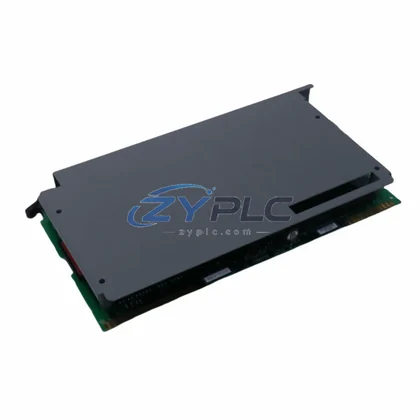
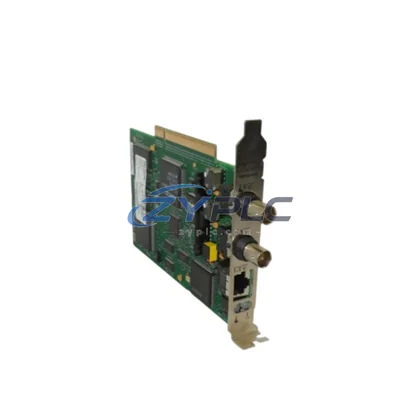
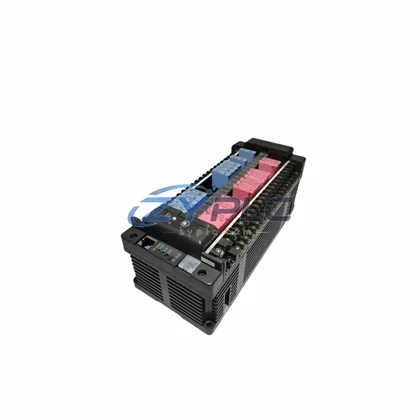
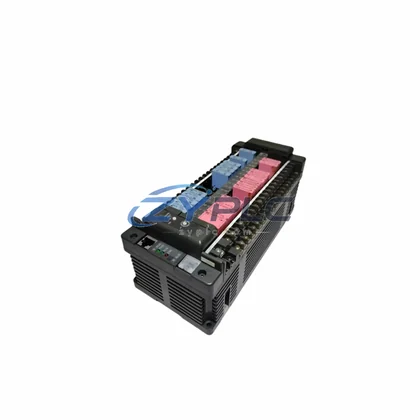
Allen-Bradley 1756-RIO Industrial Network Interface for ControlLogix Systems: Bridging the Industrial Data Link
The Allen-Bradley 1756-RIO is a high-performance Remote I/O Communication Module engineered for the ControlLogix platform, purpose-built to serve as the critical data bridge between field-level devices and upper-layer control and supervisory systems. In modern smart factory environments, where every millisecond of data latency and every byte of process information carries operational weight, the 1756-RIO delivers deterministic, high-speed communication across the Remote I/O network — connecting distributed field devices, legacy I/O racks, and intelligent sensors directly into the ControlLogix backplane architecture.
Designed for demanding industrial applications across automotive assembly, oil and gas processing, water treatment, food and beverage production, and discrete manufacturing, the 1756-RIO enables seamless protocol bridging between the ControlLogix controller environment and Remote I/O-based field infrastructure. Whether integrating legacy 1771 I/O racks, remote sensor clusters, or distributed drive systems, this module ensures that real-time process data flows reliably from the plant floor to SCADA dashboards and MES platforms without interruption.
Compatibility & Integration Notes
| Specification |
Details |
| Communication Protocol |
Remote I/O (RIO) — Allen-Bradley Proprietary |
| Interface Type |
ControlLogix Backplane + Remote I/O Coaxial Network |
| Data Transmission |
57.6 Kbps / 115.2 Kbps / 230.4 Kbps (selectable) |
| Network Compatibility |
ControlLogix, CompactLogix (via adapter), 1771 I/O Racks |
| System Application |
SCADA Integration, HMI Data Feed, PLC-to-Field I/O Bridging, Remote Diagnostics |
| Module Form Factor |
1756 ControlLogix Chassis Module |
| Operating Temperature |
0°C to 60°C (32°F to 140°F) |
| Certifications |
UL, CE, cUL |
| Warranty |
Warranty and support terms confirmed before quote — All units tested before shipment |
| Supply Availability |
Availability confirmed via RFQ before quotation; export shipping available | Request an RFQ from ZYPLC |
Connected Automation Data Flow
In a fully integrated ControlLogix automation architecture, the 1756-RIO sits at the heart of the field-to-controller data pipeline. Signal acquisition begins at the sensor and actuator layer — pressure transmitters, proximity switches, flow meters, and temperature sensors — where raw process signals are collected by distributed 1771 I/O racks connected via the Remote I/O coaxial trunk cable. The 1756-RIO module scans these remote racks cyclically, pulling discrete and analog I/O data into the ControlLogix controller’s data table at configurable baud rates, ensuring deterministic scan times aligned with the controller’s task execution cycle.
Within the ControlLogix chassis, the 1756-L7x or 1756-L8x series controllers process the incoming field data alongside logic from EtherNet/IP-connected devices. The 1756-EN2T EtherNet/IP communication module simultaneously carries this processed data upstream to SCADA servers running platforms such as Rockwell FactoryTalk View SE or Wonderware System Platform, where operators monitor real-time KPIs, trend historical process data, and configure alarm thresholds. HMI panels — including PanelView Plus 7 terminals — display live field status, valve positions, and drive feedback directly sourced from the data aggregated through the 1756-RIO network path.
For drive integration, PowerFlex 755 variable frequency drives connected via DeviceNet or EtherNet/IP feed speed references and fault diagnostics back through the ControlLogix system, while the 1756-RIO handles legacy analog output racks that still govern older drive systems on the same production line. The 1756-DNB DeviceNet Bridge module extends the network reach further, pulling in smart sensor data from DeviceNet-connected photoelectric sensors and barcode readers on conveyor systems.
Remote I/O data from geographically distributed substations — pump stations, compressor rooms, or remote valve manifolds — travels across the coaxial RIO trunk to the 1756-RIO module, eliminating the need for dedicated point-to-point wiring runs. This architecture is further complemented by 1756-DHRIO modules that bridge Data Highway Plus networks, enabling legacy PLC-5 and SLC 500 controllers to share process data with the ControlLogix system through a unified supervisory layer. Edge gateways such as the Moxa MGate MB3000 series can additionally translate Modbus RTU signals from third-party instruments into the broader EtherNet/IP ecosystem, ensuring no field device remains isolated from the central data flow.
Solving Data Isolation in Industrial Sites
One of the most persistent challenges in brownfield industrial facilities is the coexistence of multiple generations of control technology — legacy Remote I/O racks installed in the 1990s operating alongside modern EtherNet/IP-based ControlLogix systems, with no native communication path between them. The Allen-Bradley 1756-RIO directly resolves this protocol fragmentation by acting as the authoritative gateway between the Remote I/O network and the ControlLogix controller, eliminating data silos that would otherwise require costly full I/O replacement projects.
Production line transparency is achieved by surfacing all remote rack I/O states — including discrete input status, analog process values, and output command confirmations — directly within the ControlLogix tag database. This unified data model feeds SCADA historians, MES production tracking systems, and OEE dashboards without requiring custom middleware or protocol converters at the supervisory layer. Alarm management becomes more responsive: fault conditions detected at remote I/O racks are propagated to the controller within the RIO scan cycle, triggering FactoryTalk Alarms and Events notifications to operators in near real-time.
Remote diagnostics capabilities are significantly enhanced through the 1756-RIO’s integration with RSLogix 5000 / Studio 5000 Logix Designer, where engineers can monitor rack communication status, scan list health, and baud rate errors from a centralized engineering workstation without requiring physical access to the remote panel. This reduces mean time to repair (MTTR) and supports predictive maintenance strategies by flagging intermittent communication faults before they escalate to unplanned downtime.
System scalability is preserved through the modular ControlLogix chassis architecture — additional 1756-RIO modules can be added to the same chassis to expand the Remote I/O network capacity, supporting up to 32 remote racks per module across multiple network branches. This allows phased migration strategies where legacy I/O infrastructure is retained and integrated while new EtherNet/IP-based I/O is simultaneously commissioned, protecting capital investment while advancing toward a fully connected smart factory topology.
Industrial Connectivity FAQ
Q1: What is the maximum communication distance supported by the 1756-RIO Remote I/O network?
The Allen-Bradley Remote I/O network supports cable runs of up to 3,048 meters (10,000 feet) at the lowest baud rate of 57.6 Kbps, making it suitable for large plant floor layouts, remote pump stations, and distributed substation architectures. At higher baud rates (230.4 Kbps), the maximum distance is reduced accordingly, and proper coaxial cable termination is required at both ends of the trunk to maintain signal integrity.
Q2: Is the 1756-RIO compatible with both new ControlLogix deployments and existing legacy 1771 I/O rack installations?
Yes. The 1756-RIO is specifically designed to bridge the ControlLogix platform with existing Allen-Bradley 1771 Remote I/O racks, enabling brownfield integration without replacing legacy field wiring or I/O hardware. It supports standard Remote I/O rack addressing and scan list configuration through Studio 5000 Logix Designer, ensuring compatibility with existing rack configurations and I/O module types.
Q3: How does the 1756-RIO maintain network stability in electrically noisy industrial environments?
The module uses shielded coaxial cable infrastructure with defined impedance characteristics (Belden 9463 or equivalent) to reject electromagnetic interference common in industrial environments with variable frequency drives, welding equipment, and high-voltage switchgear. The ControlLogix backplane provides additional electrical isolation between the RIO network interface and the controller logic, and the module’s hardware design meets UL and CE standards for industrial electromagnetic compatibility (EMC).
Q4: What warranty and pre-shipment testing does ZYPLC provide for the 1756-RIO?
All Allen-Bradley 1756-RIO units supplied by ZYPLC carry a warranty and support terms confirmed before quote covering hardware defects and communication failures. Every unit undergoes functional testing prior to shipment, including backplane communication verification and Remote I/O network initialization checks. Shipment timing is confirmed after RFQ review, testing, and export packing. For volume orders, lead time and quotation inquiries, contact our team at plc.sales@zyplc.com or +86 19859288691.