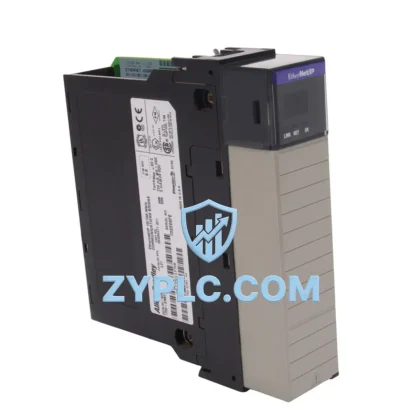
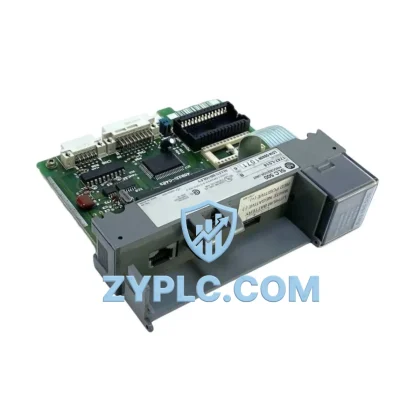
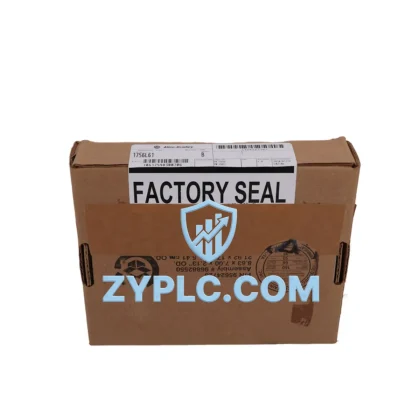
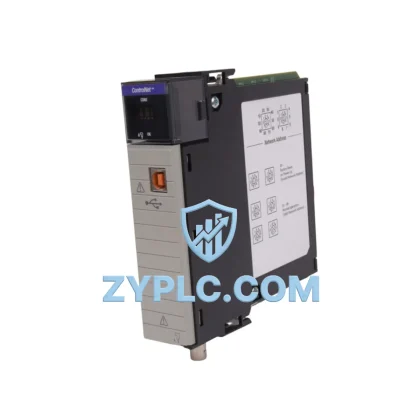
Allen-Bradley 1756-RM2 Energy-Saving Redundancy Module for Optimized ControlLogix Automation
The Allen-Bradley 1756-RM2 is a high-performance redundancy module engineered for Rockwell Automation’s ControlLogix platform, purpose-built to sustain continuous industrial operations while actively reducing unnecessary energy consumption across the control architecture. In modern manufacturing environments where unplanned downtime translates directly into wasted energy — idle conveyors, spinning motors with no load, and HVAC systems running without process feedback — the 1756-RM2 provides the system-level resilience that keeps every energy-consuming asset operating within its intended duty cycle.
Unlike passive failover solutions, the 1756-RM2 maintains a synchronized secondary controller chassis that mirrors the primary at all times. When a fault is detected, switchover occurs in under 10 milliseconds — fast enough to prevent motor drives from losing their speed reference, fast enough to keep servo axes on trajectory, and fast enough to avoid the energy-intensive restart sequences that follow an uncontrolled shutdown. In high-inertia applications such as large centrifugal pumps, compressors, or multi-axis robotic cells, avoiding a single cold restart can save the equivalent of several hours of normal operating energy.
Efficiency Performance Table
| Parameter |
Specification / Value |
| SKU / Part Number |
1756-RM2 |
| Brand |
Allen-Bradley (Rockwell Automation) |
| Series |
ControlLogix 1756 |
| Module Type |
Redundancy Module |
| Switchover Time |
< 10 ms (bumpless transfer) |
| Power Consumption |
Approx. 4.5 W (module only) |
| Operating Efficiency |
Eliminates cold-restart energy spikes; sustains optimal drive speed references |
| Compatible Systems |
ControlLogix 1756 chassis, Logix 5000 firmware, EtherNet/IP networks |
| Application Environment |
Continuous process, discrete manufacturing, energy utilities, oil & gas, water treatment |
| Energy Saving Value |
Prevents restart surges; maintains VFD ramp profiles; reduces idle-state energy waste |
| Warranty |
12-Month Warranty (ZYPLC tested & verified) |
| Origin |
USA |
Energy-Aware Automation Architecture
The 1756-RM2 does not operate in isolation — its energy optimization value is realized through its tight integration with the broader ControlLogix ecosystem. In a typical redundant control architecture, the primary chassis houses a 1756-L73 ControlLogix CPU running the Logix 5000 application, while the secondary chassis — synchronized via the 1756-RM2 — stands ready to assume control without interrupting the process. The fiber-optic RMCT cable between the two 1756-RM2 modules ensures that all output states, PID loop values, and drive speed references are continuously mirrored.
On the drive side, the system typically interfaces with PowerFlex 755 variable frequency drives over EtherNet/IP. Because the 1756-RM2 preserves the active speed reference during switchover, the PowerFlex 755 never receives a zero-speed command — eliminating the energy-intensive acceleration ramp that would otherwise be required to bring a large motor back to operating speed. In pump and fan applications, this alone can reduce peak demand charges on the facility’s energy bill.
For I/O distribution across the production floor, 1756-EN2T EtherNet/IP communication modules connect remote 1734 POINT I/O drops to the redundant controller pair. Each I/O drop continues to report field device status — pressure transmitters, flow meters, temperature sensors — without interruption during a switchover event. This unbroken data stream is essential for energy management systems that rely on real-time process values to modulate heating, cooling, and compressed air delivery.
At the HMI layer, PanelView Plus 7 terminals connected via EtherNet/IP display live energy KPIs — kilowatt-hours per unit produced, motor load percentages, and drive efficiency curves — giving operators the visibility needed to identify and correct energy waste before it accumulates. When integrated with a 1756-EN3TR dual-port EtherNet/IP module in a Device Level Ring topology, the network itself becomes fault-tolerant, ensuring that energy monitoring data is never lost during a cable fault or switch failure.
For facilities implementing ISO 50001 energy management programs, the 1756-RM2-based architecture pairs naturally with Rockwell’s FactoryTalk Energy Manager and third-party power monitoring devices such as the PowerMonitor 5000, which captures harmonic distortion, power factor, and demand data at the panel level. This combination allows the control system to not only maintain uptime but to actively report on the energy cost of every production run.
Power Optimization in Real Production Lines
Consider a continuous packaging line running three-shift operations. The line is driven by a series of servo axes — coordinated by a Kinetix 5700 servo drive system — and supervised by a ControlLogix controller with a 1756-RM2 redundancy pair. Without redundancy, a controller fault forces an emergency stop: all servo axes decelerate to zero, the line clears, and operators spend 15–30 minutes performing a controlled restart. During this window, compressed air continues to flow, cooling systems remain active, and lighting stays on — all consuming energy with zero productive output.
With the 1756-RM2 in place, the secondary controller assumes control in under 10 milliseconds. The Kinetix 5700 drives never lose their position references. The line continues at speed. The energy consumed during that 15–30 minute restart window — which in a large facility can represent 50–200 kWh per event — is entirely avoided.
In process industries such as water treatment or chemical manufacturing, the stakes are even higher. A redundant ControlLogix system managing PowerFlex 6000 medium-voltage drives on large pump stations ensures that flow rates remain stable during a controller switchover. Stable flow means stable pressure, which means the drives do not need to ramp up against a pressure deficit — a scenario that draws significantly more current and stresses motor insulation.
Predictive maintenance integration further amplifies these gains. By connecting vibration sensors and motor current signature analysis tools to the 1734 POINT I/O network, the ControlLogix system can detect bearing wear, rotor imbalance, and winding degradation before they cause a fault. Addressing these issues during planned maintenance windows — rather than responding to unplanned failures — keeps motors operating at their nameplate efficiency and avoids the energy penalty of running degraded equipment.
Every unit of the 1756-RM2 supplied by ZYPLC undergoes a full functional test prior to shipment, including redundancy switchover verification, fiber-optic link integrity check, and chassis communication validation. Stock is maintained for immediate dispatch, and all units are covered by a 12-month warranty from the date of invoice.
Energy Optimization FAQ
Q1: How does the 1756-RM2 contribute to energy savings if it is a redundancy module, not a power controller?
A: Energy waste in industrial plants is often caused by unplanned stops and restarts, not by steady-state operation. The 1756-RM2 eliminates the restart energy spikes associated with controller faults by enabling bumpless switchover in under 10 ms. This keeps variable frequency drives, servo systems, and process equipment running at their optimized operating points without interruption.
Q2: Is the 1756-RM2 compatible with existing ControlLogix 1756 chassis and EtherNet/IP networks?
A: Yes. The 1756-RM2 is designed for the standard 1756 chassis and integrates natively with Logix 5000 firmware. It communicates with the secondary chassis via a dedicated fiber-optic RMCT cable and does not require changes to the existing EtherNet/IP network topology. It is compatible with 1756-EN2T, 1756-EN3TR, and other standard ControlLogix communication modules.
Q3: Can the 1756-RM2 replace an older 1756-RM module, and what should be verified before substitution?
A: The 1756-RM2 is the current-generation replacement for the legacy 1756-RM. Before substitution, verify that both primary and secondary chassis are running compatible Logix 5000 firmware versions (v16 or later recommended), that the RMCT fiber cable length is within specification, and that the chassis backplane revision supports the RM2 module. ZYPLC’s technical team can assist with compatibility verification prior to shipment.
Q4: What does the 12-month warranty from ZYPLC cover, and what is the testing process?
A: Every 1756-RM2 unit shipped by ZYPLC is tested for full redundancy functionality, including primary-to-secondary switchover, fiber-optic link integrity, and chassis communication. The 12-month warranty covers manufacturing defects and functional failures under normal operating conditions. Units that fail during the warranty period are replaced or repaired at no charge. Contact ZYPLC at plc.sales@zyplc.com or +86 19859288691 for warranty claims and RMA processing.
© 2026 ZYPLC. All rights reserved.
Original Source: https://zyplc.com
Contact: +86 19859288691 | plc.sales@zyplc.com