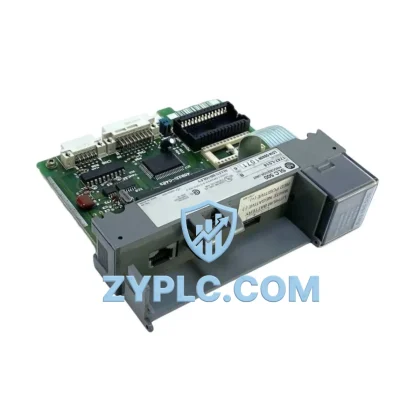
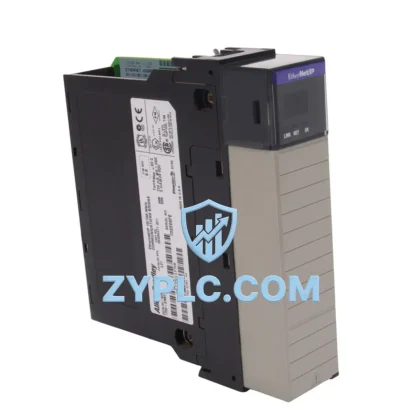
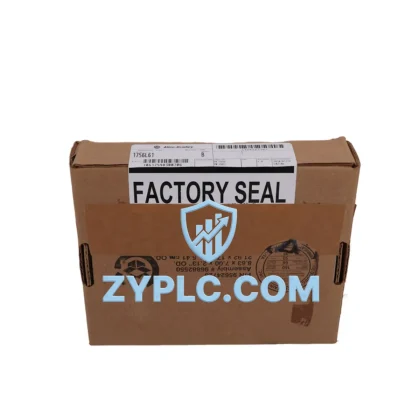
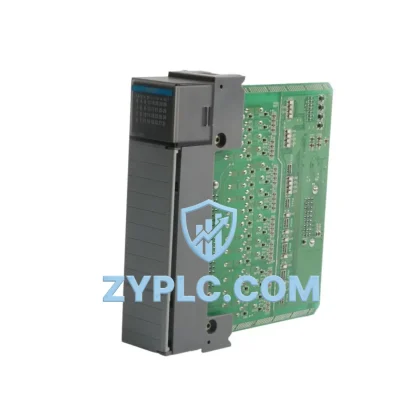
Allen-Bradley 1756-RMC3 System-Ready Fiber Optic Cable for ControlLogix Architecture
The Allen-Bradley 1756-RMC3 is a 3-meter fiber optic cable module engineered specifically for use within the ControlLogix redundancy architecture. Rather than functioning as a standalone accessory, the 1756-RMC3 serves as a critical physical link between redundant controller chassis, enabling the high-speed, deterministic communication that underpins fault-tolerant automation systems across power generation, petrochemical processing, water treatment, and advanced discrete manufacturing environments. Understanding its role requires viewing it not in isolation, but as an integral component within a layered control system where every tier—from the control layer down to the field device layer—depends on reliable, low-latency signal continuity.
Architecture Specification Table
| Parameter |
Specification |
| Part Number |
1756-RMC3 |
| Brand |
Allen-Bradley (Rockwell Automation) |
| Series |
ControlLogix 1756 |
| System Role |
Redundancy Module Fiber Optic Interconnect Cable |
| Cable Length |
3 Meters (approx. 9.8 ft) |
| Cable Type |
Fiber Optic (multimode) |
| Compatible Modules |
1756-RM, 1756-RM2, 1756-RM2XT (Redundancy Modules) |
| Communication Function |
High-speed chassis-to-chassis redundancy synchronization |
| Connector Type |
Duplex LC fiber optic connectors |
| Operating Temperature |
0°C to 60°C (32°F to 140°F) |
| Storage Temperature |
-40°C to 85°C |
| Installation Environment |
Industrial control panel, DIN rail chassis enclosure |
| Immunity |
EMI/RFI immune (fiber optic medium) |
| Product Category |
Industrial Automation / PLC Accessories / Redundancy Cables |
| Warranty |
12-Month Warranty (ZYPLC) |
| Origin |
United States |
Coordinated Control System Design
In a fully realized ControlLogix redundancy architecture, the 1756-RMC3 fiber optic cable connects the primary and secondary 1756-RM2 or 1756-RM2XT redundancy modules mounted in their respective chassis. This physical link is the backbone of the redundancy synchronization process: it carries continuous state data between the primary 1756-L7x or 1756-L8x series controllers, ensuring that in the event of a primary controller fault, the secondary controller can assume control within milliseconds without process interruption.
The control layer of such a system typically pairs the 1756-RMC3 with a 1756-RM2 redundancy module on each chassis, while the CPU layer relies on matched 1756-L73 or 1756-L75 ControlLogix controllers. Power integrity across both chassis is maintained by 1756-PA75 or 1756-PB75 power supplies, which must be independently sourced to prevent a single power failure from compromising the redundant pair.
At the I/O layer, 1756-IB16 digital input modules and 1756-OB16E digital output modules distributed across remote I/O chassis communicate back to the primary chassis via 1756-EN2T EtherNet/IP communication modules. These network modules, installed in both the primary and secondary chassis, ensure that I/O data is continuously available to whichever controller is currently active. The 1756-RMC3 cable ensures that the redundancy module pair can arbitrate controller roles and synchronize crossloaded data without relying on the EtherNet/IP network, keeping redundancy communication on a dedicated, isolated fiber channel.
For process-level integration, 1756-IF16 analog input modules handle 4–20 mA signals from field transmitters, while 1756-OF8 analog output modules drive control valves and variable frequency drives. In systems where HART pass-through is required for intelligent field device diagnostics, the fiber optic redundancy link maintained by the 1756-RMC3 ensures that HART data continues to flow without interruption during controller switchover events.
At the network layer, 1756-ENBT or 1756-EN2TR modules with dual-port ring topology support Device Level Ring (DLR) configurations, adding a second layer of network redundancy that complements the controller-level redundancy enabled by the 1756-RMC3. This multi-layer redundancy strategy—controller redundancy via fiber optic cable, network redundancy via DLR—is the standard architecture for SIL 2-capable ControlLogix systems in regulated industries.
From a maintenance perspective, the 1756-RMC3 is a field-replaceable component. Its duplex LC connectors allow technicians to swap the cable during scheduled maintenance windows without disturbing the redundancy module mounting or chassis backplane. Keeping a spare 1756-RMC3 in the site’s critical spares inventory is a standard recommendation for any facility operating ControlLogix redundancy systems, as cable degradation or connector contamination can silently degrade redundancy synchronization performance before causing an outright fault.
Application in Layered Automation Systems
Power Generation & Utilities: In combined-cycle power plants and hydroelectric facilities, ControlLogix redundancy systems using the 1756-RMC3 protect turbine governor control and excitation regulation loops. A controller switchover triggered by a CPU fault must complete within the scan cycle to prevent turbine trip events. The fiber optic link’s immunity to electromagnetic interference from high-voltage switchgear and generator fields makes it the preferred interconnect medium in these environments.
Petrochemical & Refinery Processing: Continuous process units such as distillation columns, catalytic crackers, and compressor trains require uninterrupted PLC availability. ControlLogix redundancy architectures with 1756-RMC3 interconnects are deployed in these applications to meet API and IEC 61511 functional safety requirements, ensuring that process upsets do not escalate due to controller unavailability.
Water & Wastewater Treatment: Municipal water treatment facilities operating under EPA and local regulatory mandates use ControlLogix redundancy to protect SCADA-integrated pump station control, chemical dosing, and filtration sequencing. The 1756-RMC3 enables the redundancy architecture that allows these systems to meet uptime requirements without requiring hot-standby manual operator intervention.
Mining & Metals Processing: Conveyor drive control, crusher sequencing, and flotation cell management in mining operations benefit from ControlLogix redundancy where production stoppages carry significant financial penalties. The rugged operating temperature range of the 1756-RMC3 supports deployment in control rooms adjacent to high-heat processing equipment.
Packaging & Discrete Manufacturing: High-speed packaging lines and automotive assembly systems use ControlLogix redundancy to protect line-critical control nodes. In these applications, the 1756-RMC3 supports the rapid switchover times needed to prevent line stoppages that would otherwise require manual restart sequences and quality inspection holds.
Architecture Engineering FAQ
Q1: Is the 1756-RMC3 compatible with both the 1756-RM and 1756-RM2 redundancy modules?
The 1756-RMC3 is designed for use with the 1756-RM2 and 1756-RM2XT redundancy modules, which use duplex LC fiber optic connectors. Earlier 1756-RM (revision 1) modules used a different cable specification. Before ordering, confirm your installed redundancy module revision and connector type to ensure compatibility. ZYPLC’s technical team can assist with cross-referencing your existing hardware configuration.
Q2: Can the 1756-RMC3 be used in extended-temperature ControlLogix XT chassis environments?
The 1756-RMC3 is compatible with 1756-RM2XT redundancy modules used in ControlLogix XT (extended temperature) chassis configurations. However, the cable itself should be routed and protected in accordance with the ambient temperature limits of its fiber optic jacket rating. In extreme environments, additional cable management and thermal shielding may be required to maintain signal integrity over the cable’s service life.
Q3: What does the 12-Month Warranty cover, and how does it support long-term system maintenance planning?
ZYPLC’s 12-Month Warranty covers the 1756-RMC3 against defects in materials and workmanship from the date of shipment. For maintenance engineers managing ControlLogix redundancy systems, this warranty period aligns with annual preventive maintenance cycles, allowing facilities to schedule cable inspection and replacement as part of their standard PM program. In the event of a warranty claim, ZYPLC provides direct technical support and replacement coordination to minimize system downtime.
© 2026 ZYPLC. All rights reserved.
Original Source: https://zyplc.com
Contact: +86 19859288691 | plc.sales@zyplc.com