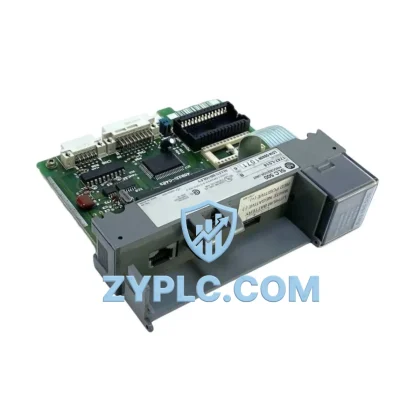
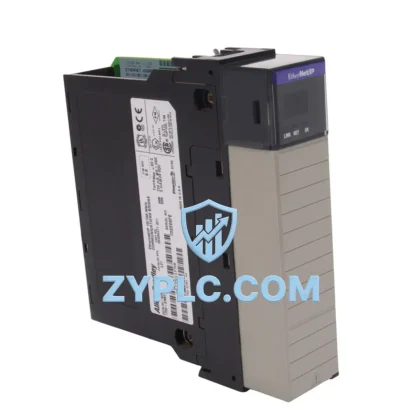
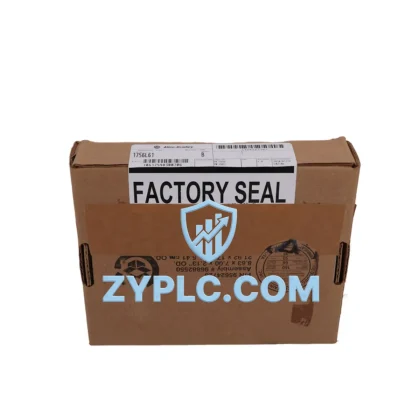
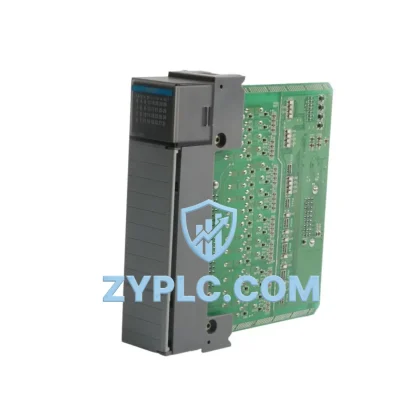
Allen-Bradley 1756-SYNCH System-Ready SynchLink Bridge for ControlLogix Architecture
The Allen-Bradley 1756-SYNCH SynchLink Communication Bridge is a purpose-engineered module designed to operate within the ControlLogix backplane architecture, delivering high-speed, deterministic synchronization across distributed drive and motion control networks. Rather than functioning as a standalone device, the 1756-SYNCH is conceived as a structural element within a layered automation system — one that binds the control layer, drive layer, and communication layer into a coherent, synchronized whole. For engineers designing systems where timing precision, coordinated motion, and long-term maintainability are non-negotiable, the 1756-SYNCH represents a critical architectural investment.
In a fully realized ControlLogix system, the 1756-SYNCH occupies the communication layer, bridging the ControlLogix chassis to SynchLink-enabled drives and motion controllers. It works in close coordination with the 1756-L7x or 1756-L8x series ControlLogix CPUs, which serve as the system’s decision-making core. The CPU issues synchronized motion commands that the 1756-SYNCH translates and distributes across the SynchLink fiber-optic network to connected PowerFlex 700S and PowerFlex 700H drives. This architecture eliminates the timing jitter inherent in conventional fieldbus topologies, enabling sub-millisecond synchronization across multiple drive axes — a requirement in winding, printing, and coordinated conveyor applications.
The 1756-SYNCH integrates seamlessly into the 1756 chassis alongside other ControlLogix I/O modules, including the 1756-IB16 digital input module and 1756-OB16E digital output module, which handle discrete field signals from sensors, limit switches, and actuators. Analog process variables — such as tension feedback, speed references, and torque signals — are managed through 1756-IF8 or 1756-OF8 analog I/O modules mounted in the same or adjacent chassis. This co-location within the ControlLogix backplane ensures that all I/O data, motion commands, and synchronization signals share a common execution context, reducing latency and simplifying ladder logic or structured text programming in Studio 5000 Logix Designer.
At the network layer, the 1756-SYNCH operates alongside the 1756-EN2T or 1756-EN3TR EtherNet/IP communication modules, which provide upstream connectivity to SCADA systems, historian servers, and MES platforms via standard Ethernet infrastructure. The EN3TR variant supports dual-port topology, enabling Device Level Ring (DLR) redundancy — a critical feature in applications where network faults cannot be tolerated. The 1756-SYNCH’s SynchLink network, by contrast, operates as a dedicated, real-time synchronization bus, keeping drive coordination traffic isolated from general plant network congestion.
Power integrity is maintained through the 1756-PA75 or 1756-PB75 power supply modules, which provide regulated 1.2V, 3.3V, 5V, and 24V DC rails to all modules within the chassis. In high-availability architectures, redundant power supplies are deployed alongside the 1756-RM2 ControlLogix Redundancy Module, which enables bumpless controller switchover in the event of a CPU or chassis fault. The 1756-SYNCH is fully compatible with this redundancy architecture, ensuring that synchronization continuity is maintained even during planned maintenance or unplanned fault events.
At the human-machine interface layer, PanelView Plus 7 terminals connected via EtherNet/IP provide operators with real-time visibility into drive status, synchronization health, and system alarms. Faceplates generated in FactoryTalk View SE display 1756-SYNCH network diagnostics alongside drive speed, torque, and fault codes, enabling rapid fault isolation without requiring engineers to access the physical cabinet. This integration between the HMI layer and the SynchLink communication layer significantly reduces mean time to repair (MTTR) in production environments.
From an engineering and commissioning perspective, the 1756-SYNCH is configured entirely within Studio 5000 Logix Designer, using the standard Add-On Profile (AOP) framework. No external configuration software is required. Drive parameters for connected PowerFlex drives are accessible directly through the controller project tree, enabling centralized parameter management and version-controlled configuration backups. This approach simplifies both initial commissioning and long-term change management, particularly in regulated industries where configuration traceability is mandatory.
For inventory and supply chain planning, the 1756-SYNCH is stocked as a standard line item, with lead times suitable for both planned capital projects and emergency replacement scenarios. All units supplied by ZYPLC are covered by a 12-Month Warranty, with pre-shipment functional verification and full documentation support. Contextual Integration services are available to assist engineering teams with system architecture review, module compatibility verification, and on-site commissioning support.
Architecture Specification Table
| Parameter |
Specification |
| System Role |
SynchLink Communication Bridge — ControlLogix Backplane |
| Compatible CPUs |
1756-L7x, 1756-L8x ControlLogix Series |
| Network Type |
SynchLink (Fiber-Optic, Proprietary Real-Time Sync Bus) |
| Backplane Interface |
1756 ControlLogix Chassis (any slot) |
| Power Consumption |
Supplied via 1756 backplane (1756-PA75 / 1756-PB75) |
| Operating Temperature |
0°C to 60°C (32°F to 140°F) |
| Relative Humidity |
5% to 95% non-condensing |
| Enclosure Rating |
Open-type; requires installation in IP54 or better enclosure |
| Compatible Drives |
PowerFlex 700S, PowerFlex 700H (SynchLink-enabled) |
| Communication Protocol |
SynchLink (dedicated); EtherNet/IP (via 1756-EN2T/EN3TR) |
| Redundancy Support |
Compatible with 1756-RM2 ControlLogix Redundancy Module |
| Configuration Tool |
Studio 5000 Logix Designer (Add-On Profile) |
| Warranty |
12-Month Warranty — All units pre-verified before shipment |
| Contextual Integration |
Available — Architecture review, compatibility check, commissioning |
Coordinated Control System Design
The 1756-SYNCH achieves its full value only when considered within the context of a complete ControlLogix system architecture. At the control layer, the 1756-L74 or 1756-L83E ControlLogix CPU executes the motion and process control program, issuing synchronized commands at the configured task rate. These commands are transmitted to the 1756-SYNCH, which distributes them across the SynchLink network to PowerFlex 700S drives operating in coordinated speed or torque mode.
Discrete I/O is handled by 1756-IB16 input modules and 1756-OB16E output modules, which interface with field devices including proximity sensors, solenoid valves, and motor starters. Analog signals — tension feedback, process temperature, and flow rate — are processed through 1756-IF8 analog input modules. All of these modules share the same 1756 chassis backplane, ensuring deterministic data exchange with the CPU and the 1756-SYNCH at every scan cycle.
Network connectivity to the plant Ethernet backbone is provided by the 1756-EN3TR dual-port EtherNet/IP module, which supports Device Level Ring topology for network fault tolerance. Upstream, this connects to FactoryTalk Historian and SCADA servers for production data aggregation. At the HMI layer, PanelView Plus 7 terminals display real-time system status, drive diagnostics, and SynchLink network health. For high-availability applications, the 1756-RM2 Redundancy Module provides seamless CPU switchover, with the 1756-SYNCH maintaining synchronization continuity across the switchover event. Terminal blocks and 1492-AIFM analog interface modules complete the field wiring interface, providing a clean, maintainable connection point between the control cabinet and field instrumentation.
Application in Layered Automation Systems
The 1756-SYNCH is deployed across a wide range of industrial sectors where coordinated motion and communication integrity are essential. In paper and film manufacturing, the module synchronizes multiple winding and unwinding drives across a continuous web process, maintaining tension control and preventing web breaks during speed transitions. In power generation and utilities, it coordinates auxiliary drive systems within turbine control architectures, where timing deviations can trigger protective relay actions.
In petrochemical and refinery applications, the 1756-SYNCH supports coordinated pump and compressor drive systems operating under ControlLogix supervision, with SynchLink providing the real-time coordination layer that fieldbus protocols cannot reliably deliver. In mining and mineral processing, it is used in conveyor drive synchronization systems, where multiple drives must maintain precise speed ratios to prevent material spillage and mechanical stress on transfer points.
In metals and metallurgy, rolling mill drive systems rely on the 1756-SYNCH to coordinate roughing and finishing stand drives, where speed synchronization tolerances are measured in fractions of a percent. In packaging and converting lines, the module enables coordinated registration control across print, cut, and fold stations, ensuring consistent product quality at high line speeds. Across all of these applications, the 1756-SYNCH’s role is not merely communicative — it is architecturally foundational, enabling the ControlLogix platform to deliver the deterministic, synchronized control that modern industrial processes demand.
Architecture Engineering FAQ
Q1: Is the 1756-SYNCH compatible with all ControlLogix chassis and CPU generations?
The 1756-SYNCH is designed for use with the 1756 ControlLogix chassis family and is compatible with 1756-L6x, 1756-L7x, and 1756-L8x series CPUs. It occupies a standard chassis slot and is configured via Studio 5000 Logix Designer using the module’s Add-On Profile. For systems using older 1756-L5x CPUs, compatibility should be verified against the module’s firmware revision requirements prior to installation.
Q2: Can the 1756-SYNCH be used in a redundant ControlLogix architecture?
Yes. The 1756-SYNCH is compatible with ControlLogix redundancy architectures using the 1756-RM2 Redundancy Module. In a redundant configuration, the primary and secondary chassis each contain a 1756-SYNCH module. Upon a switchover event, the secondary controller assumes control and the SynchLink network continues to operate without interruption, provided that the redundancy configuration has been correctly implemented in Studio 5000 and the SynchLink network topology supports the switchover sequence.
Q3: What does the 12-Month Warranty cover, and what Contextual Integration support is available?
All 1756-SYNCH units supplied by ZYPLC are covered by a 12-Month Warranty from the date of shipment, covering manufacturing defects and functional failures under normal operating conditions. Pre-shipment functional verification is performed on all units. Contextual Integration support includes system architecture review, module compatibility assessment, firmware version guidance, and remote commissioning assistance. On-site support can be arranged for complex multi-drive SynchLink network deployments. Contact our technical team at [email protected] or +86 19859288691 to discuss your specific architecture requirements.
© 2026 ZYPLC. All rights reserved.
Original Source: https://zyplc.com
Contact: +86 19859288691 | [email protected]