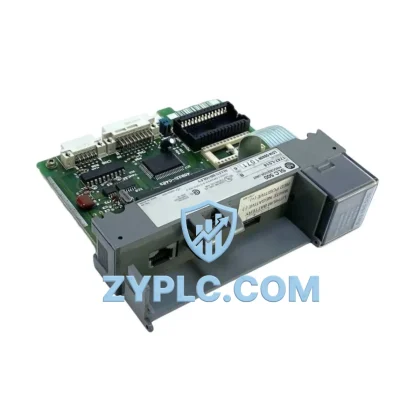
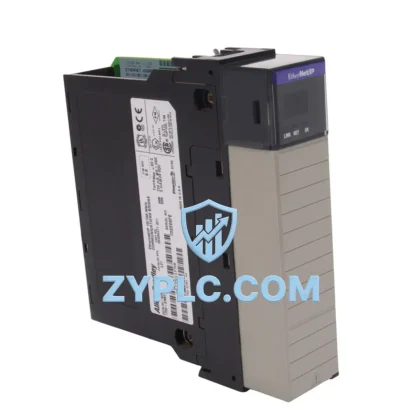
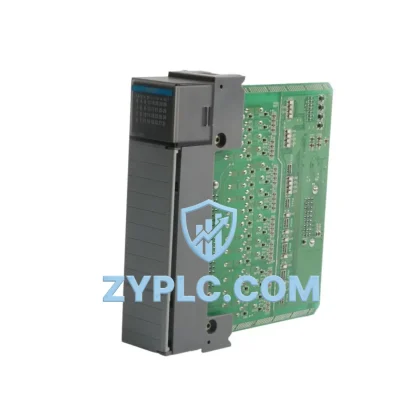
Allen-Bradley 1756-TBNH System-Ready Terminal Block for ControlLogix Architecture
In a fully integrated industrial control system, every layer — from the controller backbone to the field wiring interface — must operate with precision, consistency, and long-term reliability. The Allen-Bradley 1756-TBNH is a 20-pin screw-type terminal block engineered specifically for the ControlLogix 1756 platform, providing a robust and repeatable field-wiring interface that anchors the I/O layer of your automation architecture. Rather than treating this component as a passive connector, system engineers recognize the 1756-TBNH as a critical element in maintaining signal integrity, reducing commissioning time, and enabling efficient long-term maintenance across complex, multi-rack control environments.
The 1756-TBNH is designed to mate directly with Allen-Bradley 1756 series I/O modules — including analog input modules such as the 1756-IF8 and 1756-IF16, digital output modules such as the 1756-OB16I, and combination I/O modules used in high-density process control panels. Its screw-terminal design ensures secure, vibration-resistant field wire termination, which is essential in demanding environments such as mining conveyors, petrochemical processing units, and heavy manufacturing lines where mechanical stress and thermal cycling are constant factors.
Architecture Specification Table
| Parameter |
Specification |
| System Role |
Field Wiring Interface / I/O Layer Terminal Block |
| Compatible Platform |
Allen-Bradley ControlLogix 1756 Series |
| Terminal Count |
20-pin screw terminal |
| Terminal Type |
Screw-type, removable wiring arm |
| Wire Gauge Compatibility |
14–22 AWG (solid or stranded) |
| Electrical Rating |
250V AC/DC, 10A per terminal |
| Communication Role |
Passive field interface; signal continuity to 1756 I/O backplane |
| Installation Environment |
DIN rail / panel mount; IP20 enclosure rating |
| Operating Temperature |
0°C to 60°C |
| Compatibility |
1756-IF8, 1756-IF16, 1756-OB16I, 1756-IB16, and compatible 1756 I/O modules |
| Warranty |
12-Month Warranty — covers manufacturing defects and functional failure under normal operating conditions |
Coordinated Control System Design
The 1756-TBNH does not operate in isolation — it is one node in a carefully coordinated control architecture. In a typical ControlLogix deployment, the system begins at the controller level with a 1756-L73 or 1756-L85E CPU module seated in a 1756-A10 or 1756-A17 chassis. The controller communicates with distributed I/O racks via a 1756-EN2T EtherNet/IP communication module, enabling high-speed, deterministic data exchange across the plant network. Within each I/O rack, modules such as the 1756-IF8 analog input module and 1756-OB16I digital output module rely on properly terminated field wiring to deliver accurate process data to the controller.
This is precisely where the 1756-TBNH becomes architecturally significant. By providing a clean, labeled, and removable wiring interface, it allows maintenance teams to disconnect field wiring from the I/O module without disturbing the module itself — a critical advantage during scheduled maintenance windows or emergency fault isolation. In redundant system designs, where a 1756-RM2 redundancy module coordinates primary and secondary controller chassis, the ability to quickly swap or inspect field wiring without disrupting the redundancy handshake is operationally essential.
At the power layer, a 1756-PA75 or 1756-PB75 power supply module provides stable DC bus voltage to the chassis, ensuring that all I/O modules — and by extension, the terminal blocks interfacing with them — operate within their rated electrical parameters. For human-machine interface integration, a PanelView Plus 7 terminal connected via EtherNet/IP provides operators with real-time visibility into field signal states, alarm conditions, and process trends — all of which depend on the signal fidelity maintained at the 1756-TBNH termination point.
In larger architectures involving DeviceNet or ControlNet communication, a 1756-DNB DeviceNet scanner or 1756-CNB ControlNet bridge module may extend the I/O network to remote device clusters. Even in these distributed topologies, the local I/O rack’s terminal block infrastructure — anchored by components like the 1756-TBNH — remains the last physical interface between the control system and the real world.
Application in Layered Automation Systems
The 1756-TBNH finds application across a wide range of industrial sectors where the ControlLogix platform is the backbone of process and discrete control. In power generation and electrical substation automation, it provides reliable termination for analog measurement signals from current transformers and voltage transducers, feeding data into the 1756-IF8 for real-time grid monitoring. In petrochemical and refinery applications, it supports the termination of 4–20mA signals from pressure transmitters, flow meters, and temperature sensors, where signal accuracy directly impacts process safety and regulatory compliance.
In water and wastewater treatment facilities, the 1756-TBNH is commonly deployed in multi-rack ControlLogix systems managing pump stations, filtration control, and chemical dosing loops. Its removable wiring arm design simplifies the replacement of I/O modules during planned maintenance without requiring field wire re-termination — a significant operational advantage in facilities with limited maintenance windows. In mining and mineral processing environments, where vibration, dust, and temperature extremes are routine, the screw-terminal design of the 1756-TBNH provides superior mechanical retention compared to spring-clamp alternatives, reducing the risk of intermittent signal faults caused by wire loosening.
In automotive and discrete manufacturing lines, the 1756-TBNH supports high-density I/O configurations where dozens of digital and analog signals must be reliably terminated within a compact control panel footprint. Packaging machinery, conveyor systems, and robotic work cells all benefit from the consistent, repeatable wiring interface that the 1756-TBNH provides, enabling faster line changeovers and reducing the risk of wiring errors during system reconfiguration.
Architecture Engineering FAQ
Q1: Is the 1756-TBNH compatible with all 1756 series I/O modules, and how does it integrate into an existing ControlLogix rack?
The 1756-TBNH is specifically designed for 20-pin 1756 series I/O modules, including the 1756-IF8, 1756-IB16, 1756-OB16I, and similar modules with a 20-pin field wiring connector. It attaches directly to the front of the I/O module and can be pre-wired before the module is installed in the 1756-Ax chassis, enabling hot-swap replacement without field wire disturbance. Always verify the pin count of your specific I/O module before ordering, as the 1756 platform also uses 36-pin (1756-TBNF) and other terminal block variants.
Q2: How does the 1756-TBNH support long-term maintenance and system uptime in redundant ControlLogix architectures?
In redundant architectures using the 1756-RM2 redundancy module, the 1756-TBNH’s removable wiring arm design is a key maintenance enabler. When an I/O module requires replacement, the entire wiring arm — with all field terminations intact — can be disconnected and transferred to the replacement module in minutes, eliminating the need to re-terminate individual wires. This dramatically reduces mean time to repair (MTTR) and minimizes the risk of wiring errors during fault recovery. Combined with our 12-Month Warranty coverage, this ensures that your system investment is protected throughout the commissioning and early operational phases.
Q3: What does the 12-Month Warranty cover, and how does Contextual Integration support apply to this product?
Our 12-Month Warranty covers manufacturing defects and functional failures under normal operating conditions from the date of shipment. If the 1756-TBNH fails to perform its specified function within this period due to a manufacturing defect, we will provide a replacement at no additional cost. Contextual Integration support means that our technical team can assist with verifying compatibility between the 1756-TBNH and your specific I/O module configuration, rack layout, and wiring requirements — ensuring that the component integrates correctly into your existing ControlLogix architecture without requiring extensive on-site troubleshooting.
© 2026 ZYPLC. All rights reserved.
Original Source: https://zyplc.com
Contact: +86 19859288691 | plc.sales@zyplc.com