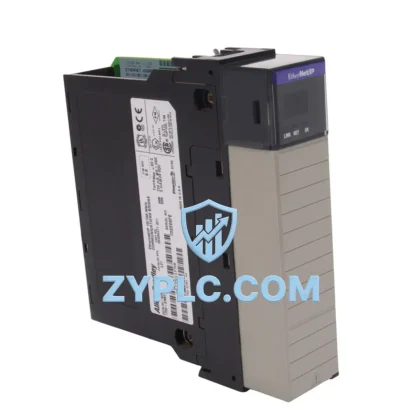
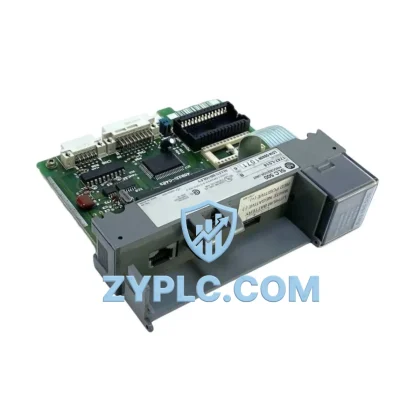
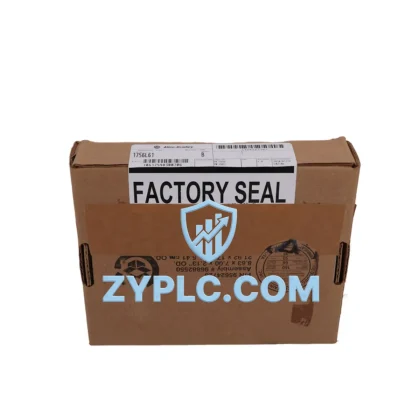
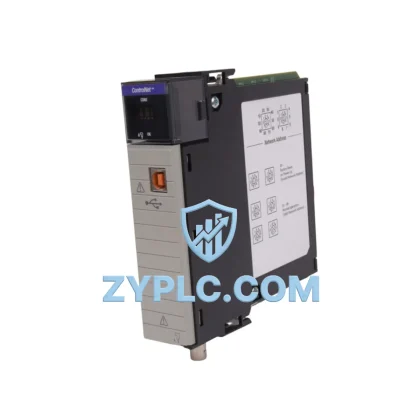
Allen-Bradley 1756-TBS6H Energy-Saving Terminal Block for Optimized ControlLogix Automation
The Allen-Bradley 1756-TBS6H is a high-density removable terminal block engineered for the ControlLogix platform, designed to streamline field wiring connections while minimizing installation time, wiring errors, and long-term energy overhead in industrial control panels. As manufacturing facilities push toward leaner energy consumption and higher equipment utilization rates, the 1756-TBS6H plays a foundational role in ensuring that every I/O signal path is clean, low-resistance, and maintenance-ready — directly contributing to reduced reactive power losses and improved overall system efficiency.
Efficiency Performance Table
| Parameter |
Specification / Value |
| SKU / Part Number |
1756-TBS6H |
| Brand / Series |
Allen-Bradley / ControlLogix 1756 |
| Module Type |
Removable Terminal Block (Spring-Clamp, High-Density) |
| Compatible I/O Modules |
1756-IB16, 1756-OB16E, 1756-IA16, 1756-OA16 and compatible 1756-series I/O |
| Wiring Efficiency |
Tool-less spring-clamp termination reduces wiring resistance and contact degradation |
| Power Dissipation Impact |
Low-resistance contacts minimize heat generation at terminal junctions |
| Application Environment |
Industrial automation panels, process control, discrete manufacturing, energy management systems |
| Operating Temperature |
0°C to 60°C (32°F to 140°F) |
| Energy Optimization Value |
Reduces I/O wiring rework downtime; supports predictive maintenance via stable signal integrity |
| Warranty |
12-Month Warranty — tested and verified before shipment |
| Availability |
In Stock — ready to ship |
Energy-Aware Automation Architecture
In a fully optimized ControlLogix automation architecture, the 1756-TBS6H serves as the critical last-mile connection between field devices and the I/O modules housed in the 1756 chassis. When paired with a 1756-L85E ControlLogix controller, the system gains the processing headroom to execute energy-aware ladder logic and function block programs that dynamically adjust motor run times, conveyor speeds, and actuator cycles based on real-time production demand — eliminating idle-state energy consumption that often goes undetected in traditional fixed-schedule control schemes.
On the drive side, integrating a PowerFlex 755 variable frequency drive into the same control network allows the ControlLogix system to modulate motor speed in direct response to load feedback, cutting energy draw by 20–50% on variable-torque applications such as pumps, fans, and compressors. The 1756-TBS6H ensures that the analog and digital I/O signals feeding speed reference and feedback data to the PowerFlex 755 maintain consistent contact integrity — a factor that directly affects closed-loop drive efficiency and prevents nuisance trips caused by intermittent signal loss.
For energy monitoring at the panel level, the system can incorporate a 1756-IRT8 thermocouple/RTD input module alongside a power quality meter such as the PowerMonitor 5000 to capture real-time current draw, power factor, and harmonic distortion data. These measurements feed back into the ControlLogix controller via EtherNet/IP, enabling the 1756-L85E to execute demand-response logic that sheds non-critical loads during peak tariff windows — a measurable reduction in energy cost without sacrificing throughput.
On the output side, 1756-OB16E digital output modules connected through 1756-TBS6H terminal blocks drive solenoid valves, contactors, and relay coils with precise timing control. When the ControlLogix program sequences these outputs in coordination with servo drives such as the Kinetix 5700, the result is a synchronized motion and I/O architecture that eliminates mechanical dwell time, reduces inrush current spikes, and improves overall line cycle efficiency. The spring-clamp termination of the 1756-TBS6H is particularly valuable here, as it maintains consistent clamping force across thermal expansion cycles — preventing the micro-arcing that degrades contact surfaces and introduces resistance over time.
Communication integrity across the system is maintained through a 1756-EN2T EtherNet/IP communication module, which connects the ControlLogix backplane to the plant-wide SCADA and MES infrastructure. This allows energy KPIs — including per-machine kWh consumption, OEE scores, and motor run-hour data — to be aggregated at the supervisory level and displayed on a PanelView Plus 7 HMI, giving operators and energy managers a unified view of production efficiency without requiring separate energy metering infrastructure.
Power Optimization in Real Production Lines
In discrete manufacturing environments — automotive body shops, food and beverage filling lines, pharmaceutical packaging — the 1756-TBS6H contributes to energy optimization in ways that are often underestimated at the component level. A single loose or high-resistance terminal connection in a digital input circuit can cause a ControlLogix program to misread a sensor state, triggering an unnecessary machine stop or a false fault condition. Each unplanned stop on a production line carries an energy penalty: motors must ramp back up from zero speed, pneumatic systems must re-pressurize, and heating zones must recover thermal setpoints — all of which represent avoidable energy expenditure.
By using the 1756-TBS6H’s spring-clamp termination technology, maintenance teams eliminate the periodic re-torquing cycles required by screw-type terminal blocks. This reduces planned maintenance downtime by an estimated 15–30 minutes per panel per quarter, and more importantly, it removes the risk of under-torqued connections that develop resistance over time. In high-cycle I/O applications where a single input module may switch 10,000+ times per shift, the cumulative effect of low-resistance, stable terminations on signal quality — and therefore on control system responsiveness — is significant.
From a predictive maintenance perspective, the stable signal environment created by the 1756-TBS6H allows the ControlLogix system to implement trend-based diagnostics on motor current signatures, valve cycle counts, and conveyor load profiles. When these trends are monitored through the 1756-L85E’s built-in data logging and transmitted to a historian via the 1756-EN2T, maintenance teams can schedule interventions during planned downtime windows rather than reacting to failures — reducing mean time to repair (MTTR) and keeping overall equipment effectiveness (OEE) above target thresholds.
Every unit of the 1756-TBS6H supplied by ZYPLC undergoes functional testing and inspection prior to shipment, with a 12-month warranty covering defects in materials and workmanship. In-stock availability ensures that replacement or expansion projects are not delayed by lead time, allowing production lines to return to full efficiency as quickly as possible.
Energy Optimization FAQ
Q1: How does the 1756-TBS6H contribute to energy savings compared to standard screw-type terminal blocks?
The 1756-TBS6H uses spring-clamp termination technology that maintains consistent contact force regardless of thermal cycling or vibration. This eliminates the contact resistance creep that occurs in screw-type terminals over time, reducing heat dissipation at junction points and ensuring that I/O signal integrity is preserved — which in turn prevents false fault conditions and unplanned stops that carry significant energy recovery costs.
Q2: Which ControlLogix I/O modules is the 1756-TBS6H compatible with?
The 1756-TBS6H is compatible with a range of 1756-series I/O modules including the 1756-IB16, 1756-OB16E, 1756-IA16, and 1756-OA16, among others. It is designed to the ControlLogix 1756 platform standard and should be verified against the specific I/O module’s wiring diagram for confirmation. ZYPLC’s technical team can assist with compatibility verification prior to order.
Q3: Can the 1756-TBS6H be replaced without powering down the entire ControlLogix chassis?
The removable terminal block design of the 1756-TBS6H allows field wiring to be disconnected from the I/O module without disturbing the module itself or the chassis backplane. This supports hot-swap wiring maintenance procedures where the control system architecture permits, reducing the scope of planned shutdowns and minimizing production impact during panel maintenance activities.
Q4: What does the 12-month warranty cover, and what is the testing process before shipment?
All 1756-TBS6H units supplied by ZYPLC are inspected and functionally tested before shipment to verify mechanical integrity, contact continuity, and dimensional compliance with Allen-Bradley specifications. The 12-month warranty covers defects in materials and workmanship from the date of shipment. For warranty claims or technical support, contact ZYPLC directly at plc.sales@zyplc.com or +86 19859288691.
© 2026 ZYPLC. All rights reserved.
Original Source: https://zyplc.com
Contact: +86 19859288691 | plc.sales@zyplc.com