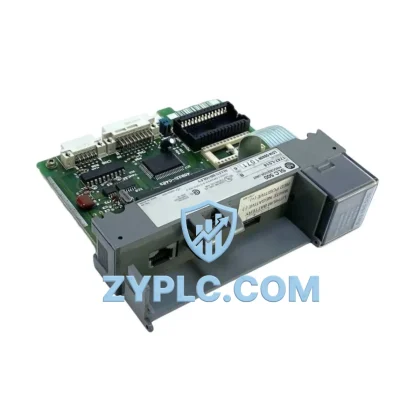
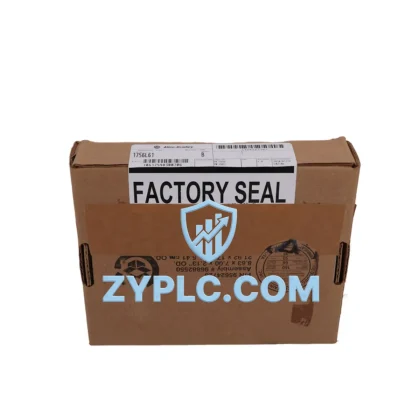
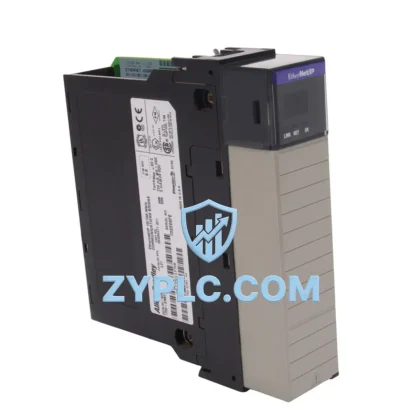
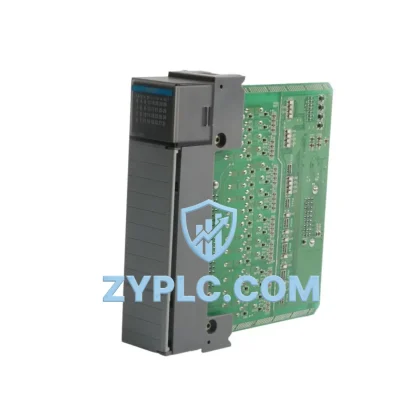
Allen-Bradley 1757-SRC3 System-Ready Redundancy Module for ControlLogix Architecture
The Allen-Bradley 1757-SRC3 System Redundancy Controller is a purpose-engineered redundancy module designed to operate at the heart of ControlLogix-based control architectures. In modern industrial automation, system availability is not a preference — it is a requirement. The 1757-SRC3 addresses this requirement by enabling seamless hot-standby redundancy between paired ControlLogix chassis, ensuring that a single point of failure at the controller level does not interrupt process continuity. Whether deployed in continuous manufacturing, power generation, petrochemical processing, or water treatment infrastructure, this module delivers the architectural resilience that mission-critical operations demand.
Unlike standalone redundancy solutions, the 1757-SRC3 is designed to function as a coordinating layer within a fully integrated control system. It synchronizes controller state data between primary and secondary chassis in real time, manages switchover logic, and communicates health status across the control network. This makes it not merely a backup device, but an active participant in the system’s operational integrity — one that must be selected, configured, and maintained with the same rigor applied to the primary controller itself.
At ZYPLC, every 1757-SRC3 unit is sourced, inspected, and dispatched with a 12-Month Warranty, providing procurement engineers and maintenance teams with the confidence needed for long-cycle capital projects and ongoing plant operations.
Architecture Specification Table
| Parameter |
Specification |
| System Role |
System Redundancy Controller — Primary/Secondary Chassis Synchronization |
| Compatible Platform |
Rockwell Automation ControlLogix (1756 Series) |
| Series |
1757 Series |
| Module Type |
Hot-Standby Redundancy Controller |
| Redundancy Architecture |
Dual-chassis, synchronized state transfer with automatic switchover |
| Switchover Time |
Bumpless transfer (sub-scan switchover under normal operating conditions) |
| Communication Interface |
Redundancy communication link between primary and secondary chassis |
| Backplane Compatibility |
1756 ControlLogix chassis backplane |
| Power Requirements |
Supplied via ControlLogix chassis backplane (1756-PA72 / 1756-PB72 compatible) |
| Operating Temperature |
0°C to 60°C (32°F to 140°F) |
| Storage Temperature |
-40°C to 85°C |
| Relative Humidity |
5% to 95% non-condensing |
| Installation Environment |
Panel-mount within ControlLogix chassis; suitable for industrial control cabinets |
| Certifications |
UL Listed, CE Marked, cUL (inferred per Rockwell Automation 1757 Series standards) |
| Warranty |
12-Month Warranty — Covered by ZYPLC from date of shipment |
Coordinated Control System Design
The 1757-SRC3 does not operate in isolation. Its value is realized only when it is properly integrated into a complete ControlLogix system architecture, where each layer — from the controller and I/O subsystem to the communication network and power infrastructure — is selected for compatibility and coordinated for performance.
At the controller layer, the 1757-SRC3 pairs with the 1756-L63 or 1756-L71 ControlLogix CPU modules installed in both the primary and secondary chassis. The redundancy module continuously monitors controller health and synchronizes program state, output data, and tag values between the two processors. When a fault is detected on the primary controller, the 1757-SRC3 initiates a controlled switchover to the secondary chassis — a process that is transparent to field devices and operator interfaces under normal conditions.
The chassis infrastructure supporting this architecture typically relies on the 1756-A17 or 1756-A10 ControlLogix chassis, providing sufficient slot capacity for the redundancy module, CPU, communication modules, and I/O bridges within a single enclosure. Power to each chassis is supplied by the 1756-PA72 AC power supply or the 1756-PB72 DC variant, both of which are recommended for redundant deployments due to their stable output characteristics and diagnostic feedback capabilities.
At the I/O layer, remote I/O chassis connected via 1756-ENBT or 1756-EN2T EtherNet/IP communication modules allow field signals to remain accessible regardless of which chassis holds primary control. This architecture ensures that analog input modules such as the 1756-IF16 and digital output modules such as the 1756-OB16E continue to receive valid commands during and after a switchover event. The separation of I/O from the redundant controller pair is a fundamental design principle that the 1757-SRC3 is built to support.
For process networks requiring deterministic communication, the 1756-DNB DeviceNet Bridge or 1756-CN2 ControlNet module may be integrated into the architecture to extend the redundancy boundary to field-level devices. These communication modules, when properly configured within the redundant chassis pair, maintain network continuity during controller switchover, preserving drive commands, valve positions, and sensor polling cycles without interruption.
At the human-machine interface layer, operator workstations running FactoryTalk View SE connected via EtherNet/IP maintain visibility into system status throughout the redundancy switchover process. The 1757-SRC3 exposes switchover events and redundancy health data as controller tags, which can be mapped to HMI faceplates for real-time operator awareness — a critical feature for facilities operating under regulatory oversight or safety instrumented system (SIS) requirements.
Application in Layered Automation Systems
The 1757-SRC3 is deployed across a wide range of industries where process continuity and system uptime are directly tied to operational safety and economic performance.
In power generation and electrical utilities, redundant ControlLogix systems using the 1757-SRC3 manage turbine control, generator excitation, and substation automation. The module’s bumpless switchover capability ensures that protection relay logic and load dispatch commands are never interrupted by a controller fault, meeting the stringent availability requirements of grid-connected generation assets.
In petrochemical and refinery applications, the 1757-SRC3 supports continuous process control for distillation columns, reactor temperature loops, and compressor surge control systems. These processes cannot tolerate controller downtime without risking product quality, equipment damage, or safety incidents. The redundancy architecture enabled by the 1757-SRC3 provides the fault tolerance required by IEC 61511 functional safety frameworks.
In water and wastewater treatment, municipal utilities rely on redundant ControlLogix systems to manage pump station sequencing, chemical dosing, and SCADA integration. The 1757-SRC3 ensures that treatment processes continue uninterrupted during planned maintenance windows or unexpected controller faults, supporting compliance with environmental discharge regulations.
In mining and metals processing, conveyor control systems, crusher automation, and smelter process control benefit from the 1757-SRC3’s ability to maintain output states during switchover. The harsh electrical environment of mining facilities — characterized by high-voltage switching transients and ground faults — makes controller redundancy not merely a best practice but an operational necessity.
In packaging and discrete manufacturing, high-speed production lines using servo drives, vision systems, and robotic cells integrated into a ControlLogix architecture can leverage the 1757-SRC3 to minimize unplanned downtime. Even in applications where process continuity is less critical than in continuous industries, the reduction in mean time to recovery (MTTR) achieved through hot-standby redundancy delivers measurable improvements in overall equipment effectiveness (OEE).
Architecture Engineering FAQ
Q1: Is the 1757-SRC3 compatible with all ControlLogix CPU revisions, and what firmware considerations apply when configuring a redundant chassis pair?
The 1757-SRC3 is designed for use with ControlLogix 1756-series controllers and requires that both the primary and secondary chassis run identical firmware revisions on all installed modules, including the CPU, communication modules, and I/O bridges. Mismatched firmware between chassis is the most common source of redundancy qualification failures during commissioning. Rockwell Automation’s Redundancy System User Manual specifies the qualified firmware combinations for each 1757-SRC3 revision. ZYPLC recommends verifying the target firmware matrix before procurement to ensure the supplied module is compatible with the existing system revision. Our technical team can assist with compatibility verification as part of the pre-sale process.
Q2: How does the 1757-SRC3 handle I/O module configuration in a redundant architecture, and can remote I/O be shared between the primary and secondary chassis?
In a standard ControlLogix redundancy architecture, I/O modules are not installed in the redundant controller chassis. Instead, all field I/O is connected to remote chassis via EtherNet/IP or ControlNet communication modules installed in both the primary and secondary chassis. Both communication modules are configured with the same I/O tree, but only the primary chassis actively controls the I/O at any given time. Upon switchover, the secondary chassis assumes ownership of the I/O connections within the configured switchover time. This architecture requires careful attention to RPI (Requested Packet Interval) settings and connection timeout parameters to ensure that field devices do not fault during the switchover window. The 1757-SRC3 manages the coordination of this ownership transfer as part of its core function.
Q3: What does the 12-Month Warranty from ZYPLC cover for the 1757-SRC3, and what is the process for warranty claims or advance replacement?
ZYPLC’s 12-Month Warranty on the 1757-SRC3 covers defects in materials and workmanship under normal operating conditions from the date of shipment. Each unit undergoes functional testing prior to dispatch. In the event of a warranty claim, ZYPLC’s support team initiates a diagnostic review to determine the nature of the fault. For confirmed warranty cases, replacement units are dispatched with priority to minimize system downtime. Customers operating in critical infrastructure environments are encouraged to discuss advance replacement arrangements and spare module stocking strategies with our sales team at the time of initial procurement. Contact us at plc.sales@zyplc.com or +86 19859288691 for warranty support and spare parts planning.
© 2026 ZYPLC. All rights reserved.
Original Source: https://zyplc.com
Contact: +86 19859288691 | plc.sales@zyplc.com