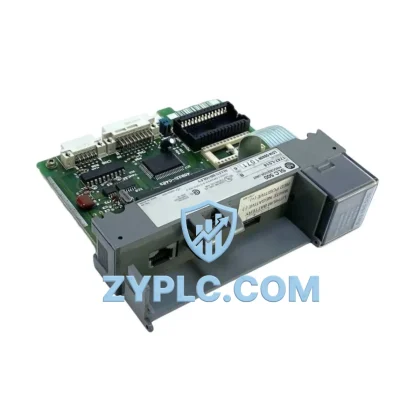
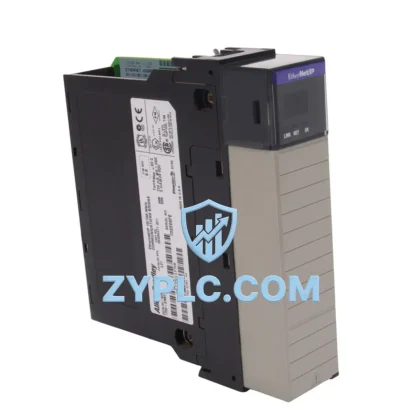
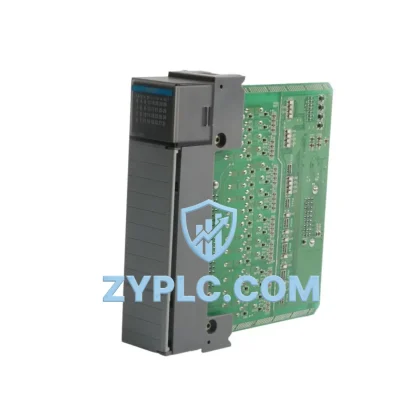
Allen-Bradley 1769-L31 System-Ready Processor for CompactLogix Architecture: Control System Coordination and Upstream-Downstream Synergy
The Allen-Bradley 1769-L31 is a mid-range CompactLogix processor engineered to serve as the central execution node within a structured, multi-layer industrial automation architecture. Rather than functioning as a standalone controller, the 1769-L31 is designed to integrate seamlessly across the control layer, I/O layer, network layer, power layer, HMI layer, and field execution layer — delivering consistent signal processing, deterministic scan cycles, and scalable I/O expansion across demanding industrial environments. Whether deployed in a new greenfield installation or retrofitted into an existing Rockwell Automation control cabinet, the 1769-L31 provides the architectural backbone that ensures system-wide coherence, long-term maintainability, and reliable uptime.
At the control layer, the 1769-L31 executes Ladder Diagram, Function Block Diagram, Structured Text, and Sequential Function Chart programming languages via the Studio 5000 Logix Designer environment. Its onboard EtherNet/IP port enables direct integration with supervisory SCADA systems, historian platforms, and MES layers without requiring an additional communication bridge. This native network capability positions the 1769-L31 as a first-tier controller capable of participating in plant-wide information architectures while maintaining real-time determinism at the machine level.
Within the CompactLogix 1769 backplane system, the 1769-L31 coordinates directly with local I/O modules including the 1769-IQ16 digital input module, the 1769-OB16 digital output module, the 1769-IF4 analog input module, and the 1769-OF2 analog output module. These modules share the high-speed local bus, enabling sub-millisecond I/O update rates that are critical for motion-sensitive and process-critical applications. The modular backplane architecture also supports the 1769-ECR end cap and 1769-ECL left end cap for proper bus termination, ensuring signal integrity across all connected I/O modules.
For distributed I/O expansion beyond the local rack, the 1769-L31 communicates over EtherNet/IP with remote I/O adapters and Point I/O modules, extending the control footprint across large-scale production floors without sacrificing scan time performance. In applications requiring DeviceNet or ControlNet connectivity, the 1769-SDN DeviceNet scanner module or 1769-CNB ControlNet bridge module can be added to the local rack, enabling the 1769-L31 to manage field devices such as variable frequency drives, smart sensors, and remote terminal units within a unified control namespace.
Power integrity is maintained through the 1769-PA2 or 1769-PB2 power supply modules, which provide regulated 24 VDC output to the backplane and connected I/O modules. Proper power supply selection and load calculation are essential steps during system commissioning, and the 1769-L31’s architecture supports redundant power configurations in applications where continuous availability is a design requirement. The processor’s onboard battery-backed memory preserves program data and tag values during power interruptions, reducing recovery time and protecting process state information.
At the human-machine interface layer, the 1769-L31 integrates natively with PanelView Plus terminals via EtherNet/IP, enabling operators to monitor process variables, acknowledge alarms, and adjust setpoints in real time. The shared tag database between the controller and the HMI eliminates the need for manual address mapping, reducing engineering time during commissioning and simplifying long-term maintenance. For applications requiring remote visualization, FactoryTalk View SE provides plant-wide HMI connectivity across multiple 1769-L31 controllers within a unified supervisory environment.
In layered automation systems, the 1769-L31 is frequently deployed alongside safety controllers, motion controllers, and process controllers within the same control cabinet. Its ability to produce and consume tags over EtherNet/IP enables peer-to-peer data exchange with other Logix-family controllers, supporting coordinated multi-axis motion sequences, interlocked safety zones, and synchronized batch processes without requiring a centralized master controller. This distributed coordination model improves system resilience and reduces single-point-of-failure risk across the automation architecture.
From an engineering and maintenance perspective, the 1769-L31 supports online program editing, partial import/export of routines, and controller diagnostics through Studio 5000, enabling maintenance engineers to troubleshoot faults, update logic, and verify I/O states without taking the system offline. The processor’s structured memory organization and tag-based programming model simplify documentation, version control, and knowledge transfer across engineering teams — reducing the total cost of ownership over the system lifecycle.
All units supplied by ZYPLC are fully tested, functionally verified, and covered by a 12-Month Warranty. Our inventory management process ensures that each 1769-L31 is inspected prior to dispatch, with traceability documentation available upon request. Fast global shipping and responsive technical support make ZYPLC a reliable supply partner for MRO procurement, system integration projects, and emergency replacement requirements.
Architecture Specification Table
| Parameter |
Specification |
| System Role |
Mid-Range CompactLogix Processor / Local Control Node |
| Part Number |
1769-L31 |
| Brand / Manufacturer |
Allen-Bradley / Rockwell Automation |
| Series |
CompactLogix 1769 |
| Memory |
512 KB User Memory |
| Max I/O Modules |
Up to 16 local 1769 I/O modules |
| Communication Ports |
1 × EtherNet/IP (built-in), 1 × RS-232 (DF1/DH-485) |
| Programming Software |
Studio 5000 Logix Designer / RSLogix 5000 |
| Programming Languages |
Ladder Diagram, FBD, Structured Text, SFC |
| Power Supply Voltage |
24 VDC (via 1769-PA2 / 1769-PB2) |
| Operating Temperature |
0°C to 60°C |
| Relative Humidity |
5% to 95% (non-condensing) |
| Mounting |
DIN Rail / Panel Mount |
| Certifications |
UL, CE, cUL |
| Warranty |
12-Month Warranty (ZYPLC) |
Coordinated Control System Design
The 1769-L31 achieves its full architectural potential when deployed as part of a coordinated CompactLogix system. In a typical control cabinet configuration, the processor occupies the leftmost slot of the 1769 backplane and communicates with adjacent modules through the high-speed local bus. The 1769-IQ16 digital input module handles discrete field signals from pushbuttons, proximity sensors, and limit switches, while the 1769-OB16 digital output module drives solenoid valves, motor starters, and indicator lamps. For process control loops requiring analog signal handling, the 1769-IF4 four-channel analog input module and 1769-OF2 two-channel analog output module provide the signal conditioning and scaling functions necessary for PID control and setpoint management.
Network-layer integration is achieved through the built-in EtherNet/IP port, which connects the 1769-L31 to managed industrial Ethernet switches, SCADA servers, and remote I/O adapters. For legacy field device networks, the 1769-SDN DeviceNet scanner module extends the controller’s reach to variable frequency drives, smart motor controllers, and distributed sensor arrays operating on the DeviceNet protocol. In applications requiring ControlNet determinism for time-critical I/O, the 1769-CNB ControlNet bridge module provides scheduled and unscheduled messaging capabilities within the same backplane. The 1769-ECR end cap terminates the backplane bus and is required for proper system operation whenever the rightmost module position is reached.
At the HMI layer, PanelView Plus 6 and PanelView Plus 7 terminals connect directly to the 1769-L31 over EtherNet/IP, sharing the controller’s tag database for real-time visualization and operator interaction. In multi-controller architectures, the 1769-L31 participates in produced/consumed tag relationships with peer Logix controllers, enabling coordinated interlocking, data sharing, and alarm propagation across control zones without centralized arbitration.
Application in Layered Automation Systems
The 1769-L31 is widely deployed across manufacturing, power distribution, petrochemical processing, water treatment, mining, metallurgy, packaging lines, and continuous process control systems. In discrete manufacturing environments, the processor manages multi-station assembly lines, robotic cell interlocking, and conveyor sequencing with deterministic scan times that ensure consistent throughput and product quality. In food and beverage packaging lines, the 1769-L31 coordinates filling, capping, labeling, and case-packing operations through synchronized I/O control and recipe management via the HMI layer.
In power distribution and substation automation applications, the 1769-L31 monitors breaker status, transformer load, and bus voltage through analog and digital I/O modules, providing local protection logic and upstream SCADA reporting over EtherNet/IP. In water treatment facilities, the processor manages pump sequencing, chemical dosing, and level control across multiple process zones, with remote I/O extensions reaching field instruments located throughout the treatment plant. In mining and metallurgical applications, the 1769-L31 controls crusher sequencing, conveyor load management, and dust suppression systems within harsh environmental conditions, supported by its wide operating temperature range and robust backplane architecture.
For petrochemical and oil and gas process control, the 1769-L31 integrates with pressure transmitters, flow meters, and control valves through analog I/O modules, executing PID control loops and safety interlock logic within a unified control namespace. Its EtherNet/IP connectivity enables integration with DCS historian platforms and plant-wide asset management systems, supporting predictive maintenance and process optimization initiatives across the facility lifecycle.
Architecture Engineering FAQ
Q1: Is the 1769-L31 compatible with existing CompactLogix 1769 I/O modules and backplane configurations?
Yes. The 1769-L31 is fully compatible with the CompactLogix 1769 I/O module family, including digital, analog, and specialty modules. It supports up to 16 local I/O modules connected via the 1769 backplane, and the system can be extended with remote I/O over EtherNet/IP. Existing backplane configurations using 1769-series modules do not require hardware modification when integrating the 1769-L31, provided the power supply capacity is verified against the total backplane load.
Q2: How does the 1769-L31 support long-term maintenance and firmware management in multi-controller architectures?
The 1769-L31 supports online program editing and controller diagnostics through Studio 5000 Logix Designer, enabling maintenance engineers to update logic, monitor I/O states, and troubleshoot faults without system shutdown. Firmware updates are managed through ControlFLASH or Studio 5000, and the processor’s tag-based memory structure simplifies documentation and version control. In multi-controller architectures, each 1769-L31 maintains an independent program and tag database, reducing the risk of cross-controller interference during maintenance operations.
Q3: What does the 12-Month Warranty from ZYPLC cover, and what is the process for warranty claims?
The 12-Month Warranty provided by ZYPLC covers functional defects identified during normal operating conditions within twelve months of the shipment date. Each unit is tested and verified prior to dispatch. In the event of a warranty claim, customers should contact ZYPLC at plc.sales@zyplc.com or +86 19859288691 with the order reference and a description of the fault. ZYPLC will arrange inspection, repair, or replacement in accordance with the warranty terms, with the objective of minimizing system downtime and supporting continuous production operations.
© 2026 ZYPLC. All rights reserved.
Original Source: https://zyplc.com
Contact: +86 19859288691 | plc.sales@zyplc.com