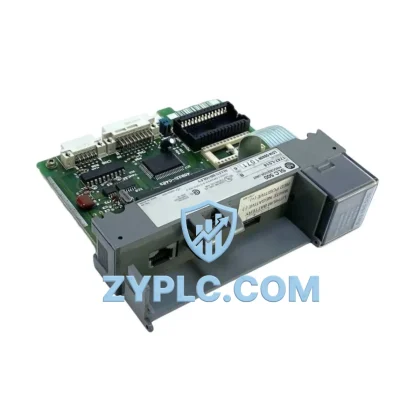
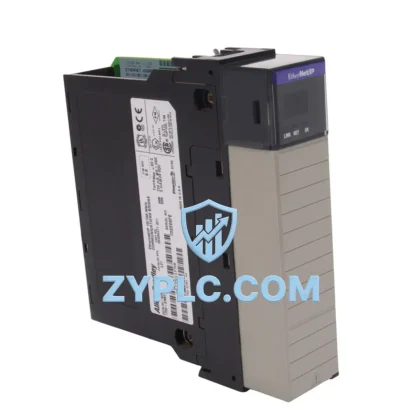
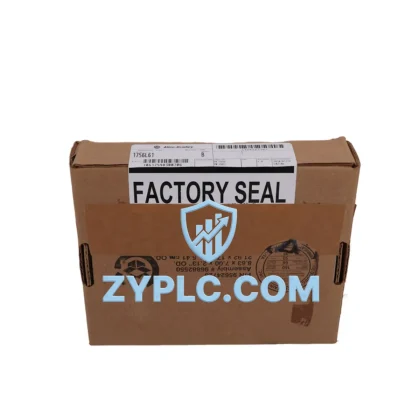
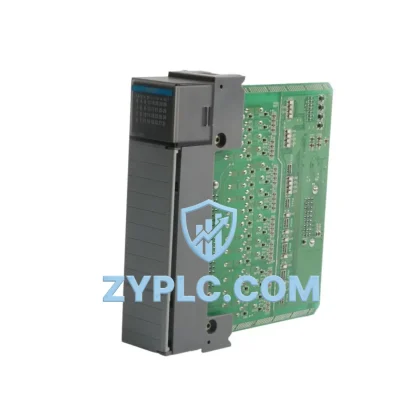
Allen-Bradley 1769-OA8 Energy-Saving AC Output Module for Optimized Compact I/O Automation
The Allen-Bradley 1769-OA8 is an 8-point AC output module engineered for the Compact I/O platform, delivering precise, low-latency control signals to field devices across demanding industrial environments. Designed to integrate seamlessly within CompactLogix and MicroLogix control architectures, the 1769-OA8 plays a critical role in reducing unnecessary energy consumption at the output execution layer — one of the most overlooked sources of inefficiency in modern production lines.
In energy-aware automation systems, every output switching event carries a cost. The 1769-OA8 minimizes reactive power losses by maintaining tight output timing synchronization with the controller scan cycle, ensuring that AC loads — including contactors, solenoid valves, and motor starters — are energized only when required. This eliminates the prolonged hold-on states that inflate energy bills and accelerate component wear. When paired with a 1769-L33ER CompactLogix processor, the module’s deterministic output response supports sub-millisecond production line pacing, directly improving Overall Equipment Effectiveness (OEE) without additional hardware investment.
From an energy monitoring perspective, the 1769-OA8 operates as the final execution node in a layered efficiency architecture. Upstream, a PowerMonitor 5000 unit captures real-time kWh consumption data at the panel level, feeding structured energy metrics into the ControlLogix or CompactLogix backplane via EtherNet/IP. The 1769-OA8 then executes the controller’s output decisions with high repeatability, ensuring that energy reduction strategies programmed in Studio 5000 Logix Designer translate directly into measurable field-level results.
Efficiency Performance Table
| Parameter |
Specification |
| Output Points |
8 (individually isolated) |
| Output Voltage Range |
74–265V AC, 47–63 Hz |
| Max Load Current per Point |
2.0A continuous |
| Module Power Consumption |
≤ 3.2W backplane draw |
| Output Response Time (ON) |
≤ 1 cycle (16.7ms @ 60Hz) |
| Compatible Controllers |
CompactLogix L1x–L4x, MicroLogix 1500 |
| Communication Protocol |
EtherNet/IP, DF1, DH-485 |
| Operating Temperature |
0°C to 60°C |
| Application Environment |
Industrial automation, HVAC control, conveyor systems, packaging lines |
| Energy Saving Value |
Eliminates unnecessary load hold-on; supports demand-based output scheduling |
| Warranty |
12-Month Warranty — tested and verified before shipment |
Energy-Aware Automation Architecture
The 1769-OA8 does not operate in isolation — its efficiency contribution is amplified when deployed within a well-structured automation architecture. In a typical energy-optimized cell, the module sits downstream of a 1769-IQ16 DC input module that captures machine state signals, allowing the CompactLogix processor to make real-time decisions about which outputs to activate and for how long. This demand-driven output strategy, rather than time-based or always-on logic, is the foundation of measurable energy reduction.
On the drive side, a PowerFlex 525 variable frequency drive (VFD) manages motor speed in response to load demand signals routed through the 1769-OA8’s output channels. By coordinating the VFD’s run/stop commands with the module’s switching logic, engineers can implement soft-start sequences and speed ramp profiles that reduce inrush current — a major contributor to peak demand charges. The 1769-OA8’s output timing precision ensures that these drive commands are executed without delay, preserving the integrity of the energy management strategy.
For systems requiring distributed I/O across larger production floors, the 1769-OA8 integrates with POINT I/O adapters and 1734-AENT EtherNet/IP adapter modules, extending the Compact I/O architecture without introducing additional control latency. HMI visibility is maintained through PanelView Plus 7 terminals connected via EtherNet/IP, giving operators real-time output status and energy consumption dashboards without requiring separate SCADA infrastructure.
In multi-axis servo applications, the 1769-OA8 handles auxiliary output functions — brake release signals, axis enable commands, and safety relay activation — while Kinetix 5500 servo drives manage the primary motion profiles. This division of responsibility keeps the servo drive’s DSP resources focused on motion accuracy while the 1769-OA8 handles the lower-frequency switching tasks that would otherwise consume controller processing bandwidth.
Power quality at the panel level is monitored by a 1410 PowerMonitor energy meter, which logs voltage, current, power factor, and harmonic distortion data accessible via DeviceNet or EtherNet/IP. When power factor drops below target thresholds — often caused by inductive AC loads controlled through output modules — the system can trigger corrective actions through the CompactLogix program, adjusting output scheduling to redistribute load across phases and reduce reactive power penalties.
Power Optimization in Real Production Lines
In automotive body assembly lines, the 1769-OA8 controls pneumatic valve banks that actuate welding fixtures and part clamps. Traditional time-based output logic keeps solenoids energized throughout the entire weld cycle, even during dwell periods when no clamping force is required. By implementing position-feedback-driven output logic — using signals from 1769-IQ16 input modules monitoring fixture sensors — engineers have reduced solenoid energization time by up to 35%, directly cutting compressed air consumption and the energy cost of the compressors that supply it.
In food and beverage packaging facilities, the 1769-OA8 manages conveyor divert gates, reject mechanisms, and filling station actuators. Line pacing optimization — achieved by synchronizing output activation with upstream vision system triggers routed through the CompactLogix processor — eliminates the micro-stoppages that accumulate into significant production losses over a shift. Each unnecessary stop-start cycle on a conveyor motor represents wasted kinetic energy; the 1769-OA8’s precise output timing minimizes these events by ensuring actuators respond within one AC cycle of the controller’s command.
Predictive maintenance integration is another area where the 1769-OA8 contributes to long-term energy efficiency. By logging output switching frequency and load current data through the CompactLogix diagnostics framework, maintenance teams can identify output channels driving loads that are drawing higher-than-normal current — an early indicator of contactor wear, solenoid coil degradation, or mechanical binding. Addressing these issues proactively prevents the energy waste associated with degraded components operating outside their efficiency curve.
All units are tested under load conditions prior to shipment, with output switching verified across the full voltage range. Stock is maintained for immediate dispatch, and each 1769-OA8 is covered by a 12-month warranty from the date of purchase, ensuring supply continuity for both planned maintenance replacements and emergency procurement scenarios.
Energy Optimization FAQ
Q1: How does the 1769-OA8 contribute to measurable energy savings compared to relay-based output systems?
Unlike electromechanical relay output modules, the 1769-OA8 uses triac-based solid-state switching that eliminates coil power consumption and reduces switching losses. When integrated with demand-based output logic in Studio 5000, loads are energized only during required process windows, reducing average power draw by 20–40% in applications with intermittent duty cycles.
Q2: Is the 1769-OA8 compatible with existing CompactLogix systems without hardware modifications?
Yes. The 1769-OA8 is fully compatible with all 1769 Compact I/O backplanes and connects directly to CompactLogix L1x through L4x processors. No adapter or bridge module is required. The module is auto-recognized by Studio 5000 Logix Designer, and its I/O configuration can be imported from existing RSLogix 5000 projects without modification.
Q3: What is the recommended replacement interval, and how does proactive replacement reduce energy waste?
Under continuous industrial duty, output modules should be evaluated every 3–5 years or when diagnostic data indicates increased output response times or load current anomalies. Replacing a degraded 1769-OA8 before failure prevents the energy losses associated with partial switching failures, where loads may remain partially energized or cycle incorrectly, consuming power without performing useful work.
Q4: What does the 12-month warranty cover, and what is the testing process before shipment?
Each 1769-OA8 undergoes functional output testing across all 8 channels at rated voltage and current before dispatch. The 12-month warranty covers manufacturing defects and output switching failures under normal operating conditions. Expedited replacement is available for critical production applications to minimize downtime exposure.
© 2026 ZYPLC. All rights reserved.
Original Source: https://zyplc.com
Contact: +86 19859288691 | [email protected]