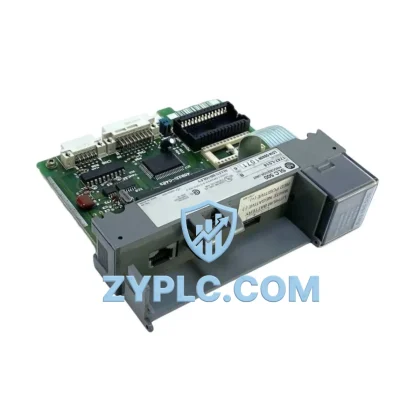
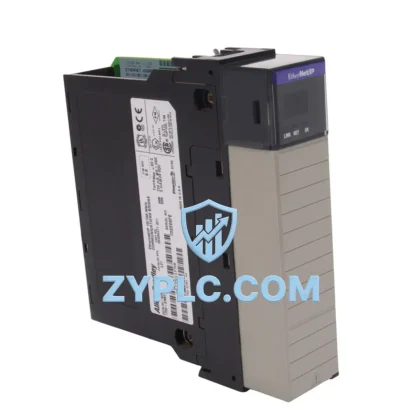
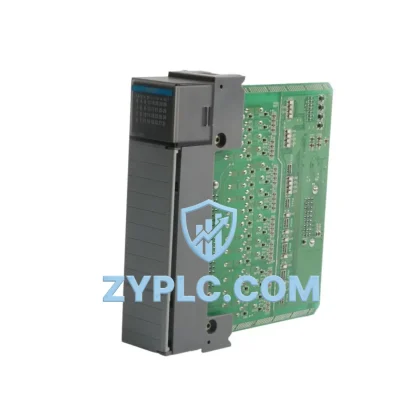
Allen-Bradley 1769-OB32 Energy-Saving Digital Output Module: Precision Output Control for Optimized CompactLogix Automation
The Allen-Bradley 1769-OB32 is a 32-point, 24VDC sourcing digital output module engineered for the CompactLogix 1769 series platform. In modern industrial environments where energy accountability is no longer optional, the 1769-OB32 delivers deterministic output switching that eliminates unnecessary actuator dwell time, reduces inrush current events, and supports tightly coordinated production line sequencing. Whether deployed in discrete manufacturing, material handling, or process control, this module enables plant engineers to enforce output discipline at the field device level — a foundational step toward measurable energy reduction.
Every unit shipped by ZYPLC undergoes full functional testing under load conditions, is verified against OEM specifications, and is backed by a 12-month warranty. In-stock availability ensures minimal lead time for maintenance replacements and system expansions.
Efficiency Performance Table
| Parameter |
Specification |
| SKU / Part Number |
1769-OB32 |
| Brand / Series |
Allen-Bradley / CompactLogix 1769 |
| Output Points |
32 points (sourcing) |
| Output Voltage |
24VDC |
| Output Current per Point |
0.5 A (max) |
| Total Module Current Draw |
≤ 4 mA @ 5VDC (backplane); ≤ 145 mA @ 24VDC (user side) |
| Switching Efficiency |
Solid-state MOSFET output — zero mechanical wear, near-zero switching loss |
| Compatible Systems |
CompactLogix L1x, L2x, L3x, L4x, L43, L45 controllers |
| Communication / Backplane |
1769 CompactLogix backplane (implicit I/O via EtherNet/IP or ControlNet) |
| Application Environment |
Discrete manufacturing, conveyor control, packaging lines, HVAC actuation, water treatment |
| Energy Optimization Value |
Eliminates relay coil losses; enables output scheduling via ladder/FBD logic to cut idle actuator power |
| Operating Temperature |
0°C to 60°C (32°F to 140°F) |
| Certifications |
UL, CE, RCM |
| Warranty |
12 Months — ZYPLC Tested & Verified |
Energy-Aware Automation Architecture
The 1769-OB32 does not operate in isolation — its energy impact is realized through its integration within a coordinated automation architecture. In a typical CompactLogix-based control panel, the 1769-OB32 sits alongside input modules such as the 1769-IQ32 (32-point 24VDC digital input module), which feeds real-time field status back to the controller. Together, these modules allow the Allen-Bradley CompactLogix L33ER or L36ERM processor to execute output commands only when process conditions are confirmed — eliminating speculative actuator energization that wastes power.
On the drive side, the 1769-OB32 frequently works in tandem with Allen-Bradley PowerFlex 525 or PowerFlex 755 variable frequency drives. The output module issues discrete run/stop and direction commands to the VFD, while the drive handles motor speed regulation. This combination allows production lines to implement demand-based motor control — running conveyors, pumps, and fans only at the speed and duration required by the current production rate, directly reducing kWh consumption per unit produced.
For energy monitoring at the panel level, the 1769-OB32 is commonly deployed alongside Allen-Bradley PowerMonitor 5000 or PowerMonitor 1000 units. These power quality meters capture real-time current draw, power factor, and harmonic distortion data, which the CompactLogix controller can use to trigger load-shedding output sequences through the 1769-OB32 when demand thresholds are approached. This closed-loop energy management approach is increasingly required in facilities pursuing ISO 50001 energy management certification.
In multi-axis motion applications, the 1769-OB32 handles auxiliary discrete outputs — brake release signals, servo enable lines, and safety gate interlocks — while Kinetix 5500 or Kinetix 6500 servo drives manage the precision motion axes. The 1769-OF4 analog output module may complement the 1769-OB32 where proportional valve control or variable setpoint signaling is required alongside the discrete outputs.
Communication transparency is maintained through the EtherNet/IP network, where the CompactLogix controller exchanges I/O data with Allen-Bradley PanelView Plus 7 HMI terminals. Operators can monitor output state maps, identify outputs that remain energized beyond expected cycle times, and trigger manual de-energization sequences — all of which contribute to reducing standby power consumption on the production floor. The 1769-ECR end cap and 1769-PA4 power supply complete the local bus, ensuring stable backplane power delivery without voltage sag that could cause spurious output toggling.
Power Optimization in Real Production Lines
In discrete manufacturing environments, uncontrolled output states are a primary source of hidden energy waste. Solenoid valves left energized during machine idle periods, conveyor drives running without load, and indicator lamps cycling unnecessarily all accumulate into measurable kWh losses over a production shift. The 1769-OB32 addresses this at the control logic level: because each of its 32 output points is individually addressable and controllable through the CompactLogix ladder or structured text program, engineers can implement output timeout routines, production-state-based output masking, and energy mode sequences that de-energize non-critical outputs during scheduled downtime.
The solid-state MOSFET output design of the 1769-OB32 eliminates the coil resistance losses inherent in relay output modules. In a 32-point relay output module, coil power consumption can reach 1–2W per energized point — across a fully loaded module running two shifts, this represents a non-trivial energy cost. The 1769-OB32’s transistor outputs consume negligible quiescent power, and their fast switching response (typically <1ms) supports high-frequency output cycling for applications such as pulse-width modulated valve control or stepper indexer signals without thermal buildup.
From a maintenance and uptime perspective, the absence of mechanical contacts means the 1769-OB32 does not degrade with switching cycles. Relay output modules in high-cycle applications may require replacement within 12–18 months; the 1769-OB32’s solid-state design supports multi-year service life under normal industrial duty cycles. Reduced module replacement frequency directly lowers maintenance labor costs and eliminates the production interruptions associated with unplanned output module failures. ZYPLC maintains in-stock inventory of the 1769-OB32 to support rapid replacement scenarios, with same-day dispatch available for verified orders.
Line throughput optimization is another dimension where the 1769-OB32 contributes. Its deterministic output response — synchronized to the CompactLogix scan cycle — ensures that actuator commands are executed at precisely the right point in the production sequence. Inconsistent output timing, often caused by aging relay contacts or undersized output modules operating near current limits, introduces jitter into machine cycles that accumulates into reduced parts-per-hour throughput. By maintaining clean, repeatable output switching, the 1769-OB32 supports stable line beat rates and reduces the frequency of cycle time deviations that trigger manual operator intervention.
Energy Optimization FAQ
Q1: How does the 1769-OB32 contribute to measurable energy savings compared to relay output modules?
The 1769-OB32 uses solid-state MOSFET outputs that draw negligible quiescent power per point, compared to relay coil modules that consume 1–2W per energized output. In a fully loaded 32-point configuration running extended shifts, this difference is significant. Additionally, the module’s integration with CompactLogix logic enables output scheduling and idle-state de-energization routines that relay-based systems cannot implement with the same precision.
Q2: Is the 1769-OB32 compatible with my existing CompactLogix system without hardware changes?
Yes. The 1769-OB32 is a standard 1769 series module and is compatible with all CompactLogix L1x through L4x controllers. It installs directly onto the 1769 backplane and is auto-configured by RSLogix 5000 or Studio 5000 Logix Designer. No additional adapters or power supplies are required beyond the standard 1769-PA4 or 1769-PB4 power supply already present in your system.
Q3: What is the recommended replacement process, and how does ZYPLC support minimal downtime?
The 1769-OB32 is a hot-swap-capable module in systems configured for partial-slot isolation. For standard replacement, the module is removed from the backplane, the replacement unit is inserted, and the controller automatically downloads the I/O configuration. ZYPLC ships tested, OEM-specification units with full configuration documentation. In-stock availability means replacement units can be dispatched same day, minimizing mean time to repair (MTTR) for production-critical lines.
Q4: What does the 12-month warranty cover, and what is the testing process?
Every 1769-OB32 unit sold by ZYPLC is tested under functional load conditions prior to shipment — output point activation, current sourcing verification, and backplane communication integrity are all validated. The 12-month warranty covers manufacturing defects and functional failures under normal operating conditions. Units that fail within the warranty period are replaced or refunded. Test records are available upon request for quality-critical procurement processes.
© 2026 ZYPLC. All rights reserved.
Original Source: https://zyplc.com
Contact: +86 19859288691 | [email protected]