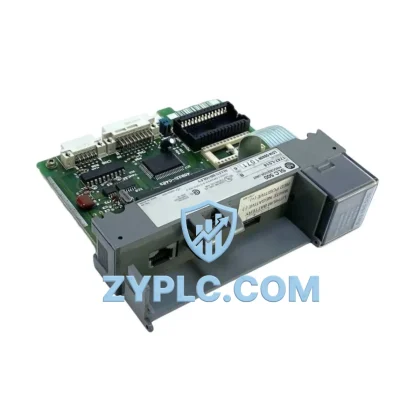
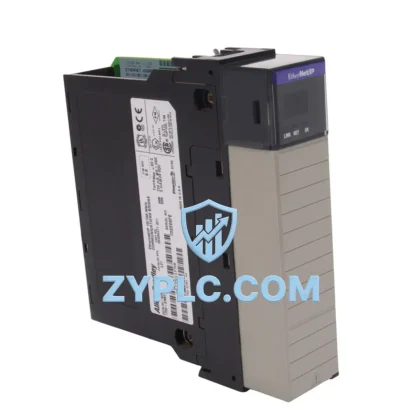
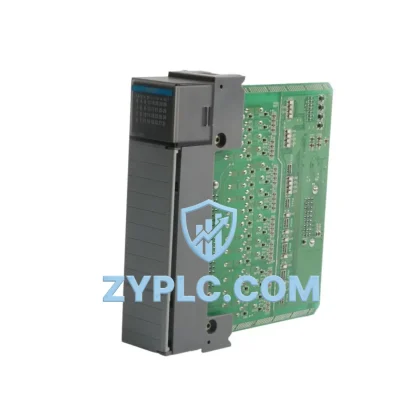
Allen-Bradley 1769-OW8 System-Ready Relay Output for CompactLogix Architecture
The Allen-Bradley 1769-OW8 is an 8-point relay output module engineered for seamless integration within the CompactLogix 1769 control system architecture. Rather than functioning as a standalone component, the 1769-OW8 is designed to operate as a coordinated element within a layered automation hierarchy — bridging the control layer, I/O layer, and execution layer to deliver reliable, scalable, and maintainable discrete output performance across demanding industrial environments.
In a fully realized CompactLogix system, the 1769-OW8 connects directly to the 1769 compact I/O bus, sharing backplane communication with the CPU module — typically a 1769-L30ER, 1769-L33ER, or 1769-L36ERM controller — without requiring additional interface hardware. This tight architectural coupling ensures deterministic scan-cycle performance, minimized signal latency, and consistent relay switching across all eight output channels. Each channel supports both AC and DC load switching, making the module suitable for controlling solenoids, motor starters, pilot lights, and other field devices across mixed-voltage installations.
System architects benefit from the 1769-OW8’s compatibility with the broader 1769 compact I/O ecosystem, which includes analog input modules such as the 1769-IF4 and 1769-IF8, digital input modules like the 1769-IQ16, and specialty modules including the 1769-HSC high-speed counter. This modular expandability allows engineers to configure the I/O layer precisely to process requirements without over-specifying hardware, reducing both capital expenditure and long-term maintenance overhead.
Architecture Specification Table
| Parameter |
Specification |
| System Role |
Discrete Relay Output Module — CompactLogix 1769 I/O Layer |
| Output Points |
8 relay output channels (Form A / SPST-NO) |
| Output Voltage Range |
5–265V AC / 5–125V DC per channel |
| Maximum Load Current |
2A per point (AC); 1A per point (DC) |
| Backplane Communication |
1769 Compact I/O serial bus (direct module-to-module) |
| Communication Protocol |
EtherNet/IP via CompactLogix CPU (1769-L3x series) |
| Operating Temperature |
0°C to 60°C (32°F to 140°F) |
| Storage Temperature |
-40°C to 85°C |
| Relative Humidity |
5–95% non-condensing |
| Mounting |
DIN rail or panel mount via 1769 bus end cap |
| Isolation |
Group isolated outputs (2 groups of 4) |
| Certifications |
UL, CE, CSA |
| Warranty |
12-Month Warranty — covers manufacturing defects and functional failure under normal operating conditions |
Coordinated Control System Design
The 1769-OW8 achieves its full value when deployed within a coordinated CompactLogix system architecture. At the control layer, a 1769-L30ER or 1769-L36ERM CPU executes the ladder logic or function block programs that govern relay switching sequences. The CPU communicates with the 1769-OW8 through the 1769 compact I/O backplane, enabling sub-millisecond output response times that are critical in high-speed discrete manufacturing and process interlock applications.
Power distribution within the control cabinet is typically managed by a 1769-PA2 or 1769-PB2 power supply module, which provides regulated 24V DC bus power to the I/O modules while the relay contacts themselves switch field-level voltages independently. This architectural separation of control power and field power enhances electrical isolation and reduces the risk of noise-induced faults propagating into the CPU or communication network.
For network-layer integration, the CompactLogix platform supports EtherNet/IP connectivity through the CPU’s built-in Ethernet port, enabling the 1769-OW8’s output states to be monitored and controlled from SCADA systems, historian platforms, or remote HMI terminals such as the PanelView Plus 7 or PanelView 800. This network transparency supports real-time diagnostics, remote fault acknowledgment, and production data logging without requiring additional communication gateway hardware.
In redundancy-critical applications, the 1769-OW8 can be deployed in parallel output configurations alongside a 1769-OB16 or 1769-OB32 transistor output module, where relay outputs handle high-voltage or high-current loads while solid-state outputs manage fast-switching, low-voltage signals. This hybrid I/O architecture optimizes both switching speed and load capacity within a single compact rack, reducing panel footprint while maintaining full output coverage.
Terminal wiring is simplified through compatibility with 1769-RTBN18 or equivalent removable terminal blocks, which allow field wiring to remain in place during module replacement — a significant advantage in facilities where minimizing downtime during maintenance is a contractual or operational requirement. Combined with the 12-Month Warranty and Contextual Integration support provided by ZYPLC, the 1769-OW8 represents a low-risk, high-reliability choice for both new system builds and legacy system expansions.
Application in Layered Automation Systems
Discrete Manufacturing: In automotive assembly, food and beverage packaging, and electronics production lines, the 1769-OW8 controls conveyor diverters, pneumatic actuators, and machine interlocks. Its relay contacts provide the electrical isolation required when switching inductive loads such as motor starters and solenoid valves, protecting the CompactLogix CPU from voltage transients generated during load switching.
Power Distribution and Utilities: In electrical substation automation and building management systems, the 1769-OW8 interfaces with protection relays, circuit breaker trip coils, and alarm annunciators. The module’s group-isolated output architecture allows simultaneous control of devices operating at different voltage levels within the same rack, reducing wiring complexity and panel space requirements.
Water and Wastewater Treatment: Process control systems for pump stations, filtration plants, and chemical dosing facilities rely on the 1769-OW8 to switch pump motor starters, valve actuators, and alarm outputs. The module’s wide operating temperature range and humidity tolerance make it suitable for installation in outdoor or semi-outdoor control enclosures common in water infrastructure projects.
Oil, Gas, and Petrochemical: In pipeline monitoring and refinery process control, the 1769-OW8 provides reliable discrete output control for shutdown valves, flare ignition systems, and safety interlock circuits. When integrated with a 1769-L36ERM CPU running a Safety Instrumented System (SIS) architecture, the module contributes to layered protection strategies that meet IEC 61511 functional safety requirements.
Mining and Metallurgy: Conveyor belt control, crusher interlock systems, and ventilation fan management in underground and surface mining operations benefit from the 1769-OW8’s robust relay contacts, which maintain reliable switching performance in environments with high levels of electrical noise, vibration, and particulate contamination.
Architecture Engineering FAQ
Q1: Is the 1769-OW8 compatible with both 1769-L1x and 1769-L3x series CompactLogix CPUs, and are there any architectural limitations when mixing relay and transistor output modules in the same rack?
The 1769-OW8 is compatible with all CompactLogix 1769-L1x, 1769-L2x, and 1769-L3x series CPUs. When mixing relay output modules (1769-OW8) with transistor output modules (1769-OB16, 1769-OB32) in the same rack, there are no backplane communication conflicts — the CPU addresses each module by slot number regardless of output type. However, engineers should account for the higher current draw of relay coils when sizing the 1769-PA2 or 1769-PB2 power supply, and should verify that the total backplane current budget is not exceeded when configuring large I/O racks.
Q2: What is the recommended procedure for replacing a 1769-OW8 module in a live system, and how does the 12-Month Warranty apply to field-replaced units?
For hot-swap or scheduled replacement, the recommended procedure is to inhibit the module in RSLogix 5000 / Studio 5000 Logix Designer before physical removal, which prevents the CPU from generating I/O faults during the swap. If removable terminal blocks (1769-RTBN18) are installed, field wiring remains connected to the terminal block and transfers to the replacement module without rewiring. The 12-Month Warranty covers the replacement unit from the date of shipment from ZYPLC, and applies to manufacturing defects and functional failures under normal operating conditions. Warranty claims are processed through plc.sales@zyplc.com with proof of purchase and a fault description.
Q3: How does the 1769-OW8 support long-term maintenance planning in a multi-site automation architecture, and what stocking strategy does ZYPLC recommend for critical relay output applications?
For multi-site installations where the 1769-OW8 is deployed across multiple production lines or facilities, ZYPLC recommends maintaining a minimum of one spare module per five installed units as a critical spare inventory strategy. This ratio balances carrying cost against the risk of extended downtime caused by module failure in the absence of a local spare. ZYPLC maintains in-stock inventory of the 1769-OW8 with same-day or next-day dispatch capability, supporting both planned maintenance schedules and emergency replacement requirements. The Contextual Integration support service provided with each unit includes application-specific commissioning guidance, ensuring that replacement modules are configured correctly within the existing system architecture without requiring on-site vendor support.
© 2026 ZYPLC. All rights reserved.
Original Source: https://zyplc.com
Contact: +86 19859288691 | plc.sales@zyplc.com