Allen-Bradley 1771-DB Energy-Saving Basic Module for Optimized PLC-5 Automation
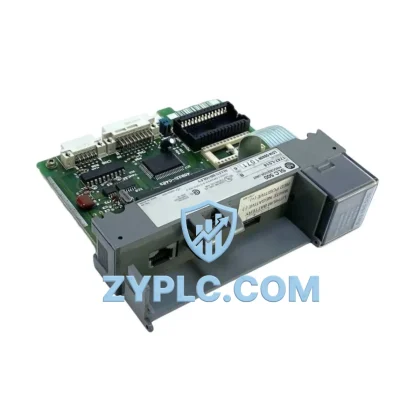
The Allen-Bradley 1771-DB is a high-performance Basic Module designed for the PLC-5 programmable controller platform, engineered to deliver precise energy-aware control across demanding industrial environments. As factories face increasing pressure to reduce operational energy costs and maximize equipment utilization, the 1771-DB provides the foundational I/O and logic execution layer that enables tighter control loops, reduced idle-state power draw, and more responsive production line sequencing. Whether deployed in continuous process control, discrete manufacturing, or hybrid automation architectures, this module supports the kind of deterministic scan-cycle performance that directly translates into measurable energy savings and reduced unplanned downtime.
Sourced directly from verified supply channels, every 1771-DB unit available through ZYPLC undergoes outgoing shipment testing to confirm signal integrity, backplane communication stability, and module self-diagnostics before dispatch. All units are covered by a 12-month warranty, ensuring your production investment is protected from day one of installation.
Efficiency Performance Table
| Parameter |
Specification / Value |
| SKU / Part Number |
1771-DB |
| Platform |
Allen-Bradley PLC-5 Series |
| Module Type |
Basic Module (BASIC Language Co-processor) |
| Operating Voltage |
5 VDC (backplane supplied) |
| Power Consumption |
Optimized low-draw backplane design |
| Scan Cycle Efficiency |
Deterministic execution supporting tight control loops |
| Compatible Systems |
PLC-5/10, PLC-5/15, PLC-5/20, PLC-5/30, PLC-5/40, PLC-5/60, PLC-5/80 |
| Communication |
1771 I/O Chassis Backplane |
| Application Environment |
Industrial manufacturing, process control, energy management systems |
| Energy Optimization Value |
Reduces idle-state processing overhead; supports demand-responsive control logic |
| Origin |
United States |
| Warranty |
12-Month Warranty (ZYPLC) |
| Stock Status |
In Stock — Ready to Ship |
Energy-Aware Automation Architecture
In a fully optimized PLC-5 automation architecture, the 1771-DB Basic Module functions as the intelligent co-processing layer that offloads custom BASIC language routines from the main CPU, freeing the primary processor — such as the 1785-L40B or 1785-L80B PLC-5 CPU module — to maintain faster scan cycles and more responsive I/O servicing. This division of processing labor is a key strategy for reducing unnecessary CPU load, which in turn lowers thermal output and extends the operational lifespan of the controller chassis.
On the drive side, the 1771-DB integrates naturally with Allen-Bradley PowerFlex 700 and PowerFlex 400 variable frequency drives via the 1771 I/O chassis and associated communication bridges. By executing demand-responsive speed reference calculations within the BASIC co-processor, the module enables the VFD to operate motors at precisely the speed required by the process — eliminating the energy waste associated with fixed-speed motor operation. In pump and fan applications alone, this approach can reduce motor energy consumption by 20–50% compared to across-the-line starting.
For energy monitoring and power quality visibility, the 1771-DB can be programmed to collect and process data from 1771-IFE analog input modules connected to current transformers and power transducers. This data can feed into an energy dashboard hosted on a PanelView Plus 7 HMI, giving operators real-time visibility into per-zone power consumption without requiring a separate energy management system. When combined with a 1756-EN2T EtherNet/IP communication module in a bridged ControlLogix architecture, this data can be forwarded upstream to SCADA or MES platforms for enterprise-level energy reporting.
The 1771-DB also plays a role in servo and motion energy efficiency when used alongside 1771-QA or 1771-QB servo interface modules. By coordinating motion profiles through BASIC routines — such as trapezoidal velocity ramps and dwell-time minimization — the module helps reduce peak current draw during acceleration phases, which directly lowers demand charges on the facility’s electrical bill. In multi-axis systems, this coordinated approach also reduces mechanical stress on gearboxes and couplings, extending mean time between maintenance events.
For distributed I/O architectures, the 1771-DB works in conjunction with 1771-ASB remote I/O adapter modules, allowing the BASIC co-processor to manage localized control logic at remote I/O drops without burdening the main network scan. This reduces communication latency and ensures that energy-critical interlocks — such as motor overload responses and pressure relief triggers — execute within deterministic timeframes regardless of network load.
Power Optimization in Real Production Lines
In real-world production environments, the Allen-Bradley 1771-DB delivers energy optimization benefits that compound across the full production shift. Consider a bottling line where conveyor speeds, filling station dwell times, and labeling machine indexing must be precisely coordinated. Without a co-processing module, the main PLC-5 CPU must handle all timing calculations, I/O servicing, and communication tasks simultaneously — often resulting in extended scan times that force conservative, energy-inefficient control setpoints. With the 1771-DB handling the timing and sequencing logic in BASIC, the main CPU scan time decreases, allowing tighter control of conveyor acceleration profiles and reducing the number of motor starts per hour — a direct reduction in inrush current events and associated energy spikes.
In process industries such as water treatment or chemical manufacturing, the 1771-DB enables demand-based pump control strategies. By executing flow-rate calculations and setpoint adjustments locally within the BASIC co-processor, the module can respond to process demand changes faster than a centralized control loop, reducing the tendency for overshooting setpoints — a common cause of energy waste in PID-controlled pump systems. This also reduces valve hunting and the associated wear on actuators, lowering maintenance frequency and spare parts consumption.
Predictive maintenance is another area where the 1771-DB contributes to energy efficiency. By logging runtime hours, cycle counts, and analog signal trends through its BASIC routines, the module provides the raw data needed to identify equipment degradation before it causes unplanned downtime. A motor drawing progressively higher current over weeks of operation is a clear indicator of bearing wear — data the 1771-DB can capture and flag through the PLC-5 data table, enabling maintenance teams to schedule interventions during planned downtime windows rather than responding to emergency failures that disrupt production and waste energy through uncontrolled restarts.
ZYPLC maintains ready inventory of the 1771-DB and related PLC-5 platform components to support rapid deployment and minimize production disruption. All units ship after passing outgoing functional tests, and the 12-month warranty covers both early-life failures and latent defects identified during normal operation.
Energy Optimization FAQ
Q1: How does the 1771-DB contribute to measurable energy savings on the production floor?
The 1771-DB offloads BASIC language processing from the main PLC-5 CPU, enabling faster scan cycles and tighter control loop execution. This allows variable frequency drives and servo systems to operate at demand-matched speeds rather than fixed setpoints, directly reducing motor energy consumption. In applications with variable load profiles — such as pumps, fans, and conveyors — this can yield significant reductions in kWh consumption per production unit.
Q2: Is the 1771-DB compatible with my existing PLC-5 chassis and I/O configuration?
Yes. The 1771-DB is designed for the 1771 I/O chassis and is compatible with the full range of PLC-5 processors, including the PLC-5/10 through PLC-5/80 family. It occupies a standard single-slot position in the 1771 chassis and communicates via the backplane without requiring additional interface hardware. Compatibility with existing 1771-IFE, 1771-OFE, 1771-ASB, and other I/O modules is maintained.
Q3: What is the recommended replacement or upgrade path if the 1771-DB is end-of-life in my facility?
For facilities planning a migration from PLC-5 to a current-generation platform, the ControlLogix 1756 series with a 1756-L85E controller and 1756-EN2T EtherNet/IP module provides a direct functional upgrade path. However, for facilities that need to maintain PLC-5 operations — due to validated process requirements or capital constraints — the 1771-DB remains a fully supportable component, and ZYPLC stocks verified units to support ongoing maintenance and spare parts programs.
Q4: What testing and warranty coverage does ZYPLC provide for the 1771-DB?
Every 1771-DB unit shipped by ZYPLC undergoes outgoing functional testing, including backplane communication verification, BASIC interpreter execution checks, and module self-diagnostic confirmation. Units are shipped with a 12-month warranty covering defects in materials and workmanship. In the event of a warranty claim, ZYPLC provides direct technical support and replacement coordination to minimize production impact.
© 2026 ZYPLC. All rights reserved.
Original Source: https://zyplc.com
Contact: +86 19859288691 | plc.sales@zyplc.com