Allen-Bradley 1771-IAN Energy-Saving Digital Input Module for Optimized PLC-5 Automation
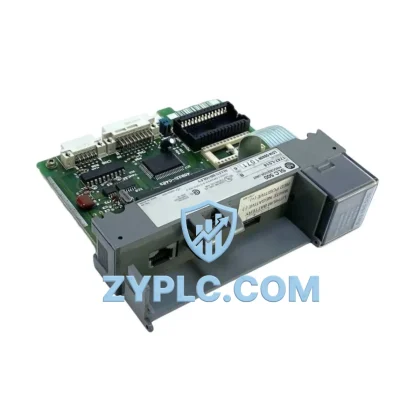
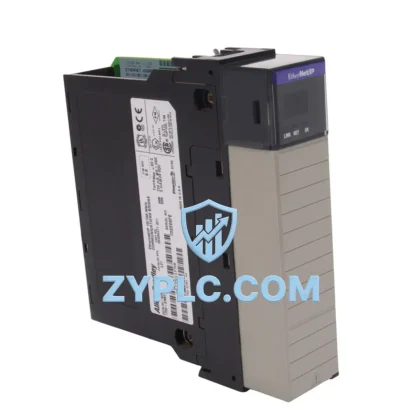
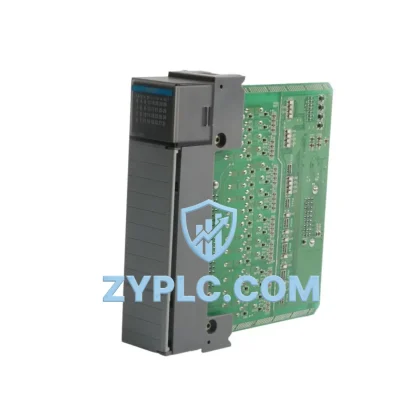
The Allen-Bradley 1771-IAN is a high-efficiency digital input module engineered for the PLC-5 programmable controller platform. In modern industrial environments where energy accountability is no longer optional, the 1771-IAN plays a foundational role in reducing unnecessary I/O scan cycles, minimizing controller overhead, and enabling tighter synchronization between field signals and control logic. By delivering clean, debounced digital inputs with low-latency signal acquisition, this module helps production lines eliminate idle-state energy waste and respond faster to process deviations — directly improving equipment utilization rates and reducing unplanned downtime.
Whether deployed in discrete manufacturing, material handling, or process control applications, the 1771-IAN integrates seamlessly into the 1771 I/O chassis, supporting the Allen-Bradley PLC-5 family’s demand-driven scan architecture. Its reliable signal conditioning reduces false triggers that can cause unnecessary actuator cycling — a hidden source of energy loss in high-cycle production environments.
Efficiency Performance Table
| Parameter |
Specification |
| SKU / Part Number |
1771-IAN |
| Brand |
Allen-Bradley (Rockwell Automation) |
| Series |
PLC-5 / 1771 I/O |
| Module Type |
Digital Input Module (AC) |
| Input Voltage Range |
100–120V AC |
| Number of Input Points |
16 Points |
| Power Consumption |
Low-draw design; minimizes backplane current load |
| Signal Response |
Fast debounce; reduces false-trigger actuator cycling |
| Compatible Systems |
Allen-Bradley PLC-5, 1771 I/O Chassis |
| Application Environment |
Discrete manufacturing, process control, material handling |
| Energy Optimization Value |
Reduces I/O scan overhead; supports demand-driven control logic |
| Origin |
USA |
| Condition |
Tested, inspected, ready to ship |
| Warranty |
12-Month Warranty |
Energy-Aware Automation Architecture
The 1771-IAN does not operate in isolation — its energy efficiency contribution is amplified when integrated within a well-designed automation architecture. In a typical PLC-5 controlled production cell, the 1771-IAN feeds real-time field status data to the PLC-5/40 or PLC-5/80 processor, which executes ladder logic to drive downstream control decisions. When paired with a 1771-OAN digital output module, the system achieves a tightly coupled input-output loop that minimizes unnecessary actuator activation — a key factor in reducing motor wear and energy draw.
For drive-level energy control, the 1771-IAN’s digital signals are often used to trigger or inhibit Allen-Bradley PowerFlex 700 or PowerFlex 40 variable frequency drives (VFDs). By ensuring that drive enable signals are only asserted when process conditions are confirmed, the module prevents motors from running at full speed during idle or transitional states — directly cutting kWh consumption per production cycle.
In systems where power quality monitoring is critical, the 1771-IAN works alongside power monitoring modules such as the Allen-Bradley 1404-M4 or 1404-M6 PowerMonitor units, which track real-time energy consumption at the panel level. The digital input signals captured by the 1771-IAN can be correlated with power draw data to identify which machine states consume the most energy, enabling targeted optimization.
Communication between the PLC-5 platform and supervisory systems is typically handled via the 1784-KTX or 1784-PCMK Data Highway Plus (DH+) interface cards, or through a 1761-NET-ENI Ethernet interface for legacy-to-modern network bridging. These communication layers allow the 1771-IAN’s input data to be surfaced in FactoryTalk View SE HMI dashboards, where operators can monitor machine state, energy consumption trends, and I/O health in real time.
For servo-driven axes within the same production cell, the 1771-IAN’s digital inputs often serve as home, limit, or interlock signals feeding into Ultra3000 or Kinetix 6000 servo drives. Accurate interlock signaling prevents servo axes from executing unnecessary motion cycles, reducing regenerative energy events and mechanical stress. In multi-axis systems, this contributes measurably to overall system energy efficiency.
The 1771 I/O chassis itself — whether a 1771-A1B, 1771-A2B, or 1771-A4B — provides the backplane infrastructure that the 1771-IAN relies on for power distribution and data transfer. Selecting the correct chassis size and slot configuration ensures that backplane current budgets are respected, preventing thermal derating that can reduce module lifespan and increase maintenance frequency.
Power Optimization in Real Production Lines
In real-world production environments, the Allen-Bradley 1771-IAN contributes to energy optimization through several interconnected mechanisms. First, its reliable signal acquisition eliminates the need for redundant polling cycles — a common source of unnecessary CPU load in older PLC architectures. By delivering clean, stable input states, the module allows the PLC-5 processor to execute scan cycles more efficiently, reducing the average scan time and freeing controller capacity for higher-priority control tasks.
Second, the 1771-IAN’s role as a process state sensor enables condition-based control strategies. Rather than running conveyors, pumps, or compressors on fixed timers, production engineers can use the module’s input signals to implement demand-driven start/stop logic. This approach — sometimes called run-on-demand control — can reduce motor running hours by 15–30% in applications where equipment is traditionally left running between production batches.
Third, the module supports predictive maintenance workflows by providing reliable digital feedback from limit switches, proximity sensors, and safety interlocks. When these signals are logged and trended via FactoryTalk Historian or a third-party SCADA system, maintenance teams can detect degrading sensor performance before it causes false trips or missed detections — both of which can result in energy-wasting restart cycles or scrap production.
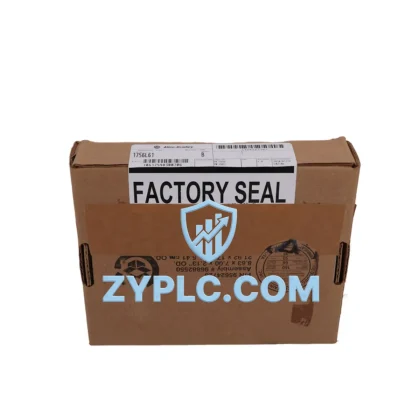
From a supply chain perspective, the 1771-IAN is maintained in stock and undergoes full functional testing prior to shipment. Each unit is verified for input threshold accuracy, backplane communication integrity, and LED indicator operation. Fast shipping availability minimizes production downtime when a replacement module is needed urgently, reducing the energy and cost impact of extended line stoppages. All units are covered by a 12-month warranty, providing confidence in long-term operational reliability.
Energy Optimization FAQ
Q1: How does the 1771-IAN contribute to reducing factory energy consumption?
The 1771-IAN enables demand-driven control logic by providing accurate, low-latency digital input signals to the PLC-5 processor. This allows engineers to implement run-on-demand strategies for motors, drives, and actuators — preventing equipment from running unnecessarily during idle periods and directly reducing kWh consumption per production shift.
Q2: Is the 1771-IAN compatible with modern Rockwell Automation systems?
The 1771-IAN is designed for the PLC-5 / 1771 I/O platform. While it is not directly compatible with ControlLogix or CompactLogix chassis, it can coexist in hybrid architectures via 1756-DHRIO or 1756-ENBT gateway modules that bridge legacy PLC-5 networks with modern Logix-based systems. This allows facilities to retain proven I/O infrastructure while upgrading control processors.
Q3: What is the recommended replacement or upgrade path for the 1771-IAN?
For facilities migrating from PLC-5 to ControlLogix, the functional equivalent in the 1756 platform is the 1756-IA16 or 1756-IA16I digital input module. However, for sites committed to maintaining PLC-5 infrastructure, the 1771-IAN remains the correct and cost-effective choice, with full backward compatibility across all 1771 chassis variants.
Q4: What does the 12-month warranty cover, and how is testing performed?
Every 1771-IAN unit is functionally tested prior to shipment, including input threshold verification, backplane communication checks, and LED status indicator validation. The 12-month warranty covers manufacturing defects and functional failures under normal operating conditions. Units that fail during the warranty period are replaced or repaired at no additional cost, ensuring minimal disruption to production operations.
© 2026 ZYPLC. All rights reserved.
Original Source: https://zyplc.com
Contact: +86 19859288691 | plc.sales@zyplc.com