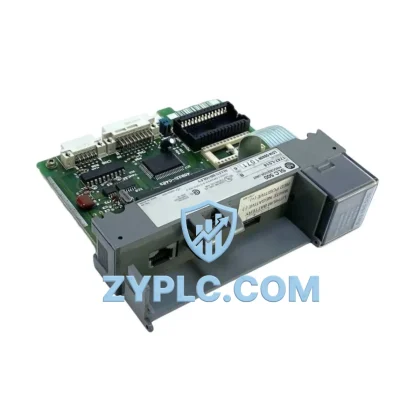
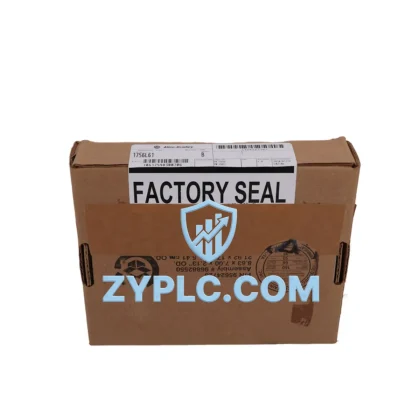
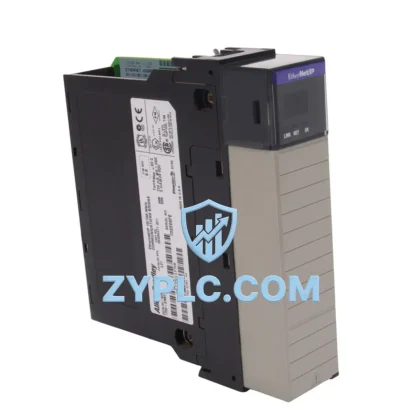
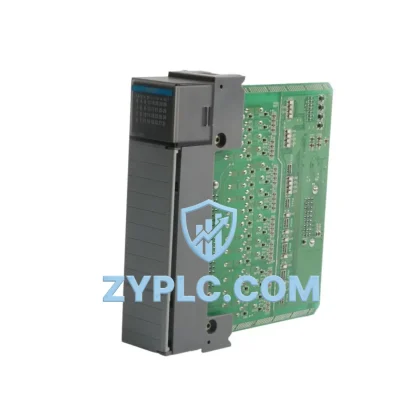
Allen-Bradley 1771-IG System-Ready Digital Input for PLC-5 Architecture
The Allen-Bradley 1771-IG is a 16-point, 120VAC digital input module engineered for seamless integration within the PLC-5 control system architecture. Rather than functioning as a standalone component, the 1771-IG occupies a critical position in the I/O layer of a multi-tier automation hierarchy — receiving field-level discrete signals and delivering them reliably to the PLC-5 processor for real-time decision-making. Its role is foundational: without accurate, noise-immune signal acquisition at the I/O layer, no amount of processor sophistication or network redundancy can compensate for corrupted or missing field data.
In a fully realized PLC-5 control architecture, the 1771-IG slots into a 1771 I/O chassis — typically a 1771-A1B, 1771-A2B, 1771-A3B, or 1771-A4B backplane — and communicates with the processor module (such as the 1785-L40B, 1785-L60B, or 1785-L80B) via the 1771 I/O bus. The backplane provides both power distribution and high-speed data transfer, ensuring that all 16 input channels are scanned within the processor’s I/O update cycle. This tight coupling between the 1771-IG and the processor module is what enables deterministic control response times critical to manufacturing and process automation.
From a system architecture perspective, the 1771-IG integrates across multiple control layers simultaneously. At the field level, it interfaces with pushbuttons, limit switches, proximity sensors, and relay contacts operating at 120VAC — the standard voltage level for industrial field devices in North American installations. At the control layer, it feeds discrete state data directly into the PLC-5 data table, where ladder logic rungs evaluate conditions and trigger output commands. At the network layer, the PLC-5 processor can propagate this I/O data upstream via Data Highway Plus (DH+) to supervisory systems, SCADA platforms, or peer controllers, enabling plant-wide visibility of field device states.
Power architecture compatibility is equally important. The 1771-IG operates within the 1771 chassis power budget managed by the 1771-P4S or 1771-P7 power supply modules. Proper load calculation across all installed I/O modules — including analog modules such as the 1771-IFE or 1771-OFE, and specialty modules such as the 1771-ASB adapter for remote I/O expansion — is essential to maintaining system stability. Overloading the chassis power supply is a common commissioning error that manifests as intermittent module faults rather than outright failures, making it difficult to diagnose without a full power budget review.
For systems requiring remote I/O expansion, the 1771-IG can be installed in remote chassis connected to the PLC-5 processor via the 1771-SN Remote I/O Scanner or through a 1747-SN scanner in hybrid architectures. This allows the physical I/O to be distributed across the plant floor while maintaining centralized control logic in the processor. In such configurations, the 1771-IG’s 16 input points appear in the processor’s I/O map as if they were local, preserving programming consistency and simplifying maintenance diagnostics.
Redundancy design is another dimension where the 1771-IG contributes to overall system resilience. In high-availability PLC-5 installations — common in power generation, petrochemical processing, and water treatment — dual-chassis redundancy configurations pair a primary and secondary processor, each with mirrored I/O chassis. The 1771-IG modules in both chassis receive identical field signals, and the redundancy controller (such as the 1785-CHBM chassis interconnect module) manages seamless switchover in the event of a primary processor fault. This architecture ensures that a single module failure does not interrupt the control loop.
From a maintenance and lifecycle management perspective, the 1771-IG’s standardized form factor and well-documented electrical specifications simplify spare parts management. Facilities running mixed PLC-5 and ControlLogix environments often maintain 1771-IG inventory alongside 1756-IB16 and 1756-IA16 modules to support both legacy and modern control platforms. The ability to cross-reference input module specifications — channel density, input voltage range, input current draw, and response time — allows maintenance engineers to plan module replacements without requiring full system revalidation.
All 1771-IG units supplied by ZYPLC are fully tested under load conditions, verified for channel-by-channel input response, and backed by a 12-Month Warranty. Each module undergoes functional verification against Allen-Bradley’s original performance specifications before shipment. Contextual Integration support is available for customers requiring assistance with chassis slot assignment, I/O map configuration, DH+ network addressing, or integration with existing PLC-5 programs. Our engineering team can provide configuration guidance to ensure the 1771-IG is correctly commissioned within your specific control architecture.
Architecture Specification Table
| Parameter |
Specification |
| System Role |
Discrete Input Module — I/O Layer, PLC-5 Architecture |
| Input Points |
16 Channels |
| Input Voltage |
120VAC Nominal |
| Input Voltage Range |
74–132VAC |
| Input Frequency |
47–63 Hz |
| Input Current (ON State) |
≥6mA at 74VAC |
| Input Current (OFF State) |
≤1.5mA at 132VAC |
| Response Time |
≤16.7ms (1 cycle at 60Hz) |
| Backplane Compatibility |
1771-A1B / A2B / A3B / A4B Chassis |
| Communication |
1771 I/O Bus (Parallel Backplane) |
| Upstream Network |
Data Highway Plus (DH+) via PLC-5 Processor |
| Operating Temperature |
0°C to 60°C (32°F to 140°F) |
| Relative Humidity |
5–95% Non-Condensing |
| Installation Environment |
Panel-Mount, Industrial Control Cabinet |
| Isolation |
Optical Isolation, Field-to-Backplane |
| Warranty |
12-Month Warranty (ZYPLC) |
| Contextual Integration |
Supported — Configuration & Commissioning Assistance Available |
Coordinated Control System Design
The 1771-IG does not operate in isolation — its value is realized through its coordination with every other layer of the PLC-5 control system. At the processor level, the 1785-L40B or 1785-L60B PLC-5 processor reads the 1771-IG’s 16 input channels during each I/O scan, updating the input image table that drives all ladder logic evaluation. The processor’s scan time directly determines how quickly field events detected by the 1771-IG are acted upon by output modules such as the 1771-OA (120VAC output) or 1771-OB (24VDC output), which drive contactors, solenoids, and motor starters in the field.
At the chassis level, the 1771-A4B 16-slot backplane provides the physical and electrical infrastructure that connects the 1771-IG to the processor and to companion modules. Analog input modules such as the 1771-IFE (16-channel analog input) may occupy adjacent slots, providing process variable data — temperature, pressure, flow — that complements the discrete state data from the 1771-IG. Together, these modules give the PLC-5 processor a complete picture of both discrete and continuous process conditions.
For remote I/O applications, the 1771-ASB adapter module enables a remote 1771 chassis — populated with 1771-IG and other I/O modules — to communicate with the PLC-5 processor over the Remote I/O (RIO) network. This is particularly valuable in large facilities where field devices are distributed across multiple control panels. The 1771-SN scanner module at the processor end manages the RIO communication, ensuring that remote 1771-IG inputs are scanned with the same determinism as local chassis modules.
At the HMI layer, operator interface terminals connected via DH+ — such as legacy PanelView units or modern FactoryTalk View SE stations — display the real-time status of inputs monitored by the 1771-IG, providing operators with actionable visibility into field device states. At the power layer, the 1771-P4S power supply ensures stable backplane voltage for the 1771-IG and all co-installed modules, with proper load balancing critical to long-term module reliability.
Application in Layered Automation Systems
The 1771-IG finds application across a broad range of industrial sectors where 120VAC discrete input signals are the standard field interface. In manufacturing and assembly lines, the module monitors conveyor position sensors, part-present detectors, and safety interlock switches, feeding real-time machine state data to the PLC-5 for sequencing control. In power generation and electrical distribution facilities, the 1771-IG monitors breaker status, relay contact states, and protection relay outputs — applications where signal integrity and response time are critical to safe operation.
In petrochemical and refinery environments, the 1771-IG is deployed in control panels monitoring valve position feedback, pump run/stop status, and level switch contacts. Its optical isolation between field wiring and the backplane bus provides an essential safety barrier in environments where ground loops and electrical noise are persistent challenges. In water and wastewater treatment plants, the module monitors pump status, valve positions, and flow switch contacts across distributed pump stations connected via Remote I/O to a central PLC-5 control room.
In mining and metals processing, the 1771-IG handles the high-density discrete input requirements of conveyor systems, crusher interlocks, and hopper level switches. In packaging and material handling lines, it monitors photoeye sensors, registration marks, and reject gate positions at the high scan rates required for precise product handling. Across all these applications, the 1771-IG’s proven reliability in harsh industrial environments — combined with ZYPLC’s 12-Month Warranty and Contextual Integration support — makes it a dependable choice for both new installations and legacy system maintenance.
Architecture Engineering FAQ
Q1: Is the 1771-IG compatible with all PLC-5 processor models, and can it be used in both local and remote chassis configurations?
The 1771-IG is compatible with all PLC-5 processor families, including the PLC-5/11, PLC-5/20, PLC-5/30, PLC-5/40, and PLC-5/60, when installed in a 1771-series chassis. It can be used in local chassis directly connected to the processor backplane, or in remote chassis connected via the 1771-ASB adapter and RIO network. In remote configurations, the module’s I/O map address is assigned through the 1771-ASB rack/group/slot addressing scheme, and the PLC-5 program references these addresses identically to local I/O — no special programming is required.
Q2: How do I verify that adding a 1771-IG to an existing chassis will not exceed the power supply capacity?
Each 1771-IG draws a defined backplane current from the 5VDC bus. To verify compatibility, sum the backplane current draw of all modules installed in the chassis — including the processor, all I/O modules, and any specialty modules — and compare the total against the rated output current of the installed power supply (e.g., 1771-P4S or 1771-P7). If the total draw approaches or exceeds the power supply rating, either redistribute modules across multiple chassis or upgrade to a higher-capacity power supply. ZYPLC’s Contextual Integration support includes power budget review assistance for customers adding modules to existing systems.
Q3: What does the 12-Month Warranty cover, and what is the process for warranty claims?
ZYPLC’s 12-Month Warranty covers manufacturing defects and functional failures under normal operating conditions for all supplied 1771-IG modules. Each module is tested prior to shipment to verify channel-by-channel input response and backplane communication integrity. In the event of a warranty claim, customers contact ZYPLC directly via +86 19859288691 or [email protected] to initiate the return and replacement process. Warranty coverage begins from the date of shipment and applies to the module hardware; it does not cover damage resulting from incorrect installation, overvoltage conditions, or physical mishandling.
© 2026 ZYPLC. All rights reserved.
Original Source: https://zyplc.com
Contact: +86 19859288691 | [email protected]