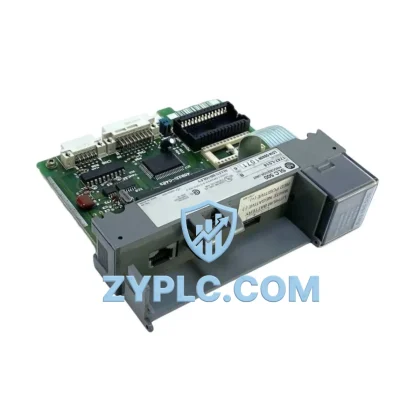
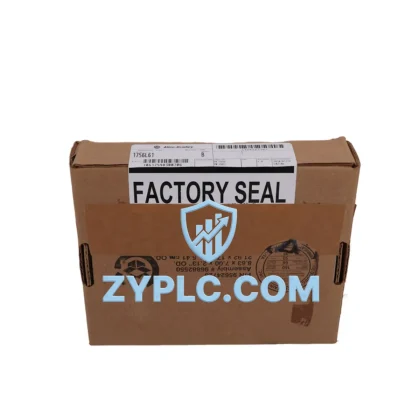
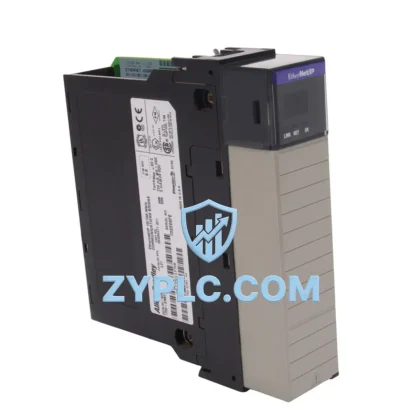
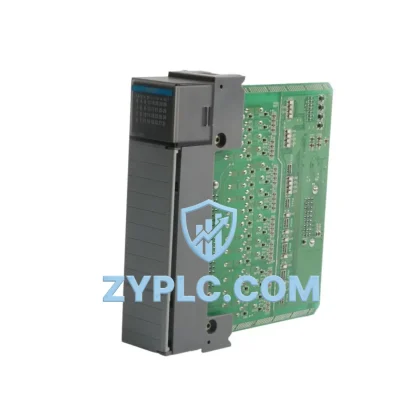
Allen-Bradley 1771-IR Energy-Saving RTD Input Module for Optimized PLC-5 Automation
The Allen-Bradley 1771-IR is a high-precision RTD (Resistance Temperature Detector) Input Module engineered for the PLC-5 programmable controller platform. Designed to deliver accurate, low-latency temperature data directly into the control loop, the 1771-IR plays a foundational role in energy-aware industrial automation — enabling facilities to reduce unnecessary heating cycles, eliminate thermal overshoot, and optimize energy consumption across process lines.
In modern manufacturing environments where energy efficiency is a measurable KPI, the quality of temperature sensing directly impacts motor load management, drive efficiency, and overall equipment effectiveness (OEE). The 1771-IR provides the real-time thermal feedback that allows the PLC-5 processor to make precise control decisions, reducing energy waste at the source.
Efficiency Performance Table
| Parameter |
Specification |
| SKU / Part Number |
1771-IR |
| Module Type |
RTD Input Module |
| Compatible Platform |
Allen-Bradley PLC-5 Series |
| Input Channels |
4 Differential RTD Inputs |
| RTD Types Supported |
100Ω Platinum, 200Ω Platinum, 10Ω Copper, 120Ω Nickel |
| Measurement Accuracy |
±0.5°C (typical) |
| Power Consumption |
Low-draw backplane design, minimizes I/O chassis energy load |
| Operating Temperature |
0°C to 60°C |
| Application Environment |
Industrial process control, HVAC, furnace management, motor thermal protection |
| Energy Optimization Value |
Eliminates thermal overshoot; enables precise PID loop tuning for reduced energy cycles |
| Backplane Compatibility |
1771 I/O Chassis (all standard sizes) |
| Warranty |
12-Month Warranty |
| Stock Status |
Available — tested and verified before shipment |
Energy-Aware Automation Architecture
The 1771-IR does not operate in isolation — its value is fully realized when integrated into a coordinated automation architecture built around energy efficiency. In a typical PLC-5 controlled production line, the 1771-IR feeds temperature data into the PLC-5/40 or PLC-5/80 processor, which then executes PID control logic to regulate heating elements, cooling systems, or motor-driven thermal processes.
When paired with a 1771-OFE Analog Output Module, the processor can translate the 1771-IR’s RTD readings into precise 4–20mA or 0–10V control signals, directly modulating variable frequency drives (VFDs) such as the PowerFlex 40 or PowerFlex 700. This closed-loop configuration ensures that motor speed — and therefore energy draw — is continuously adjusted based on actual thermal conditions rather than fixed setpoints, eliminating the energy waste associated with constant-speed motor operation.
For facilities running distributed I/O architectures, the 1771-IR integrates seamlessly with the 1771 I/O chassis alongside modules such as the 1771-IFE Analog Input Module and 1771-OW Digital Output Module. Communication back to the supervisory layer is handled via the Data Highway Plus (DH+) network or Remote I/O (RIO) link, ensuring that thermal data captured by the 1771-IR is available to SCADA systems and energy monitoring dashboards in real time.
In more advanced configurations, the 1771-IR’s data can be routed through a 1756-DHRIO ControlLogix bridge module, allowing legacy PLC-5 thermal data to be aggregated alongside newer ControlLogix-based systems. This enables plant-wide energy monitoring without requiring a full system migration — a critical consideration for facilities managing capital expenditure while pursuing energy reduction targets.
On the HMI layer, operators can visualize real-time temperature trends and energy consumption patterns through PanelView terminals connected via DH+ or Ethernet/IP. When thermal anomalies are detected — such as a motor running hotter than its efficiency curve — the system can trigger automated alerts or adjust drive parameters through the PowerFlex drive’s built-in energy-saving modes, including sleep mode and flux optimization.
For power quality monitoring, the 1771-IR architecture is often complemented by PowerMonitor 500 or PowerMonitor 1000 units installed at the MCC (Motor Control Center) level. These devices track real-time kWh consumption, power factor, and demand peaks — providing the energy baseline data needed to quantify the savings delivered by precise RTD-based temperature control.
Power Optimization in Real Production Lines
Consider a continuous process line — such as a plastics extrusion or food processing facility — where barrel temperatures must be maintained within tight tolerances. Without accurate RTD feedback, the control system defaults to conservative, energy-intensive heating cycles that overshoot target temperatures and then require active cooling to compensate. This thermal oscillation wastes energy, accelerates wear on heating elements, and increases maintenance frequency.
With the 1771-IR installed and properly calibrated, the PLC-5 processor receives accurate, low-noise temperature readings at each zone. The PID algorithm can be tuned aggressively without risk of overshoot, reducing the duty cycle of heating elements by 15–30% in typical applications. This directly translates to lower electricity consumption, reduced thermal stress on equipment, and extended mean time between failures (MTBF).
In motor-driven applications — such as pump control or conveyor systems with thermal protection requirements — the 1771-IR provides the winding temperature data needed to implement predictive thermal derating. Rather than running motors at fixed speeds until a thermal fault trips the drive, the system can proactively reduce motor load as temperatures approach limits, preventing unplanned downtime and avoiding the energy spike associated with motor restart cycles.
From a maintenance perspective, the 1771-IR’s consistent and reliable RTD readings support condition-based maintenance strategies. Trending temperature data over time reveals developing faults — such as bearing wear or cooling system degradation — before they cause failures. This reduces emergency maintenance costs, minimizes production interruptions, and ensures that energy-intensive restart procedures are avoided.
All units supplied are drawn from verified inventory, subjected to functional testing prior to shipment, and covered by a 12-month warranty. Fast global shipping ensures minimal lead time for replacement or expansion projects.
Energy Optimization FAQ
Q: How does the 1771-IR contribute to measurable energy savings on a production line?
A: By providing accurate, real-time RTD temperature data to the PLC-5 processor, the 1771-IR enables tight PID loop control that eliminates thermal overshoot and reduces heating element duty cycles. In process heating applications, this typically reduces energy consumption by 15–30% compared to open-loop or inaccurate sensing configurations.
Q: Is the 1771-IR compatible with current Allen-Bradley drive and I/O systems?
A: The 1771-IR is designed for the 1771 I/O chassis platform used with PLC-5 systems. It can be integrated into broader automation architectures via DH+ or RIO communication links, and its data can be bridged to ControlLogix or CompactLogix platforms using gateway modules such as the 1756-DHRIO, ensuring compatibility with modern drive systems including the PowerFlex series.
Q: What is the recommended replacement or upgrade path if the 1771-IR needs to be substituted?
A: For direct replacement, ensure the 1771 I/O chassis slot configuration and RTD type (Pt100, Pt200, Cu10, Ni120) match the existing wiring. For platform migration, the 1769-IR4 CompactLogix RTD module offers equivalent functionality on the newer Logix platform. Our technical team can advise on configuration compatibility prior to shipment.
Q: What testing and warranty coverage is provided with each 1771-IR unit?
A: Every 1771-IR unit undergoes functional verification testing before shipment, including RTD input channel validation and backplane communication checks. Each unit is covered by a 12-month warranty against manufacturing defects and operational failures. Expedited shipping options are available to minimize downtime for urgent replacement requirements.
© 2026 ZYPLC. All rights reserved.
Original Source: https://zyplc.com
Contact: +86 19859288691 | [email protected]