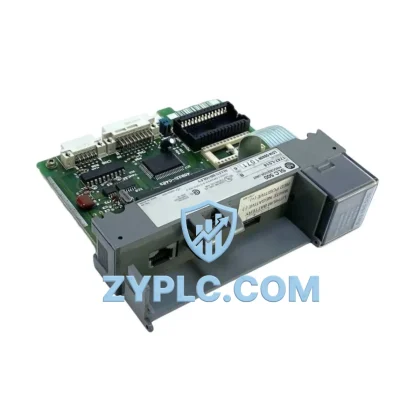
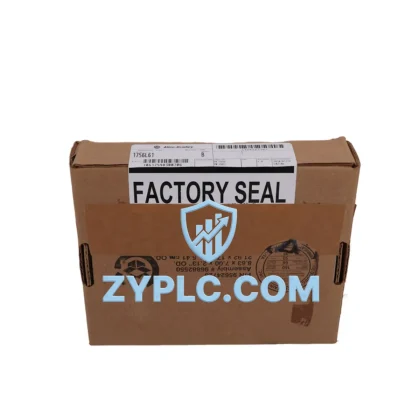
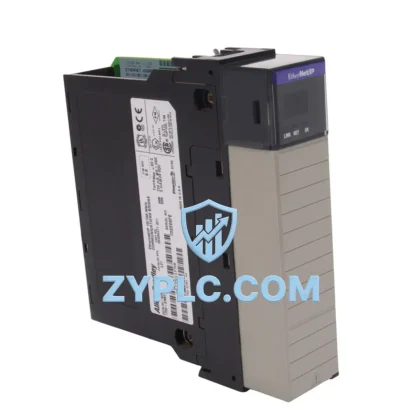
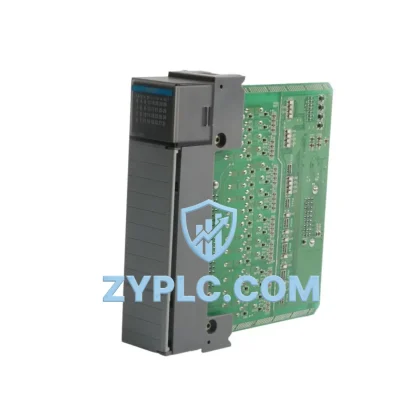
Allen-Bradley 1771-NIS System-Ready Network Interface for PLC-5 Architecture
The Allen-Bradley 1771-NIS Network Interface Module is a purpose-built communication bridge designed to integrate seamlessly within the PLC-5 control system architecture. Rather than functioning as a standalone component, the 1771-NIS occupies a critical position in the network layer of a layered automation hierarchy — enabling reliable data exchange between the PLC-5 processor and upstream SCADA systems, peer controllers, and distributed I/O networks. In complex industrial environments where system consistency, uptime, and long-term maintainability are non-negotiable, the 1771-NIS delivers the communication backbone that keeps every layer of the control architecture synchronized.
Engineered for the 1771 I/O chassis backplane, the 1771-NIS supports Data Highway Plus (DH+) network communication, allowing the PLC-5 processor — such as the 1785-L40B or 1785-L80B — to exchange data with remote I/O adapters, operator interface terminals, and peer PLCs across a shared network segment. This capability is foundational in multi-node control architectures where deterministic communication between the control layer and the I/O layer is essential for process integrity.
Within a complete PLC-5 system, the 1771-NIS works in close coordination with the 1771-P4S or 1771-P7 power supply modules, which provide stable backplane power to all installed modules. The chassis itself — typically a 1771-A4B or 1771-A2B — houses the processor, the 1771-NIS, and a range of I/O modules including the 1771-IB16 digital input module and the 1771-OB16 digital output module. Analog signal conditioning is handled by modules such as the 1771-IF4 analog input module, which feeds process variables directly to the PLC-5 processor for closed-loop control execution.
At the network layer, the 1771-NIS enables the PLC-5 to participate in DH+ segments alongside the 1784-KTX or 1784-PCMK communication cards installed in engineering workstations running RSLogix 5 or RSLinx Classic. This architecture supports both online programming and real-time diagnostics without interrupting production — a critical requirement in continuous process industries such as petrochemical refining, water treatment, and power generation.
For systems requiring human-machine interface integration, the 1771-NIS facilitates communication between the PLC-5 and PanelView terminals such as the 2711-T10C8 or 2711-K10C8, enabling operators to monitor process variables, acknowledge alarms, and issue control commands from a centralized HMI station. This HMI layer integration is particularly valuable in mining, metallurgy, and packaging line applications where operator visibility directly impacts throughput and safety.
In redundant control architectures, the 1771-NIS can be deployed in conjunction with the 1785-CHBM chassis interconnect module to support hot-standby configurations, ensuring that a processor fault does not result in a loss of network communication or process control. This redundancy design is a standard requirement in critical infrastructure applications including substation automation, offshore platform control, and municipal water distribution systems.
From an engineering and commissioning perspective, the 1771-NIS simplifies system integration by providing a standardized DH+ interface that is fully compatible with the broader Allen-Bradley PLC-5 ecosystem. Maintenance engineers benefit from the module’s diagnostic LED indicators, which provide immediate visual feedback on network status, communication activity, and fault conditions — reducing mean time to repair (MTTR) and minimizing unplanned downtime.
Long-term inventory availability is a key consideration for facilities operating legacy PLC-5 systems. ZYPLC maintains stock of the 1771-NIS and related modules to support both planned maintenance schedules and emergency replacement requirements. Every unit supplied by ZYPLC is tested, inspected, and covered by a 12-Month Warranty, providing procurement teams and plant engineers with the confidence needed to maintain system continuity without the risk of sourcing untested components from unverified channels.
Architecture Specification Table
| Parameter |
Specification |
| System Role |
DH+ Network Interface Module — PLC-5 Backplane |
| Compatible Processor |
Allen-Bradley PLC-5 Series (1785-L20B, 1785-L40B, 1785-L80B) |
| Network Protocol |
Data Highway Plus (DH+) |
| Backplane Compatibility |
1771 I/O Chassis (1771-A2B, 1771-A4B) |
| Communication Baud Rate |
57.6 Kbps / 115.2 Kbps (DH+ selectable) |
| Power Supply Compatibility |
1771-P4S, 1771-P7 Backplane Power Supplies |
| Operating Voltage |
5 VDC (backplane supplied) |
| Operating Temperature |
0°C to 60°C (32°F to 140°F) |
| Relative Humidity |
5% to 95% non-condensing |
| Installation Environment |
Industrial control panel / 1771 I/O chassis slot |
| Diagnostic Indicators |
LED status indicators for network activity and fault |
| Country of Origin |
United States |
| Warranty |
12-Month Warranty (ZYPLC) |
Coordinated Control System Design
The 1771-NIS achieves its full value when deployed as part of a coordinated PLC-5 control system rather than as an isolated component. A typical architecture built around the 1771-NIS includes the following coordinated elements:
The 1785-L40B PLC-5/40 Processor serves as the central control engine, executing ladder logic programs and managing all I/O data table operations. The processor communicates with the 1771-NIS via the 1771 backplane, delegating network communication tasks to the module while maintaining full scan cycle performance. The 1771-P4S Power Supply provides regulated 5 VDC and 24 VDC backplane power, ensuring stable operation of the processor, the 1771-NIS, and all installed I/O modules under varying load conditions.
Digital I/O is handled by the 1771-IB16 Input Module and 1771-OB16 Output Module, which interface directly with field devices including proximity sensors, limit switches, solenoid valves, and motor starters. Analog process variables — such as temperature, pressure, and flow — are acquired through the 1771-IF4 Analog Input Module, which converts 4–20 mA or 0–10 VDC signals into digital values for PLC-5 processing.
Network connectivity to engineering workstations is established via the 1784-KTX DH+ Communication Card, which allows RSLogix 5 and RSLinx Classic to communicate with the PLC-5 processor through the same DH+ segment served by the 1771-NIS. Operator interface is provided by the 2711-K10C8 PanelView 1000 Terminal, which connects to the DH+ network and displays real-time process data, alarm summaries, and control command interfaces for plant operators.
In redundant configurations, the 1785-CHBM Chassis Interconnect Module links primary and secondary PLC-5 chassis, enabling hot-standby failover without loss of network communication or I/O control. Terminal block modules such as the 1492-CABLE series provide reliable field wiring termination, reducing installation time and improving long-term wiring integrity across the control cabinet.
Application in Layered Automation Systems
The 1771-NIS is deployed across a wide range of industrial sectors where the PLC-5 platform remains the established control standard. In manufacturing and assembly automation, the module enables multi-PLC coordination across production lines, allowing upstream and downstream controllers to exchange handshake signals, production counts, and fault status data in real time.
In power generation and substation control, the 1771-NIS supports communication between PLC-5 controllers managing switchgear, transformer protection relays, and auxiliary systems. The DH+ network provides deterministic communication timing that is essential for coordinated protection and control schemes in high-voltage environments.
In petrochemical and refinery applications, the 1771-NIS integrates PLC-5 controllers with distributed control system (DCS) gateways and SCADA servers, enabling plant-wide data aggregation and remote monitoring of critical process variables including reactor temperature, column pressure, and flow rates.
For water and wastewater treatment facilities, the module supports communication between PLC-5 controllers managing pump stations, filtration systems, and chemical dosing equipment across geographically distributed sites connected via DH+ network segments.
In mining and metallurgical processing, the 1771-NIS enables coordination between PLC-5 controllers managing conveyor systems, crushers, ball mills, and flotation cells, providing the network infrastructure needed for centralized supervisory control and production reporting.
Architecture Engineering FAQ
Q1: Is the 1771-NIS compatible with all PLC-5 processor variants, and can it be installed in any slot of the 1771 chassis?
The 1771-NIS is designed for use with the Allen-Bradley PLC-5 processor family, including the 1785-L20B, 1785-L40B, and 1785-L80B variants. It occupies a standard 1771 I/O chassis slot and communicates with the processor via the backplane. Slot assignment should follow the system configuration guidelines in the PLC-5 installation manual to avoid address conflicts with other installed modules. The chassis must be powered by a compatible 1771-series power supply such as the 1771-P4S or 1771-P7.
Q2: How does the 1771-NIS support long-term system maintainability in legacy PLC-5 architectures?
The 1771-NIS provides a standardized DH+ interface that is fully supported by Allen-Bradley’s RSLinx Classic communication software, ensuring that engineering workstations can maintain online connectivity to the PLC-5 processor for diagnostics, program uploads/downloads, and forced I/O operations without requiring hardware modifications. Its LED diagnostic indicators allow maintenance technicians to quickly identify network faults, communication errors, and module health status, reducing diagnostic time and minimizing unplanned downtime. ZYPLC maintains inventory of the 1771-NIS to support both scheduled maintenance and emergency replacement requirements.
Q3: What warranty coverage does ZYPLC provide for the 1771-NIS, and what does it include?
Every 1771-NIS supplied by ZYPLC is covered by a 12-Month Warranty from the date of shipment. Each unit undergoes functional testing and inspection prior to dispatch to verify backplane communication, network interface operation, and LED indicator functionality. The warranty covers manufacturing defects and functional failures under normal operating conditions. ZYPLC’s technical support team is available to assist with installation guidance, compatibility verification, and system integration questions throughout the warranty period and beyond.
© 2026 ZYPLC. All rights reserved.
Original Source: https://zyplc.com
Contact: +86 19859288691 | [email protected]