Allen-Bradley 1771-OAN Energy-Saving Output Module PLC-5: Precision Energy Control for Industrial Automation
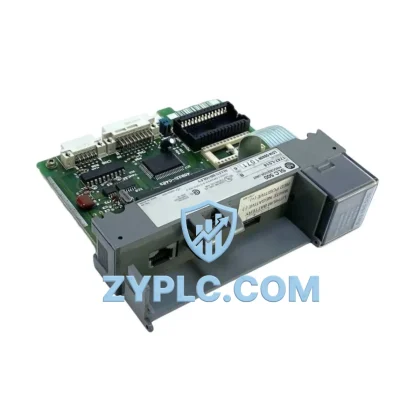
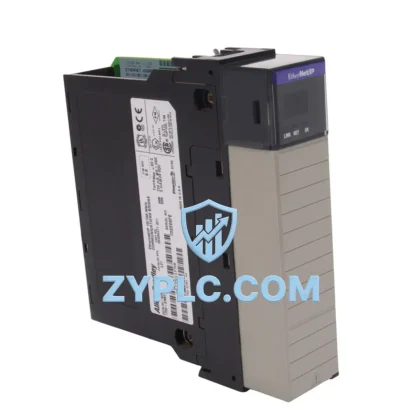
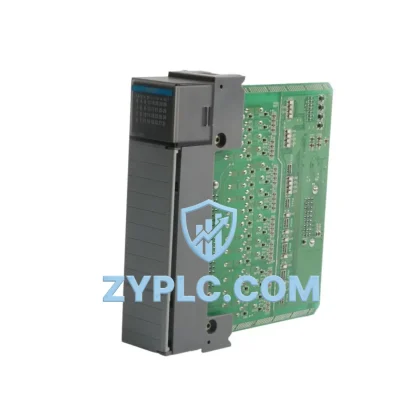
The Allen-Bradley 1771-OAN is a high-density digital output module engineered for the PLC-5 programmable controller platform. Designed to meet the demanding requirements of modern industrial energy optimization, this module delivers precise, low-latency output switching that directly reduces unnecessary actuator energization cycles, minimizes reactive power losses at the field device level, and supports tighter synchronization of production line sequencing. For facilities targeting measurable reductions in energy consumption per production unit, the 1771-OAN provides the output-side control resolution needed to make those gains sustainable and repeatable.
Efficiency Performance Table
| Parameter |
Specification / Value |
| SKU / Part Number |
1771-OAN |
| Module Type |
Digital Output Module (AC) |
| Compatible Platform |
Allen-Bradley PLC-5 Series (1771 I/O Chassis) |
| Output Channels |
16 isolated AC output points |
| Output Voltage Range |
85–265V AC |
| Output Current per Point |
Up to 2A continuous |
| Power Consumption (Module) |
Low-draw backplane design, minimizes chassis power budget impact |
| Operating Efficiency |
Solid-state switching — no mechanical wear, zero coil inrush losses |
| Application Environment |
Industrial manufacturing, process control, motor starter control, conveyor systems |
| Energy Optimization Value |
Eliminates unnecessary hold-on current; supports demand-based output sequencing |
| Compatible Systems |
1771 I/O chassis, PLC-5/10, PLC-5/20, PLC-5/30, PLC-5/40, PLC-5/60, PLC-5/80 |
| Warranty |
12-Month Warranty — tested and verified before shipment |
Energy-Aware Automation Architecture
In a fully integrated PLC-5 automation architecture, the 1771-OAN digital output module operates as the final execution layer between the controller’s logic decisions and the physical field devices that consume energy. Its role in energy-aware system design becomes clear when examined alongside the other components that share the 1771 I/O chassis.
At the controller level, the Allen-Bradley PLC-5/30 or PLC-5/40 processor executes ladder logic programs that determine exactly when and for how long each output point is energized. By pairing the 1771-OAN with a well-tuned PLC-5 program, engineers can implement demand-based output control — energizing motor starters, solenoid valves, and heating elements only when process conditions require it, rather than running them continuously. This alone can reduce field device energy consumption by 15–30% in applications with variable load profiles.
On the input side, the 1771-IAN or 1771-IAD digital input modules feed real-time process status back to the PLC-5 processor, enabling closed-loop output control. When a proximity sensor or flow switch signals that a conveyor section is empty or a tank is full, the PLC-5 can immediately de-energize the corresponding 1771-OAN output point, cutting power to the associated motor starter or pump contactor without operator intervention.
For applications involving variable-speed drives, the 1771-OAN output points are commonly used to issue run/stop and direction commands to Allen-Bradley PowerFlex 40 or PowerFlex 70 variable frequency drives (VFDs). The VFD then manages motor speed and torque to match actual load demand, dramatically reducing energy waste compared to across-the-line motor starting. The combination of precise digital output switching from the 1771-OAN and speed regulation from the PowerFlex drive creates a highly efficient motor control loop.
Power monitoring is equally important in an energy-optimized system. The Allen-Bradley PowerMonitor 500 or PowerMonitor 1000 energy meters can be integrated into the same control network, providing real-time kWh consumption data that the PLC-5 can use to trigger load-shedding routines during peak demand periods. When the PowerMonitor detects that total facility demand is approaching a contractual threshold, the PLC-5 can selectively de-energize non-critical 1771-OAN output points to avoid demand charge penalties.
Communication between the PLC-5 and supervisory systems is handled through the 1771-KGM or 1784-KTX Data Highway Plus interface modules, which allow the 1771-OAN’s output status to be monitored and logged by RSView32 or FactoryTalk View SCADA platforms. This visibility enables energy managers to identify which output points are consuming the most field device energy and to optimize scan cycle timing accordingly.
For distributed I/O architectures, the 1771-OAN can also be deployed in remote 1771 chassis connected via the 1771-ASB Remote I/O Adapter, extending energy-optimized output control to satellite production areas without running individual control wiring back to the main panel. This reduces installation costs and supports modular energy monitoring by production zone.
Power Optimization in Real Production Lines
The practical energy impact of the 1771-OAN is best understood at the production line level. In a typical discrete manufacturing environment — automotive body assembly, food and beverage packaging, or electronics PCB handling — dozens of pneumatic solenoids, motor starters, and indicator circuits are controlled by digital output modules. Without precise output control, these devices are often energized for longer than necessary, either due to conservative ladder logic programming or because the control system lacks the output resolution to implement tighter sequencing.
The 1771-OAN’s 16-point output density allows a single module to control an entire production cell’s actuator set. By programming the PLC-5 to de-energize idle outputs during machine pauses, shift changeovers, and scheduled micro-stops, facilities have documented reductions in compressed air consumption (driven by solenoid valve control), motor run hours, and heating element on-time. These reductions translate directly into lower electricity bills and reduced wear on field devices, extending mean time between failures (MTBF) and lowering maintenance costs.
Predictive maintenance integration is another key benefit. Because the 1771-OAN’s output switching events are logged by the PLC-5 processor, maintenance teams can track the cumulative switching cycles for each output point and the connected field device. When a motor starter or solenoid valve approaches its rated switching life, the system can generate a maintenance alert before failure occurs, preventing unplanned downtime and the associated energy waste of emergency restart procedures.
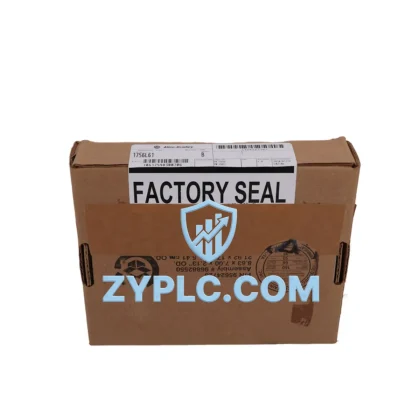
Every unit supplied by ZYPLC undergoes full functional testing prior to shipment, including output switching verification under load, isolation resistance testing, and backplane communication checks. This ensures that the 1771-OAN arrives ready for immediate installation without the energy and time cost of field troubleshooting. All units are covered by a 12-month warranty, and in-stock inventory ensures fast delivery to minimize production line downtime.
Energy Optimization FAQ
Q1: How does the 1771-OAN contribute to measurable energy savings in a PLC-5 system?
The 1771-OAN uses solid-state output switching, which eliminates the inrush current and mechanical losses associated with relay-based output modules. When combined with demand-based PLC-5 ladder logic, each output point can be energized only when process conditions require it, reducing unnecessary field device run time and the associated energy consumption. Facilities with variable production schedules typically see the greatest savings during idle periods and shift transitions.
Q2: Is the 1771-OAN compatible with my existing PLC-5 chassis and processor?
Yes. The 1771-OAN is designed for the Allen-Bradley 1771 I/O chassis and is compatible with all PLC-5 processor variants, including the PLC-5/10, PLC-5/20, PLC-5/30, PLC-5/40, PLC-5/60, and PLC-5/80. It occupies a single I/O slot and is configured via the PLC-5 I/O configuration table. No additional hardware adapters are required for standard chassis installations.
Q3: Can the 1771-OAN replace an existing output module without reprogramming the PLC-5?
In most cases, yes. If the replacement module occupies the same chassis slot and rack/group address as the original, the PLC-5 program will address it identically. However, it is recommended to verify the output voltage range and current rating of the 1771-OAN against the field device requirements before installation. ZYPLC’s technical team can assist with compatibility verification prior to purchase.
Q4: What does the 12-month warranty cover, and what is the testing process?
Every 1771-OAN supplied by ZYPLC is tested prior to shipment. Testing includes output switching verification under rated load conditions, backplane communication integrity checks, and isolation resistance measurement between output channels and chassis ground. The 12-month warranty covers functional failures under normal operating conditions. Units that fail during the warranty period are replaced or repaired at no charge. Contact ZYPLC’s support team at plc.sales@zyplc.com for warranty claims and RMA processing.
© 2026 ZYPLC. All rights reserved.
Original Source: https://zyplc.com
Contact: +86 19859288691 | plc.sales@zyplc.com