Allen-Bradley 1771-OFE3 System-Ready Analog Output for PLC-5 Architecture
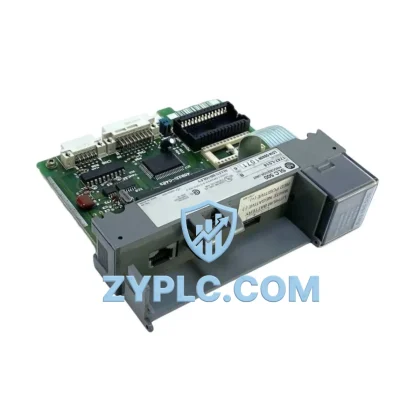
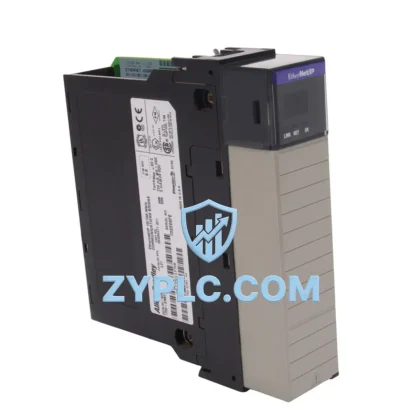
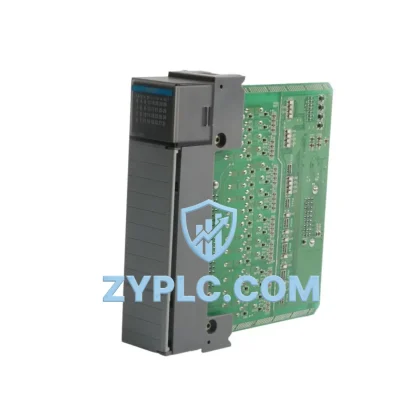
The Allen-Bradley 1771-OFE3 is a three-channel analog output module engineered for seamless integration within the PLC-5 control system architecture. Designed to operate within the 1771 I/O chassis, this module serves as a critical bridge between the digital control layer and the physical process environment, converting processor-generated digital values into precise analog signals — typically 4–20 mA current or 0–10 V voltage — that drive field devices such as control valves, variable frequency drives, and positioners. In any layered automation architecture, the 1771-OFE3 occupies the output side of the I/O layer, working in close coordination with the CPU, backplane, power supply, and communication modules to ensure deterministic, high-fidelity signal delivery across the entire control loop.
Within a complete PLC-5 system, the 1771-OFE3 is mounted directly into a 1771 I/O chassis — such as the 1771-A1B, 1771-A2B, 1771-A3B, or 1771-A4B — and communicates with the processor via the 1771 backplane bus. The processor, typically a 1785-L40B, 1785-L60B, or 1785-L80B PLC-5 CPU, scans the output image table and writes digital values to the module at each program scan cycle. The 1771-OFE3 then performs digital-to-analog conversion and drives the connected field instruments with the corresponding analog signal. This tight integration between the processor scan cycle and the analog output update rate is fundamental to achieving stable, low-latency process control in demanding industrial environments.
System architects specifying the 1771-OFE3 must consider its role within the broader power distribution and chassis architecture. The 1771 chassis requires a compatible power supply — such as the 1771-P4S or 1771-P7 — to provide regulated DC power to all installed I/O modules, including the 1771-OFE3. Proper power budgeting across the chassis is essential, particularly in high-density configurations where multiple analog output modules are installed alongside digital I/O modules such as the 1771-OAD or 1771-IBD. The 1771-OFE3 draws a defined backplane current, and this must be accounted for in the total chassis power budget to prevent undervoltage conditions that could compromise output accuracy or system stability.
From a network and communication perspective, the PLC-5 processor hosting the 1771-OFE3 typically participates in a Data Highway Plus (DH+) or ControlNet network, enabling coordinated control across multiple processors and remote I/O racks. In distributed architectures, the 1771-OFE3 may be installed in a remote I/O rack connected to the main processor via a 1771-ASB remote I/O adapter, extending analog output capability to field panels located far from the main control room. This remote I/O capability is essential in large-scale process plants, substations, and pipeline control systems where control cabinets are distributed across wide geographic areas.
For human-machine interface integration, the analog output values driven by the 1771-OFE3 are typically reflected in real-time on PanelView or PanelView Plus HMI terminals connected via DH+ or Ethernet/IP gateways. Operators can monitor setpoints, actual output values, and alarm states directly from the HMI, enabling rapid response to process deviations. The 1771-OFE3 supports engineering unit scaling within the processor program, allowing output values to be displayed in meaningful process units — such as percentage valve opening or motor speed in RPM — rather than raw digital counts.
Redundancy is a key consideration in critical process applications. While the 1771-OFE3 itself operates as a standard (non-redundant) module, it can be deployed within redundant PLC-5 architectures using the 1785-CHBM chassis interconnect module and redundant processor pairs. In such configurations, the primary and secondary processors maintain synchronized output image tables, ensuring that in the event of a processor failover, the 1771-OFE3 continues to receive valid output data with minimal disruption to the controlled process. This architecture is commonly specified in power generation, chemical processing, and water treatment applications where unplanned process interruptions carry significant operational or safety consequences.
Long-term maintainability is another strength of the 1771-OFE3 within established PLC-5 installations. Because the PLC-5 platform has been widely deployed across global industries for decades, spare parts availability — including the 1771-OFE3 itself — remains a priority for industrial distributors and MRO suppliers. ZYPLC maintains verified stock of the 1771-OFE3 with full functional testing prior to shipment, backed by a 12-Month Warranty covering manufacturing defects and operational failures under normal service conditions. This warranty commitment supports plant maintenance teams in managing lifecycle risk for aging PLC-5 systems that are not yet scheduled for migration to newer platforms such as ControlLogix or CompactLogix.
Architecture Specification Table
| Parameter |
Specification |
| System Role |
Analog Output Module — I/O Layer, PLC-5 Architecture |
| Output Channels |
3 Isolated Analog Output Channels |
| Output Signal Types |
4–20 mA Current / 0–10 V Voltage (configurable per channel) |
| Resolution |
12-bit DAC (1 in 4095) |
| Accuracy |
±0.1% of Full Scale at 25°C |
| Chassis Compatibility |
1771-A1B, 1771-A2B, 1771-A3B, 1771-A4B I/O Chassis |
| Backplane Communication |
1771 Parallel Backplane Bus |
| Power Supply Compatibility |
1771-P4S, 1771-P7 (chassis-dependent) |
| Operating Temperature |
0°C to 60°C (32°F to 140°F) |
| Storage Temperature |
-40°C to 85°C |
| Relative Humidity |
5% to 95% Non-Condensing |
| Backplane Current Draw |
800 mA @ 5 VDC (typical) |
| Isolation |
Channel-to-Channel and Channel-to-Backplane Isolation |
| Communication Protocol |
DH+, Remote I/O (via 1771-ASB adapter) |
| Certifications |
UL Listed, CE Marked |
| Warranty |
12-Month Warranty (ZYPLC) |
| Origin |
USA |
Coordinated Control System Design
The 1771-OFE3 achieves its full performance potential when specified as part of a coordinated PLC-5 system architecture. At the processor level, the 1785-L40B or 1785-L60B CPU manages the output image table that feeds the 1771-OFE3, executing ladder logic or structured text programs that calculate the required analog output values based on PID loop outputs, operator setpoints, or sequential control logic. The processor communicates with the 1771-OFE3 across the 1771 backplane, which is housed in a 1771-A3B or 1771-A4B chassis providing sufficient slot capacity for mixed I/O configurations.
On the input side, analog process variables are typically acquired by companion modules such as the 1771-IFE or 1771-IF analog input modules, which feed real-time process data back to the processor for closed-loop control calculations. Digital status signals from field devices are handled by 1771-IBD or 1771-OAD discrete I/O modules installed in the same or adjacent chassis slots. The combination of analog and discrete I/O within a single 1771 chassis enables compact, high-density control panel designs that minimize wiring complexity and cabinet footprint.
For communication and supervisory integration, the PLC-5 processor connects to plant-level SCADA systems via a 1784-KTX or 1784-PKTX Data Highway Plus communication card, or through a 1761-NET-ENI Ethernet interface that bridges DH+ to modern Ethernet/IP networks. This connectivity allows the analog output values driven by the 1771-OFE3 to be monitored and adjusted remotely from control room workstations running RSView32 or FactoryTalk View SE. Terminal block modules such as the 1492-CABLE series provide reliable field wiring termination for the 1771-OFE3’s analog output channels, ensuring low-resistance connections that preserve signal accuracy over long cable runs to field instruments.
Application in Layered Automation Systems
The 1771-OFE3 is deployed across a wide range of industrial sectors where the PLC-5 platform remains the established control standard. In continuous process manufacturing — including chemical plants, refineries, and pharmaceutical production facilities — the module drives control valves and flow control elements that regulate raw material feeds, reaction temperatures, and product blending ratios. Its 12-bit resolution and channel isolation ensure that small setpoint changes are accurately translated into proportional valve movements, supporting tight process control within defined quality specifications.
In power generation and electrical substation applications, the 1771-OFE3 provides analog output signals to automatic voltage regulators, excitation systems, and load dispatch controllers. The module’s channel-to-channel isolation is particularly valuable in these environments, where ground loops and common-mode noise from high-voltage equipment can corrupt analog signals in non-isolated modules. The ability to operate reliably in the 0°C to 60°C temperature range makes the 1771-OFE3 suitable for installation in outdoor switchgear panels and substation control buildings without additional thermal management.
In water and wastewater treatment systems, the 1771-OFE3 controls variable speed pump drives, chemical dosing pumps, and aeration blower systems. PLC-5 controllers managing these processes often operate continuously for years without planned shutdowns, making the long-term reliability and spare parts availability of the 1771-OFE3 a critical procurement consideration. ZYPLC’s verified stock and 12-Month Warranty provide plant operators with confidence that replacement modules will perform to original specification when installed as direct replacements in existing 1771 chassis.
In mining, metals processing, and heavy industry, the 1771-OFE3 is used to control conveyor speed references, crusher feed rates, and furnace temperature setpoints. These applications demand robust module performance under conditions of high vibration, wide temperature variation, and electromagnetic interference from large motor drives. The 1771-OFE3’s industrial-grade construction and proven field reliability make it a preferred choice for maintenance engineers managing legacy PLC-5 installations in these demanding environments.
Architecture Engineering FAQ
Q1: Is the 1771-OFE3 compatible with all PLC-5 processor models, and can it be used in a remote I/O rack?
The 1771-OFE3 is compatible with all PLC-5 processor families, including the PLC-5/11, PLC-5/20, PLC-5/30, PLC-5/40, and PLC-5/60, as well as the PLC-5/40E and PLC-5/80E Ethernet-enabled variants. It can be installed in any 1771 I/O chassis — local or remote — provided the chassis is powered by a compatible 1771 power supply and the remote rack is connected via a 1771-ASB remote I/O adapter. When used in a remote rack, the module’s output update rate is subject to the remote I/O scan time, which should be factored into PID loop tuning for time-critical control applications.
Q2: How should the 1771-OFE3 be configured for Contextual Integration within a mixed analog/discrete I/O chassis, and what are the key installation considerations?
Contextual Integration of the 1771-OFE3 within a mixed I/O chassis requires careful attention to slot addressing, power budgeting, and module keying. Each 1771-OFE3 occupies a single slot and is addressed as a 2-slot module in the processor’s I/O configuration, consuming two words of output image table. The module must be keyed with the correct 1771 keying bands to prevent accidental installation of an incompatible module type. Power budget calculations must confirm that the combined backplane current draw of all installed modules — including the 1771-OFE3’s 800 mA at 5 VDC — does not exceed the chassis power supply rating. Field wiring should use shielded twisted-pair cable with shields grounded at a single point to minimize analog signal noise.
Q3: What does the 12-Month Warranty from ZYPLC cover for the 1771-OFE3, and how does it support long-term maintenance planning for PLC-5 systems?
ZYPLC’s 12-Month Warranty for the 1771-OFE3 covers manufacturing defects, component failures, and operational malfunctions that occur under normal service conditions within twelve months of the shipment date. Each module undergoes functional testing prior to dispatch to verify analog output accuracy, channel isolation integrity, and backplane communication performance. For plant maintenance teams managing PLC-5 systems that are not yet scheduled for platform migration, this warranty provides a structured risk management framework: replacement modules can be procured with confidence that they will perform to original Allen-Bradley specification, reducing unplanned downtime risk and supporting multi-year maintenance budgets for legacy control system assets.
© 2026 ZYPLC. All rights reserved.
Original Source: https://zyplc.com
Contact: +86 19859288691 | plc.sales@zyplc.com