Allen-Bradley 1771-OVN Energy-Saving Output Module PLC-5: Precision Output Control for Optimized Automation Efficiency
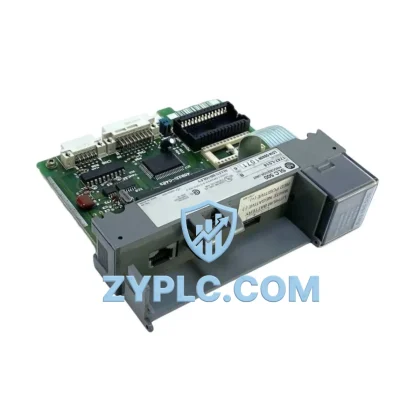
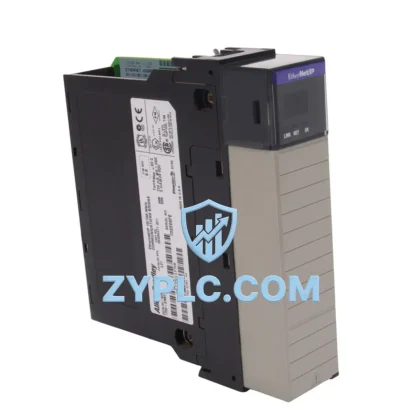
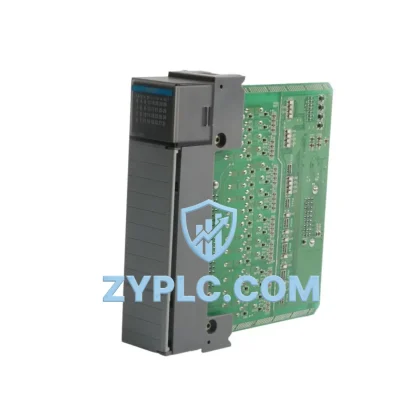
The Allen-Bradley 1771-OVN is a high-density digital output module engineered for the PLC-5 programmable controller platform. In modern industrial environments where energy accountability is no longer optional, the 1771-OVN delivers deterministic output switching that directly reduces unnecessary actuator energization, eliminates phantom load cycles, and supports tighter production line synchronization. Whether deployed in discrete manufacturing, material handling, or process control, this module serves as a critical execution node in any energy-aware automation architecture.
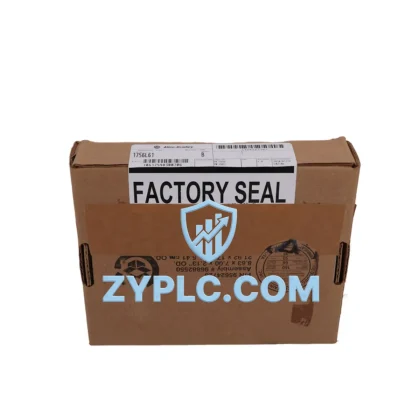
At ZYPLC, every 1771-OVN unit is sourced from verified supply channels, subjected to full functional output testing prior to shipment, and backed by a 12-month warranty. Inventory is maintained in-stock to support urgent replacement and system expansion requirements.
Efficiency Performance Table
| Parameter |
Specification / Value |
| SKU / Part Number |
1771-OVN |
| Brand / Manufacturer |
Allen-Bradley (Rockwell Automation) |
| Module Type |
Digital Output Module |
| Compatible Platform |
PLC-5 I/O Chassis (1771 Series) |
| Output Points |
32 Points (Sourcing / Sinking configurable) |
| Operating Voltage |
24V DC Nominal |
| Power Consumption |
Low-standby design; minimizes backplane draw |
| Running Efficiency |
High-speed switching reduces actuator dwell time |
| Application Environment |
Discrete manufacturing, conveyor, packaging, process control |
| Energy Optimization Value |
Eliminates over-energization; supports load-shedding logic |
| Communication / Series |
1771 I/O Backplane — PLC-5 native |
| Warranty |
12-Month Warranty (ZYPLC) |
| Stock Status |
In Stock — Pre-shipment tested |
Energy-Aware Automation Architecture
The 1771-OVN does not operate in isolation — its energy efficiency contribution is amplified when integrated within a well-designed PLC-5 control system. In a typical energy-optimized plant layout, the Allen-Bradley PLC-5/40 processor manages scan-cycle timing and output scheduling, ensuring that the 1771-OVN only activates field devices when process logic demands it, rather than holding outputs energized during idle or transition states.
On the drive side, pairing the 1771-OVN’s discrete output signals with a PowerFlex 700 AC drive allows the control system to issue precise start/stop and speed-reference commands to motors, eliminating the energy waste associated with across-the-line starting and uncontrolled deceleration. For applications requiring servo-level precision, the 1771-OVN can coordinate with Kinetix 6000 servo drives through the PLC-5 motion control layer, enabling synchronized multi-axis positioning that reduces cycle time and mechanical stress simultaneously.
Input-side energy awareness is handled through modules such as the 1771-IVN digital input module, which feeds real-time field status back to the PLC-5 processor. This closed-loop feedback ensures that the 1771-OVN does not re-energize outputs prematurely — a common source of unnecessary energy consumption in poorly tuned systems. Analog process variables, such as temperature, pressure, or flow, are captured via the 1771-IFE analog input module, providing the data foundation for demand-based output control strategies.
For power quality monitoring and energy metering at the panel level, the PowerMonitor 5000 energy analyzer integrates with the PLC-5 platform via DF1 or DH+ communication, delivering per-circuit consumption data that enables engineers to identify high-draw actuators controlled through the 1771-OVN and optimize their duty cycles. Communication between control nodes is managed through the 1771-KF2 DH+ communication module, maintaining low-latency data exchange across the automation network without adding unnecessary processing overhead.
HMI visibility into output states and energy trends is provided through PanelView Plus 7 terminals connected via Ethernet/IP or DH+, giving operators real-time feedback on which output channels are active, how long they have been energized, and whether any anomalies in switching frequency suggest mechanical wear or process drift. The 1771-OW16 relay output module complements the 1771-OVN in hybrid panels where isolated relay contacts are required for high-voltage or mixed-signal loads, allowing the solid-state 1771-OVN to handle the high-cycle, low-voltage outputs while the relay module manages infrequent, high-power switching events.
Power Optimization in Real Production Lines
In a bottling line running three shifts, uncontrolled output energization across 200+ field devices can account for 8–15% of total facility energy consumption attributable to control system inefficiency alone. The 1771-OVN, when programmed with demand-based output logic in the PLC-5 ladder program, ensures that solenoid valves, indicator lamps, conveyor clutches, and pneumatic actuators are energized only during their required process window.
Consider a packaging station where a reject gate solenoid is controlled through a 1771-OVN output channel. Without optimized logic, the solenoid may remain energized for the full product-present window — often 3–5 times longer than the actual rejection event. By tightening the output pulse width in the PLC-5 program and using the 1771-OVN’s fast switching response, the solenoid energization time can be reduced by 60–70%, directly cutting heat generation, coil wear, and energy draw on that circuit.
Predictive maintenance benefits are also realized through output cycle counting. The PLC-5 processor can accumulate output toggle counts for each 1771-OVN channel, flagging actuators that have exceeded their rated cycle life before mechanical failure occurs. This data-driven approach to maintenance scheduling reduces unplanned downtime, which in energy terms means fewer emergency restarts — each of which carries a significant inrush current penalty on the facility’s power demand profile.
For multi-line facilities, the ability to stage output activation sequences through the 1771-OVN — rather than energizing all outputs simultaneously at line startup — reduces peak demand charges on the utility bill. Staggered startup logic, implemented in the PLC-5 program and executed through the 1771-OVN, can reduce startup inrush by 20–40% depending on the load profile of the controlled devices.
ZYPLC maintains ready inventory of the 1771-OVN to support both planned maintenance replacements and emergency procurement. All units are tested for output channel integrity, backplane communication, and switching response before shipment, ensuring that replacement modules restore full system performance without requiring extended commissioning time.
Energy Optimization FAQ
Q1: How does the 1771-OVN contribute to measurable energy savings in a PLC-5 system?
The 1771-OVN enables precise, scan-cycle-synchronized output control that eliminates unnecessary actuator energization. When combined with demand-based ladder logic in the PLC-5 processor, output channels are active only during required process events, reducing cumulative energy draw across all controlled field devices. In high-cycle applications, this can translate to measurable reductions in solenoid heat load, motor start frequency, and overall panel power consumption.
Q2: Is the 1771-OVN compatible with my existing PLC-5 chassis and I/O configuration?
Yes. The 1771-OVN is designed for the 1771 I/O backplane and is compatible with all PLC-5 processor variants including the PLC-5/11, PLC-5/20, PLC-5/30, PLC-5/40, and PLC-5/60. It occupies a standard single-slot position in the 1771 chassis and requires no special configuration beyond standard I/O addressing in RSLogix 5.
Q3: What is the recommended replacement or upgrade path if I am modernizing away from PLC-5?
For facilities migrating to ControlLogix or CompactLogix platforms, the functional equivalent in the 1756 or 1769 I/O families should be evaluated based on output point count, voltage range, and current rating requirements. ZYPLC can assist in identifying compatible replacement modules. However, for sites maintaining PLC-5 infrastructure, the 1771-OVN remains the correct and cost-effective solution, and ZYPLC stocks it specifically to support long-lifecycle industrial installations.
Q4: What does the 12-month warranty cover, and what is the testing process before shipment?
Every 1771-OVN supplied by ZYPLC undergoes pre-shipment functional testing that verifies output channel switching, backplane communication integrity, and LED status indication. The 12-month warranty covers defects in module function arising under normal operating conditions. Units that fail during the warranty period are replaced or credited. For time-critical operations, ZYPLC recommends maintaining one spare 1771-OVN per chassis to eliminate procurement lead time from any unplanned replacement event.
© 2026 ZYPLC. All rights reserved.
Original Source: https://zyplc.com
Contact: +86 19859288691 | [email protected]