Allen-Bradley 1771-OW System-Ready Relay Output for 1771 Architecture: Control System Architecture and Upstream-Downstream Coordination
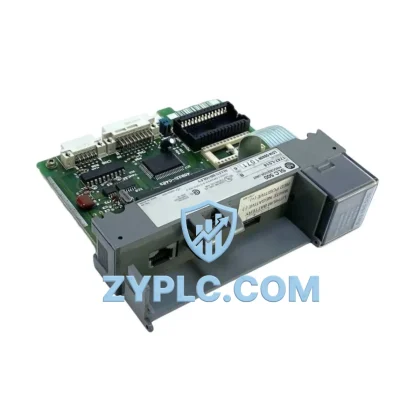
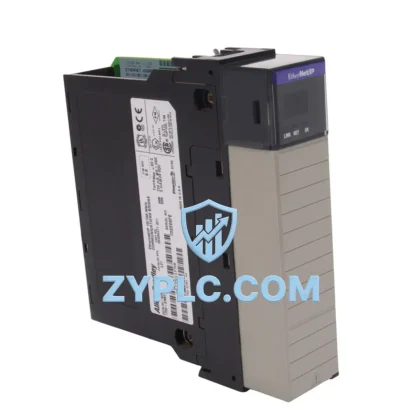
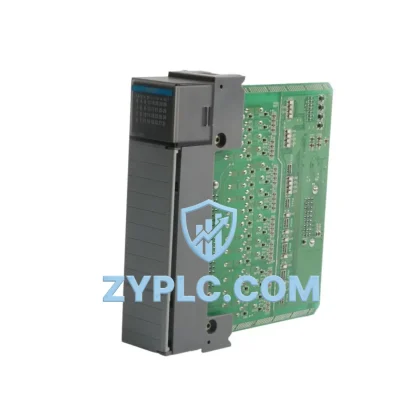
In modern industrial automation, the reliability of a control system depends not on any single component, but on the seamless coordination between every layer of the architecture. The Allen-Bradley 1771-OW relay output module occupies a critical position within the 1771 I/O chassis system, serving as the final command interface between the programmable logic controller and field-level actuators. Whether deployed in a standalone rack or as part of a distributed multi-rack configuration, the 1771-OW ensures that discrete output signals are delivered with the electrical isolation and contact reliability that demanding industrial environments require.
The 1771 platform, developed by Rockwell Automation under the Allen-Bradley brand, represents one of the most widely deployed PLC architectures in global manufacturing and process industries. The 1771-OW integrates directly into the 1771 I/O chassis backplane, communicating with the processor module — typically a PLC-5 series CPU such as the 1785-L40B or 1785-L80B — through the standard 1771 backplane protocol. This tight integration allows the processor to scan output states at deterministic intervals, ensuring that relay switching commands are executed in synchronization with the overall control program cycle.
Architecture Specification Table
| Parameter |
Specification |
| System Role |
Discrete Relay Output Module — 1771 I/O Architecture |
| Compatible Platform |
Allen-Bradley 1771 PLC-5 System |
| Output Type |
Relay Contact (Isolated) |
| Number of Output Points |
16 relay output points |
| Output Voltage Range |
AC/DC: 5–265V AC / 5–125V DC |
| Maximum Output Current |
2A per point (resistive load) |
| Electrical Isolation |
Optically isolated between field and backplane |
| Communication Interface |
1771 Backplane (parallel I/O bus) |
| Module Keying |
User-configurable hardware keying |
| Installation Environment |
Industrial panel / 1771 I/O chassis slot |
| Operating Temperature |
0°C to 60°C |
| Certifications |
UL Listed, CE Marked |
| Warranty |
12-Month Warranty (ZYPLC) |
Coordinated Control System Design
The 1771-OW does not operate in isolation — its value is fully realized when considered within the complete 1771 system architecture. At the processor layer, a PLC-5 CPU such as the 1785-L40B or 1785-L40E executes the ladder logic program and drives output image table bits that directly map to the 1771-OW relay contacts. The processor communicates with the I/O chassis through the 1771 backplane, and in larger systems, remote I/O adapters such as the 1771-ASB extend this communication to satellite racks located across the plant floor.
Power integrity is maintained by the 1771-P4S or 1771-P7 chassis power supply, which provides regulated backplane voltage to all installed modules including the 1771-OW. In redundant power configurations, dual power supplies are deployed to eliminate single points of failure at the power layer. On the input side, discrete input modules such as the 1771-IB (24V DC input) or 1771-IA (120V AC input) work in parallel with the 1771-OW to complete the field signal loop — capturing sensor states and delivering actuator commands within the same scan cycle.
For analog process control loops, the 1771-OFE analog output module complements the 1771-OW by handling proportional control signals to variable-speed drives and control valves, while the 1771-OW manages on/off switching for contactors, solenoids, and alarm annunciators. Communication gateways such as the 1785-KA5 Data Highway Plus interface module allow the PLC-5 system to participate in plant-wide DH+ networks, enabling supervisory data exchange with SCADA systems and HMI terminals. At the operator interface layer, PanelView terminals connected via DH+ or Remote I/O provide real-time visualization of relay output states, supporting both local and remote monitoring of the 1771-OW’s switching activity.
In systems requiring high-density output capability, multiple 1771-OW modules can be installed across available chassis slots, with each module independently addressed within the processor’s I/O map. Terminal modules and wiring arms such as the 1771-WN wiring arm provide the field-side termination interface, simplifying installation and enabling module replacement without disturbing field wiring — a critical advantage in high-availability production environments.
Application in Layered Automation Systems
The Allen-Bradley 1771-OW relay output module is deployed across a broad spectrum of industrial sectors where discrete output control is essential to process integrity. In power generation and electrical distribution facilities, the 1771-OW drives protection relay coils, circuit breaker trip circuits, and alarm annunciator panels, where the galvanic isolation provided by relay contacts is a fundamental safety requirement. The module’s ability to switch both AC and DC loads across a wide voltage range makes it universally applicable to the mixed-voltage environments common in substation automation.
In petrochemical and refinery applications, the 1771-OW controls solenoid-operated valves, motor starter coils, and emergency shutdown actuators within safety-instrumented systems. Its integration with PLC-5 processors running IEC 61131-3 ladder logic programs allows process engineers to implement complex interlock sequences that coordinate valve sequencing, pump control, and flare system management within a single unified control architecture.
For water and wastewater treatment plants, the 1771-OW manages pump motor starters, chemical dosing solenoids, and UV disinfection system contactors across multiple treatment stages. The module’s compatibility with remote I/O configurations via the 1771-ASB adapter allows a central PLC-5 processor to control distributed pump stations located kilometers from the main control room, reducing infrastructure costs while maintaining centralized supervisory control.
In mining and mineral processing operations, the 1771-OW is used to control conveyor belt starters, crusher motor contactors, and dust suppression solenoids in environments characterized by heavy vibration, dust ingress, and wide temperature fluctuations. The robust relay contact design and industrial-grade construction of the 1771-OW ensure reliable operation under these demanding conditions, supporting continuous production with minimal unplanned downtime.
Across automotive and discrete manufacturing assembly lines, the 1771-OW coordinates robotic cell enable signals, fixture clamp solenoids, and part-present indicator lamps within high-speed production sequences. Its deterministic scan-time integration with the PLC-5 processor ensures that output switching latency remains within the tight timing windows required by synchronized multi-axis assembly operations.
Architecture Engineering FAQ
Q1: Is the Allen-Bradley 1771-OW compatible with all 1771 I/O chassis sizes, and can it be mixed with other 1771 output module types in the same chassis?
The 1771-OW is compatible with all standard 1771 I/O chassis configurations, including the 1771-A1B (4-slot), 1771-A2B (8-slot), 1771-A3B (12-slot), and 1771-A4B (16-slot) chassis. It can be freely mixed with other 1771 I/O modules — including analog, input, and specialty modules — within the same chassis, provided that the chassis power supply capacity is not exceeded. Module slot addressing is configured via the processor’s I/O configuration table, and hardware keying bands should be set to prevent incorrect module substitution during maintenance.
Q2: How does the 1771-OW support system redundancy and what are the recommended practices for high-availability architectures?
In high-availability applications, redundancy for the 1771-OW is typically achieved at the chassis and processor level rather than at the individual module level. Redundant PLC-5 processor configurations using the 1785-CHBM hot-backup module allow seamless processor switchover without interrupting output states. For critical output circuits, dual 1771-OW modules can be wired in parallel with output contacts connected in series or parallel depending on the fail-safe requirement. Additionally, deploying the 1771-OW in a remote I/O chassis with a dedicated 1771-ASB adapter provides physical separation from the main processor rack, reducing the impact of localized faults on overall system availability.
Q3: What does the 12-Month Warranty from ZYPLC cover for the 1771-OW, and what support is available for installation and long-term maintenance?
ZYPLC’s 12-Month Warranty covers the 1771-OW against manufacturing defects and functional failures under normal operating conditions from the date of shipment. Each unit undergoes functional testing prior to dispatch to verify relay contact operation, backplane communication integrity, and electrical isolation performance. ZYPLC’s technical support team provides pre-sales architecture consultation to confirm module compatibility with your existing 1771 system configuration, as well as post-sales commissioning guidance. For long-term maintenance planning, ZYPLC maintains inventory of 1771-OW modules to support scheduled preventive replacement programs, minimizing the risk of production interruption due to aging relay contacts in legacy PLC-5 installations. Contact ZYPLC at +86 19859288691 or plc.sales@zyplc.com for availability and technical support.
© 2026 ZYPLC. All rights reserved.
Original Source: https://zyplc.com
Contact: +86 19859288691 | plc.sales@zyplc.com