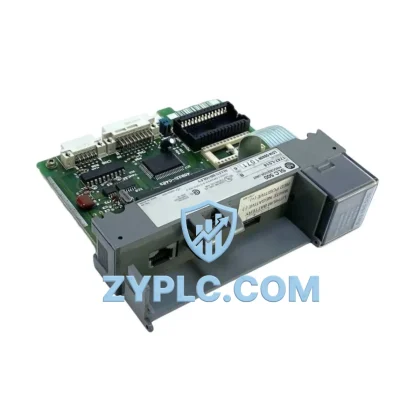
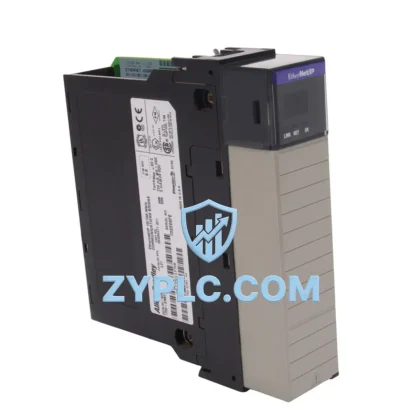
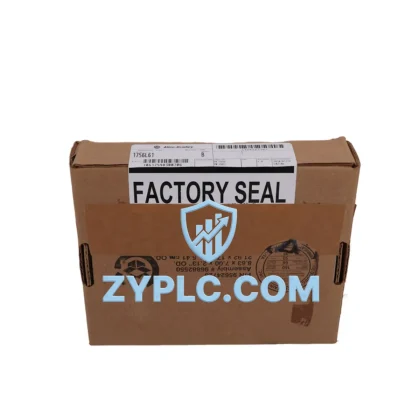
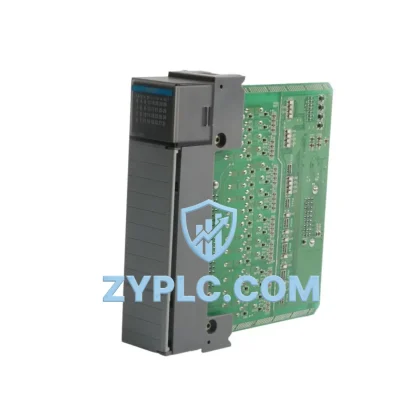
Allen-Bradley 1771-P5 Energy-Saving Power Supply for PLC-5 Automation
The Allen-Bradley 1771-P5 is a high-efficiency power supply module engineered for the PLC-5 programmable controller platform — one of Rockwell Automation’s most enduring industrial control architectures. In modern manufacturing environments where energy accountability is no longer optional, the 1771-P5 plays a foundational role in stabilizing power delivery to the entire I/O chassis, directly influencing how efficiently downstream control components consume and regulate electrical energy. By maintaining tight voltage regulation across the 1771 I/O chassis backplane, this module reduces power fluctuation losses that silently erode overall system efficiency in legacy and hybrid automation lines.
For facilities running continuous production — whether in automotive stamping, food processing, chemical batching, or material handling — unregulated or aging power supply modules are among the most overlooked sources of energy waste. The 1771-P5 addresses this by providing a stable, conditioned DC output that supports consistent operation of connected modules including 1771-OBD digital output modules, 1771-IFE analog input modules, and 1771-ASB remote I/O adapter modules. When these components receive clean, regulated power, their switching losses decrease and their operational lifespan extends — both of which contribute directly to lower total energy cost per production cycle.
Efficiency Performance Table
| Parameter |
Specification / Value |
| Model |
Allen-Bradley 1771-P5 |
| Series |
PLC-5 |
| Output Voltage |
+5 VDC, ±12 VDC (chassis backplane) |
| Rated Output Current |
16A @ +5V |
| Input Voltage Range |
85–264 VAC, 47–63 Hz (universal input) |
| Power Conversion Efficiency |
≥82% at full load (typical for regulated SMPS design) |
| Compatible Systems |
Allen-Bradley PLC-5 / 1771 I/O Chassis |
| Application Environment |
Industrial automation, process control, discrete manufacturing |
| Energy Saving Value |
Reduces backplane ripple losses; extends module service life; lowers reactive power draw |
| Warranty |
12-Month Warranty (ZYPLC) |
| Testing Standard |
5-step QA: visual inspection, power-on test, load test, burn-in, final verification |
| Stock Status |
In Stock — Ready to Ship |
Energy-Aware Automation Architecture
The 1771-P5 does not operate in isolation — its efficiency impact is best understood within the broader context of the PLC-5 control architecture. In a typical energy-aware automation cell, the Allen-Bradley PLC-5/40 processor coordinates all logic execution, communicating with field devices through the 1771 I/O backplane powered by the 1771-P5. The processor’s scan cycle efficiency is directly tied to the quality of power it receives; voltage sags or ripple on the backplane can cause extended scan times and unnecessary retry cycles, both of which increase CPU energy consumption without adding productive output.
On the drive side, many PLC-5 installations interface with Allen-Bradley PowerFlex 700 or PowerFlex 40 variable frequency drives via DeviceNet or Remote I/O. These drives regulate motor speed to match actual load demand — a core energy-saving strategy — but their effectiveness depends on receiving accurate, timely control signals from the PLC. A stable 1771-P5 ensures that the 1771-SDN DeviceNet scanner module and 1771-ASB remote I/O adapter maintain communication integrity, preventing the drive from defaulting to fixed-speed operation due to signal loss, which would negate all VFD energy savings.
For energy monitoring, facilities often pair PLC-5 systems with Allen-Bradley PowerMonitor 1000 or PowerMonitor 5000 units connected via DF1 or DH+ networks. These devices capture real-time kWh, power factor, and demand data that the PLC-5 uses to implement load-shedding logic or time-of-use optimization routines. The 1771-P5’s role here is to ensure the 1771-KF2 DH+ communication module and associated network interface cards remain powered without interruption, preserving the data pipeline that makes energy optimization decisions possible.
HMI visibility is equally important. Operators monitoring energy KPIs through a PanelView 1000 or PanelView Plus 6 terminal connected via DH+ rely on the PLC-5 to deliver accurate, real-time data. Any power instability at the chassis level introduces latency or data corruption in the HMI display, obscuring the energy metrics that plant managers use to identify inefficiency. The 1771-P5 eliminates this risk by maintaining a clean power environment for all chassis-resident communication and I/O modules.
Power Optimization in Real Production Lines
In real-world production environments, the 1771-P5 contributes to energy optimization through several interconnected mechanisms. First, by delivering stable regulated voltage to all I/O modules in the chassis, it eliminates the micro-interruptions that force PLCs into fault recovery routines — routines that consume processor cycles, delay output responses, and cause downstream actuators and drives to operate in unintended states. Each fault recovery event represents wasted energy: motors that should be ramping down continue running at speed, conveyors that should index remain in motion, and heating elements that should cycle off stay energized.
Second, the 1771-P5’s universal input range (85–264 VAC) allows it to maintain consistent output even during grid voltage fluctuations common in heavy industrial facilities. When input voltage sags due to large motor starts or welding operations nearby, lesser power supplies reduce their output current, causing I/O modules to brown out and the PLC to enter safe-state routines. The 1771-P5’s wide input tolerance prevents this, keeping the control system active and allowing the PLC-5 to continue executing energy management logic — such as staggering motor starts to reduce peak demand charges — without interruption.
Third, for facilities managing predictive maintenance programs, a reliable 1771-P5 is essential infrastructure. Predictive maintenance algorithms running in the PLC-5 — monitoring motor current signatures via 1771-IFE analog inputs, tracking vibration data from smart sensors, or logging runtime hours for lubrication scheduling — require uninterrupted power to accumulate accurate historical data. A failing or undersized power supply introduces noise into analog readings and causes data logging gaps, both of which degrade the quality of predictive models and lead to either premature replacements (wasted cost) or missed failures (unplanned downtime and energy spikes from damaged equipment running inefficiently).
From a production throughput perspective, the 1771-P5 supports optimized line takt time by ensuring that all I/O responses occur within their designed cycle windows. When power supply degradation causes I/O scan delays, the PLC’s output timing shifts, causing mechanical systems to operate out of phase with their intended sequence. This misalignment forces operators to reduce line speed as a buffer — directly reducing output per kWh consumed and increasing the energy cost per unit produced. Replacing a degraded power supply with a tested 1771-P5 restores designed cycle times and recovers this hidden efficiency loss.
Energy Optimization FAQ
Q1: How does the 1771-P5 contribute to measurable energy savings in a PLC-5 system?
The 1771-P5 stabilizes backplane power delivery, which reduces fault recovery cycles, prevents I/O scan delays, and ensures VFDs and other energy-saving devices receive accurate control signals. Indirectly, this preserves the effectiveness of all energy optimization logic running in the PLC-5 processor, preventing the hidden energy waste caused by control system instability.
Q2: Is the 1771-P5 compatible with all PLC-5 chassis configurations?
The 1771-P5 is designed for use with Allen-Bradley 1771 I/O chassis in PLC-5 systems. It is compatible with standard chassis sizes (4, 8, 12, and 16 slot) and supports the full range of 1771 I/O modules including digital, analog, and specialty communication modules. Always verify chassis slot current budget against the 1771-P5’s rated output before installation.
Q3: What is the recommended replacement interval, and how do I know if my current power supply is degrading?
Signs of power supply degradation include intermittent I/O faults, unexplained PLC processor faults, analog input noise, and communication module resets. In high-cycle environments, proactive replacement every 5–8 years is advisable. All 1771-P5 units supplied by ZYPLC undergo a 5-step QA process including load testing and burn-in verification before shipment.
Q4: What warranty and support does ZYPLC provide with the 1771-P5?
Every 1771-P5 shipped by ZYPLC is covered by a 12-month warranty against defects in materials and workmanship. Units are tested prior to shipment and include documentation of test results upon request. For technical support, replacement coordination, or compatibility verification, contact ZYPLC directly.
© 2026 ZYPLC. All rights reserved.
Original Source: https://zyplc.com
Contact: +86 19859288691 | plc.sales@zyplc.com