Allen-Bradley 1771-QRC System-Ready Analog Input for 1771 Architecture: Control System Coordination and Upstream-Downstream Synchronization
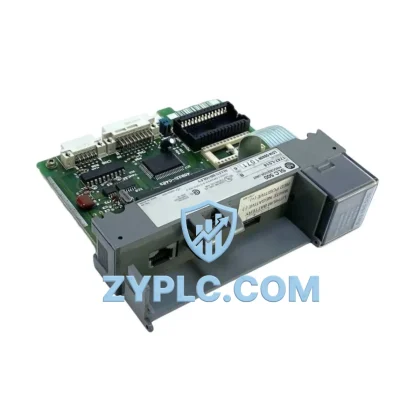
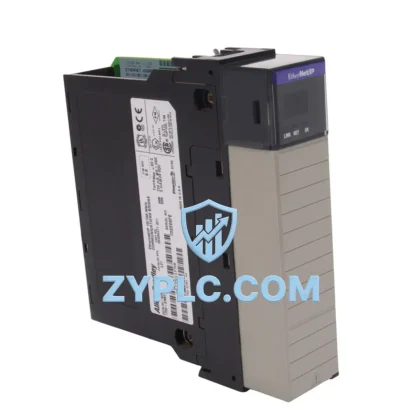
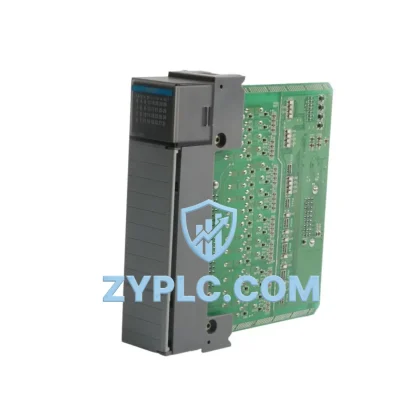
The Allen-Bradley 1771-QRC is a dedicated analog input module engineered for seamless integration within the Rockwell Automation PLC-5 control platform and the broader 1771-series I/O chassis architecture. Rather than functioning as a standalone signal acquisition device, the 1771-QRC occupies a precise role within a layered automation hierarchy — bridging field-level process variables to the CPU’s execution logic, enabling real-time closed-loop control across manufacturing, power generation, petrochemical, water treatment, and heavy industrial environments.
In a fully realized PLC-5 control architecture, the 1771-QRC resides in the I/O layer, mounted directly into a 1771-series I/O chassis such as the 1771-A1B, 1771-A2B, 1771-A3B, or 1771-A4B backplane. These chassis provide the physical and electrical backbone that connects the analog input module to the PLC-5 processor — whether that is the 1785-L40B, 1785-L60B, or 1785-L80B — via the 1771 I/O bus. The module reads analog signals from field instruments including pressure transmitters, temperature sensors, flow meters, and level transducers, converting them into digital engineering values that the CPU processes within its scan cycle.
System architects integrating the 1771-QRC must account for its position within the full control stack. At the power layer, the 1771-P4S or 1771-P6S power supply modules provide regulated DC power to the chassis, ensuring stable voltage rails that directly affect analog measurement accuracy and signal integrity. Voltage fluctuations at the power layer propagate as noise into analog readings; therefore, proper power supply sizing and grounding discipline are prerequisites for reliable 1771-QRC operation.
At the communication and network layer, the PLC-5 processor interfaces with supervisory systems via Data Highway Plus (DH+) using the 1785-KA5 communication adapter, or via Ethernet/IP through the 1761-NET-ENI or 1756-ENBT bridge modules in hybrid architectures. The analog data acquired by the 1771-QRC is made available to SCADA platforms, historian servers, and MES systems through these communication pathways, enabling plant-wide visibility of process variables without additional signal conditioning hardware.
For human-machine interface integration, the 1771-QRC’s analog data is typically surfaced through PanelView terminals — such as the 2711-T10C8 or 2711P-T12C4D1 — connected to the PLC-5 via DH+ or RS-232. Operators monitor real-time analog trends, configure setpoints, and acknowledge process alarms directly from these HMI panels, with the 1771-QRC serving as the primary data source for process variable displays.
In redundant control architectures, the 1771-QRC can be deployed in mirrored chassis configurations alongside the 1785-CHBM chassis monitor module, which supervises chassis health and triggers failover sequences when primary I/O communication is interrupted. This redundancy design is particularly critical in continuous process industries — petrochemical distillation columns, power plant boiler controls, and water treatment dosing systems — where analog input loss can trigger unsafe process excursions.
Architecture Specification Table
| Parameter |
Specification |
| System Role |
Analog Input Module — I/O Layer, 1771-Series Chassis |
| Compatible Platform |
Allen-Bradley PLC-5 (1785 Series Processors) |
| Compatible Chassis |
1771-A1B, 1771-A2B, 1771-A3B, 1771-A4B |
| Signal Type |
Analog Input (Voltage / Current) |
| Input Range |
±10V DC / 4–20 mA (configurable) |
| Resolution |
12-bit analog-to-digital conversion |
| Isolation |
Channel-to-backplane isolation |
| Communication |
1771 I/O Bus (parallel backplane) |
| Power Requirement |
Supplied via 1771-series chassis backplane |
| Operating Temperature |
0°C to 60°C (32°F to 140°F) |
| Mounting |
Single-slot 1771 I/O chassis module |
| Certifications |
UL Listed, CE Marked (Rockwell Automation standard) |
| Country of Origin |
United States |
| Warranty |
12-Month Warranty — Tested, verified, ready for system deployment |
Coordinated Control System Design
Deploying the 1771-QRC within a complete PLC-5 control system requires careful coordination across multiple module types and system layers. The following describes how the 1771-QRC integrates with complementary components in a typical industrial control cabinet:
The 1785-L60B PLC-5/60 processor serves as the central execution engine, scanning the 1771-QRC’s analog input data on every program cycle and executing PID control blocks, alarm logic, and data logging routines based on the acquired values. Alongside the processor, the 1771-OFE2 analog output module closes the control loop by converting the CPU’s calculated output values back into 4–20 mA signals that drive control valves, variable frequency drives, and positioners in the field.
Digital I/O coordination is handled by the 1771-IBD DC input module and 1771-OBD DC output module, which manage discrete signals — motor run/stop commands, limit switch feedback, and solenoid valve control — in parallel with the analog process variables monitored by the 1771-QRC. This mixed I/O architecture, all housed within the same 1771-A3B chassis, eliminates the need for separate analog and digital control cabinets, reducing panel footprint and wiring complexity.
For applications requiring thermocouple or RTD temperature measurement alongside the 1771-QRC’s voltage/current inputs, the 1771-IFE thermocouple/mV input module provides complementary temperature acquisition within the same chassis. Both modules share the 1771 I/O bus and are addressed independently by the PLC-5 processor, allowing engineers to build comprehensive multi-variable process monitoring systems without external signal conditioners.
Network connectivity is extended through the 1785-KA5 DH+ communication adapter, which bridges the PLC-5 backplane to the plant’s Data Highway Plus network. This enables the 1771-QRC’s analog data to be accessed by remote programming terminals running RSLogix 5, by SCADA systems via OPC servers, and by other PLC-5 nodes on the same DH+ segment. In facilities transitioning to Ethernet-based architectures, the 1761-NET-ENI serial-to-Ethernet interface provides a cost-effective bridge without requiring processor replacement.
Terminal block wiring for the 1771-QRC is managed through 1492-CABLE series pre-wired cables and 1492-IFM interface modules, which provide screw-terminal field wiring points that connect directly to the module’s I/O connector. This wiring infrastructure significantly reduces installation time during commissioning and simplifies field wiring changes during maintenance shutdowns.
Application in Layered Automation Systems
The 1771-QRC finds application across a broad spectrum of industrial sectors where analog process variable monitoring is fundamental to safe and efficient operation:
Manufacturing and Discrete Production: In automotive assembly and precision machining facilities, the 1771-QRC monitors hydraulic pressure, coolant temperature, and spindle load current. These analog inputs feed PLC-5 PID loops that maintain process consistency across production shifts, reducing scrap rates and tool wear through real-time adaptive control.
Power Generation and Utilities: In coal-fired and gas turbine power plants, the 1771-QRC acquires analog signals from steam pressure transmitters, turbine inlet temperature sensors, and generator output current transducers. The PLC-5 system uses these inputs to manage combustion control, load dispatch, and protective relay coordination, with the 1771-QRC’s 12-bit resolution providing the measurement accuracy required for regulatory compliance and efficiency optimization.
Petrochemical and Refining: Distillation column control, reactor temperature management, and pipeline pressure monitoring all rely on high-integrity analog input acquisition. The 1771-QRC’s channel isolation and noise immunity make it suitable for installations near variable frequency drives and high-voltage switchgear — common in refinery control rooms where electromagnetic interference is a persistent challenge.
Water and Wastewater Treatment: Municipal water treatment facilities use the 1771-QRC to monitor chlorine dosing rates, pH levels, turbidity, and pump discharge pressures. The PLC-5 system integrates these analog inputs with discrete I/O from valve position switches and motor starters, providing operators with a unified process view through connected PanelView HMI terminals.
Mining and Metallurgy: Conveyor belt load monitoring, crusher motor current measurement, and flotation cell level control are typical applications in mining operations. The 1771-QRC’s robust industrial design and wide operating temperature range support reliable operation in the dusty, vibration-prone environments characteristic of mineral processing facilities.
Architecture Engineering FAQ
Q1: Is the 1771-QRC compatible with all PLC-5 processor variants, and can it be mixed with other 1771-series I/O modules in the same chassis?
The 1771-QRC is designed for use with the full range of Allen-Bradley PLC-5 processors (1785-L11B, L20B, L30B, L40B, L60B, L80B) and is fully compatible with mixed I/O configurations within any 1771-series chassis. Engineers can combine the 1771-QRC with digital input modules (1771-IBD), digital output modules (1771-OBD), analog output modules (1771-OFE2), and specialty modules in the same chassis backplane, with each module addressed independently by the processor. Slot addressing must be configured correctly in RSLogix 5 to avoid I/O address conflicts.
Q2: What are the key considerations for integrating the 1771-QRC into a redundant PLC-5 architecture?
In redundant PLC-5 systems using the 1785-CHBM chassis monitor, the 1771-QRC should be installed in both primary and secondary chassis with identical slot addressing. The chassis monitor supervises backplane communication health and initiates controlled switchover to the secondary chassis if the primary experiences a fault. Analog input data continuity during switchover depends on the scan time configuration and the PLC-5 program’s handling of the switchover status bit. For critical analog loops — such as reactor temperature or turbine speed — engineers should implement input filtering and last-good-value hold logic in the PLC-5 program to prevent spurious control actions during the switchover interval.
Q3: What does the 12-Month Warranty cover, and how does ZYPLC support long-term maintenance for legacy 1771-series systems?
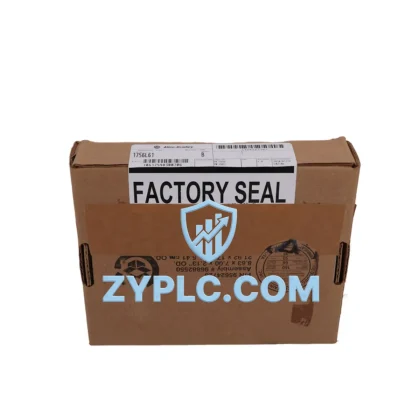
Every 1771-QRC supplied by ZYPLC is covered by a 12-Month Warranty against manufacturing defects and functional failures under normal operating conditions. Prior to shipment, each module undergoes functional testing to verify analog input accuracy, channel isolation integrity, and backplane communication. For long-term maintenance planning, ZYPLC maintains inventory of 1771-series modules to support facilities operating legacy PLC-5 systems beyond Rockwell Automation’s standard product lifecycle. Our technical team provides pre-sales compatibility verification, installation guidance, and post-sale support to ensure seamless Contextual Integration within your existing control architecture. Contact us at [email protected] or +86 19859288691 for system-specific inquiries.
© 2026 ZYPLC. All rights reserved.
Original Source: https://zyplc.com
Contact: +86 19859288691 | [email protected]